SEOUL, October 22, 2026
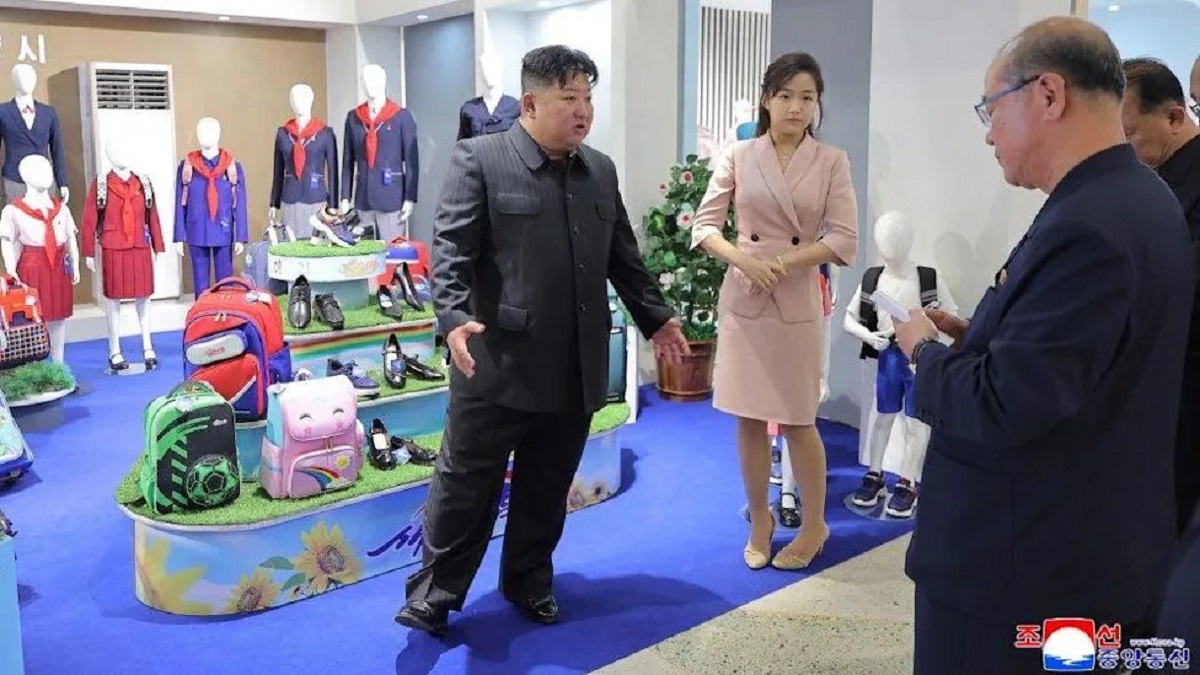
North Korean state media has published photographs showing leader Kim Jong Un visiting a clothing and footwear exhibition in Pyongyang with his daughter, Kim Ju Ae, after unverified social media claims alleged that he had died from a brain haemorrhage. The images, released on October 20, showed Kim attending the event the previous day, but they have not been independently verified by foreign journalists.
The photographs offer a new public account of Kim’s activities, but they also highlight a recurring problem for those trying to assess developments inside one of the world’s most closed political systems: separating verifiable information from speculation.

Key Points
- North Korean state media published photographs of Kim Jong Un at a Pyongyang clothing and footwear exhibition on October 20.
- The images reportedly showed Kim with his daughter, Kim Ju Ae, and other officials.
- The death rumours originated in social media claims alleging a severe brain haemorrhage, coma and emergency treatment in Beijing.
- No credible, independently verified evidence has substantiated the claims that Kim died or that a leadership transition took place.
- North Korea’s restricted information environment makes independent verification difficult and allows unsupported reports to spread quickly.
Where Did the Death Rumours Come From?
The latest speculation spread over the weekend of October 17–18, after Wanjun Xie, a US-based Chinese dissident who identifies himself as chairman of the China Democracy Party, posted claims about Kim’s alleged medical emergency.
Xie alleged that Kim had suffered a severe cerebral haemorrhage, fallen into a coma and been transferred to Peking Union Medical College Hospital in Beijing. He subsequently claimed that Kim had died and that his body had been returned to North Korea without public disclosure.
Those allegations were not accompanied by independently verifiable evidence. Reports by Anadolu Agency and South Korean media outlet Yonhap, published through The Korea Times, traced the claims to social media rather than confirmed medical or official records. South Korean officials also said they had received no information supporting the rumours.
The distinction matters because a claim can gain international attention through repetition without becoming independently confirmed. Reports that quote or refer back to the same original social media post do not necessarily represent multiple, independent sources.
What Do the New Photographs Actually Confirm?
The Korean Central News Agency (KCNA), North Korea’s state news agency, reported that Kim visited a garment and footwear exhibition in Pyongyang on October 19. Photographs published the following day showed him touring the exhibition alongside his daughter and officials.
The images provided evidence that North Korean state media was presenting Kim as active in public life. However, because the material came from the country’s own state media, it does not amount to independent verification of his precise medical condition or provide a complete picture of his health.
North Korean authorities did not directly address the death allegations in the reporting about the exhibition. The release of photographs following the online speculation therefore should not be confused with a detailed official explanation of the rumours.

Why Do Rumours About Kim Jong Un Keep Returning?
The information gap is central to understanding why these stories repeatedly emerge. North Korea tightly controls information about its leadership, and independent journalists have limited access to the country. Foreign governments, researchers and news organisations consequently cannot routinely verify the leader’s activities or medical condition through direct observation.
When Kim is absent from public reporting for a period, the lack of reliable information can create an opening for speculation. Claims about a serious illness or death can then spread rapidly, particularly when they involve a leader whose health and continued rule have wider regional implications.
A similar episode occurred in 2020, when rumours about Kim’s health intensified during a period of limited public appearances. He later reappeared at a public event. That history provides context for the latest claims, but it does not independently establish anything about his current health.
The latest episode also illustrates a reporting challenge: North Korean state media can provide evidence of what the government wants the public to see, while outside observers may lack the access needed to confirm every detail independently. Responsible coverage must acknowledge both the value and the limitations of that evidence.
What About Claims of a Leadership Change?
Some online posts also prompted speculation about Kim’s sister, Kim Yo Jong, taking control and about a possible Chinese military presence in Pyongyang. These were separate allegations, not established consequences of the death rumour.
No credible evidence cited in the available reporting confirms that Kim Yo Jong assumed power, that a succession process began or that Chinese troops entered Pyongyang as part of a leadership transition. Such claims should not be treated as facts simply because they circulated alongside the original allegation.
Kim’s daughter has attracted attention because of her appearances alongside him at official events. However, photographs of the two together do not, on their own, establish that she has been formally designated as his successor.
For now, the evidence supports a narrower conclusion: North Korean state media has reported a recent public appearance by Kim, while the claims that he died remain unsubstantiated. His actual medical condition cannot be independently established from the photographs alone.
Sources: Korean Central News Agency (as reported by regional outlets), Anadolu Agency, The Korea Times/Yonhap, and reporting from BBC News.