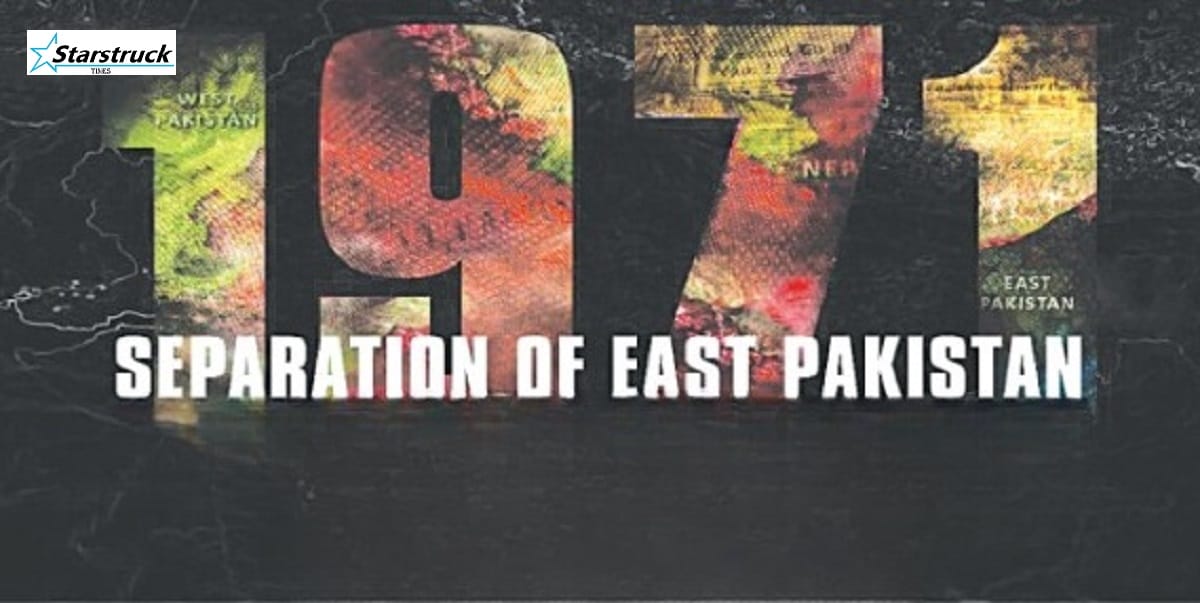
The separation of East Pakistan into Bangladesh in 1971 remains one of the most defining and painful chapters in South Asian history. What began as a dream of unity in 1947 quickly turned into decades of political, cultural, and economic disputes that led to a violent war and the birth of a new nation.
This article explores the key reasons behind the separation, the timeline of events, and how the legacy of 1971 still shapes Pakistan–Bangladesh relations today.
The Roots of the Conflict
Unequal Political Representation
After independence in 1947, Pakistan was divided into two wings:

- West Pakistan (present-day Pakistan)
- East Pakistan (present-day Bangladesh)
Although East Pakistan had a larger population, political power was dominated by West Pakistan. The Urdu vs. Bengali language controversy in the 1950s further deepened the divide.
Cultural and Linguistic Marginalization
The people of East Pakistan strongly identified with their Bengali language and culture. When Urdu was declared the sole national language in 1948, it sparked protests. The Bengali Language Movement (1948–1952) became a turning point, with students even laying down their lives on 21 February 1952.
Economic Disparities
East Pakistan produced the majority of Pakistan’s exports (mainly jute and tea), yet development funds were disproportionately allocated to West Pakistan. This economic inequality created resentment and fueled the sense of exploitation.
The 1970 Election Crisis
In 1970, Sheikh Mujibur Rahman’s Awami League won a majority in Pakistan’s first general elections. However, the central government in West Pakistan, led by General Yahya Khan and Zulfikar Ali Bhutto, refused to transfer power.
This denial of democratic rights sparked massive protests in East Pakistan.
The 1971 Military Operation and War
On 25 March 1971, the Pakistani military launched Operation Searchlight, aiming to crush Bengali nationalism. This led to mass killings, destruction, and one of the largest refugee crises in modern history.
India eventually intervened in December 1971, supporting the Bengali independence movement. Within two weeks, Pakistani forces surrendered in Dhaka on 16 December 1971, and Bangladesh was born.

The Legacy of Separation
The wounds of 1971 still influence Pakistan–Bangladesh relations. While economic, political, and cultural cooperation has improved in recent years, mistrust and unresolved historical grievances remain.
Conclusion
The separation of Pakistan and Bangladesh was not sudden—it was the result of decades of political exclusion, cultural suppression, economic inequality, and denial of democracy. The 1971 war marked the tragic climax of these tensions.
Today, as both nations attempt to rebuild ties, remembering the lessons of history is vital for fostering peace and unity in South Asia.
What’s your view on the 1971 separation? Could Pakistan and Bangladesh have stayed united if fairer policies were in place?
Share your thoughts in the comments!
Follow our blog for more deep dives into South Asian history and breaking news.