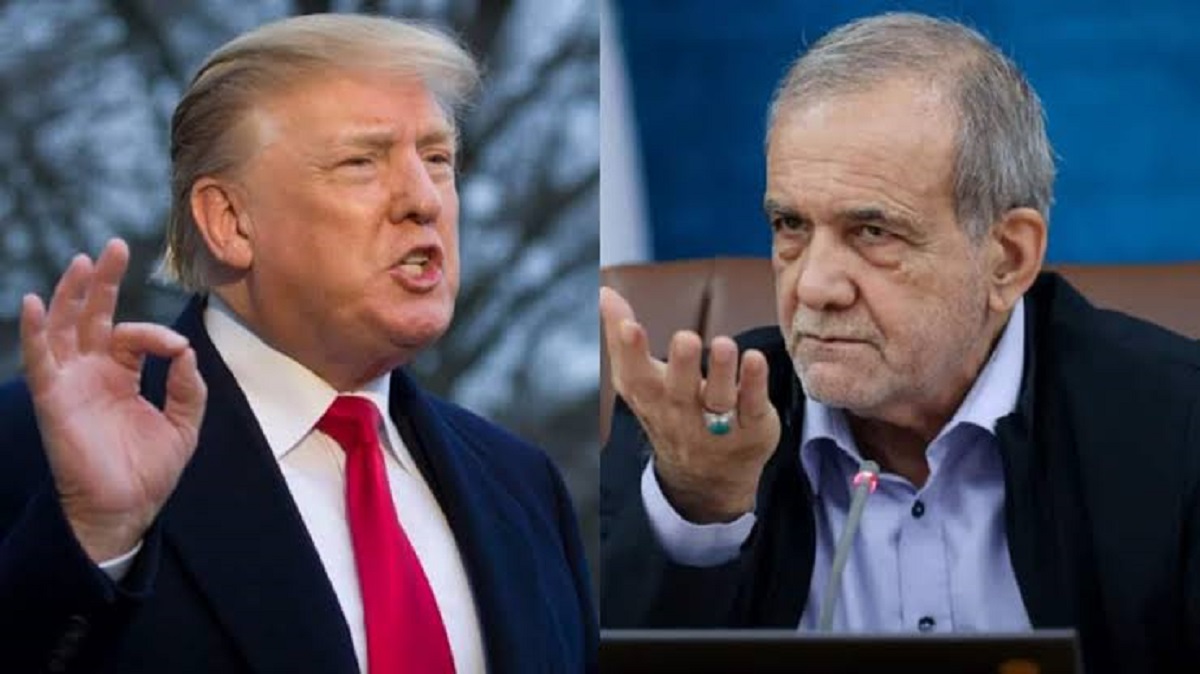
U.S. President Donald Trump and Iranian President Masoud Pezeshkian are attending the UN General Assembly as Washington and Tehran signal possible renewed negotiations.
UNITED NATIONS, New York — September 22, 2026 — The United States and Iran have signaled a possible return to negotiations as President Donald Trump and Iranian President Masoud Pezeshkian converge on New York for the United Nations General Assembly, opening a potential diplomatic channel even as the conflict between the two countries continues.
Key points
Iran has indicated that its delegation has authority to negotiate with Washington, according to Reuters.
A senior Iranian official told Reuters that Tehran could reopen the Strait of Hormuz within seven days if the United States eases military pressure and lifts its blockade of Iranian ports.
Trump has signaled openness to talks, but no direct meeting between Trump and Pezeshkian has been confirmed.
Pezeshkian has expressed skepticism about renewed negotiations, pointing to previous attacks during periods when talks were underway.
The possible diplomatic opening is already being watched closely by energy markets, with Reuters reporting that oil prices fell as expectations of improved Gulf supplies increased.
The diplomatic signals emerged as the 81st UN General Assembly opened its high-level debate in New York. The official UN schedule places the general debate from September 22 through September 28, bringing presidents and senior government officials together while the Middle East conflict remains a central concern.
The most significant development may be the reported Iranian proposal involving the Strait of Hormuz, one of the world’s most important energy corridors. Tehran has linked a possible reopening of the waterway to an easing of U.S. military pressure and the lifting of restrictions on Iranian ports. Reuters reported that the proposal was conveyed to Washington through intermediaries.
That condition matters because it means the reported offer is not an unconditional reopening of the strait. Any movement toward a broader agreement would therefore require both sides to resolve major disputes over military pressure, maritime access and the wider conflict.
The diplomatic picture remains uncertain. Reuters reported that Secretary of State Marco Rubio has expressed openness to dialogue, while Iranian officials have continued to emphasize that Tehran does not want negotiations conducted under pressure.
Pezeshkian has also struck a cautious tone. According to the Associated Press, he said Iran is wary of another round of talks after the United States and Israel attacked Iran during earlier periods of negotiations. That position illustrates the gap between the two sides even as diplomatic contacts appear to be reopening.
For now, there is no confirmed Trump-Pezeshkian summit and no announced agreement ending hostilities. The significance of the UN gathering is that both presidents are in the same diplomatic arena at a moment when intermediaries are again exploring a route toward negotiations.
The immediate test will be whether the signals translate into direct talks and whether the two governments can establish enough trust to discuss the larger conflict. Until then, the reported Hormuz proposal and the willingness of both sides to consider diplomacy remain possibilities rather than a settled breakthrough.
Hello! I'm M Muzamil Shami, the founder and lead editor of Star Struck Times, your trusted source for trending news, entertainment scoops, celebrity gossip, sports highlights, and global headlines.
With a passion for storytelling and journalism, I created this platform to bring you breaking news, viral moments, and deep insights into the worlds of Bollywood, Hollywood, sports, politics, tech, and more — all in one place.