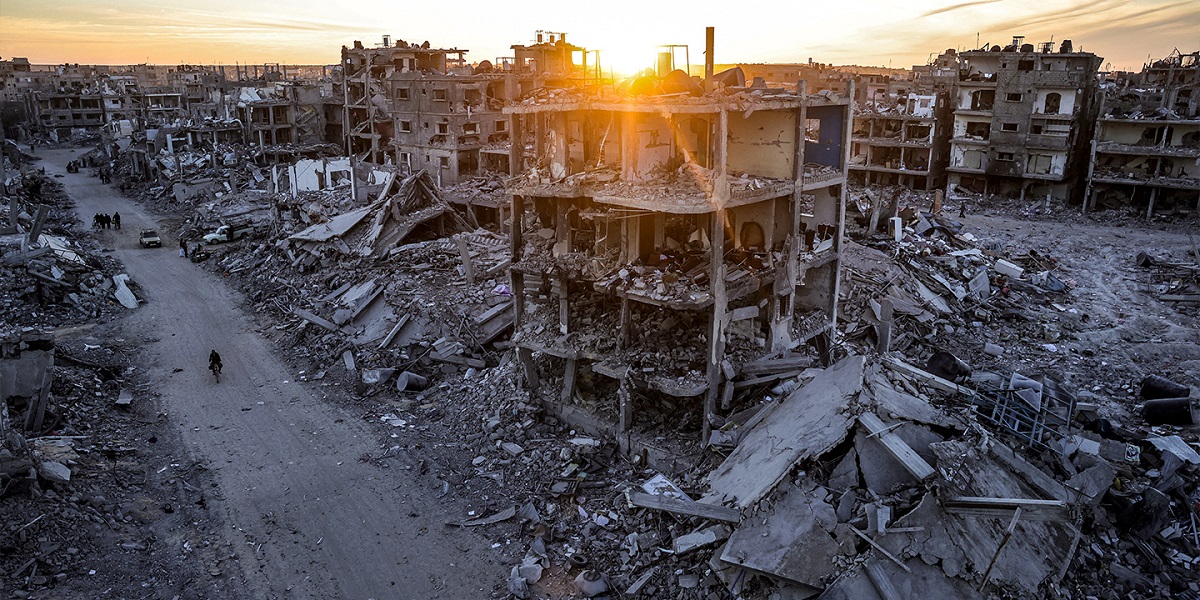
Israeli fighter jets seen over Gaza following a Hamas-linked attack that killed two soldiers, reigniting regional tensions.
Stand-first: Israeli forces launch significant strikes across Gaza after soldiers killed, raising fears of renewed full-scale conflict.
Jerusalem (Star Struck Times) — Israeli military jets and drones on Sunday targeted multiple sites across the Gaza Strip, responding to the deaths of two soldiers in a Hamas-linked cross-border attack near Rafah, according to the Israel Defense Forces (IDF). The strikes killed at least 26 Palestinians, including a woman and a child, as reported by Gaza’s health ministry.
The timing — amid a U.S.-brokered cease-fire that began on October 10 — marks one of the most serious escalations since the accord took hold. Israeli media report that the IDF used more than 120 munitions in strikes across Gaza’s south and west.
Hamas denies responsibility for the attack on the Israeli troops, saying it was not aware of any unit authorised such an operation. “We remain committed to the truce,” a spokesperson said, reinforcing the group’s stance even as Israeli warplanes roared overhead.
Reaction to the air-raids was immediate and mixed. Israeli Prime Minister Benjamin Netanyahu convened an emergency security meeting and demanded full restoration of the truce’s terms, including the return of hostages and reopening of the Rafah crossing. Meanwhile, humanitarian groups in Gaza warned that the renewed violence could derail aid flows and plunge the enclave deeper into crisis. “We had finally seen hope for peace, now it feels like that window is closing,” said one aid worker in Gaza City.
Netanyahu said late Sunday: “We will not tolerate violations of our troops or of the truce. Our retaliation will be proportional but firm.” The statement came after his office said that the Rafah border crossing would remain closed until Hamas fulfilled all its obligations under the cease-fire deal.
Audience reaction in Gaza was of dread and resignation. Residents reported sudden power cuts and air-raid sirens as Israel struck. One displaced family described how they ran from their shelter in Rafah to a neighbouring school when the bombs landed. On social media, Gaza users posted, “Here we go again,” reflecting a growing sense of inevitability about the return to full-scale hostilities.
Wrapping up the developments, while Israel said it would resume enforcement of the cease-fire after the retaliatory raids, the incident exposed the truce’s fragility and the serious risks of spiralling violence. Analysts warn that unless both sides adhere strictly to the agreement’s terms, wide-scale fighting could reignite, worsening the humanitarian disaster for Gaza’s civilians and challenging mediator efforts led by the United States.
FAQs
Q: What triggered the Israeli airstrikes? A: The strikes were triggered by a cross-border attack near Rafah that killed two Israeli soldiers, which Israel says was carried out by Hamas militants violating the truce.
Q: How many casualties resulted from the airstrikes? A: Gaza’s health ministry reported at least 26 Palestinians killed, including non-combatants, while Israel maintains it targeted solely militant infrastructure.
Q: What is the state of the cease-fire between Israel and Hamas? A: The cease-fire, brokered by the U.S. and taking effect Oct. 10, remains in place officially. However, Sunday’s strikes mark the heaviest blow since its start — raising serious questions about its durability.
Q: What are the humanitarian implications? A: The renewed strikes threatened timely aid delivery into Gaza, where the population is already facing shortage of food, fuel and medicines. The temporary suspension of crossings and escalating violence could further deepen the crisis.
Stay tuned for updates as diplomats scramble to prevent further escalation and humanitarian agencies issue fresh appeals.
Hello! I'm M Muzamil Shami, the founder and lead editor of Star Struck Times, your trusted source for trending news, entertainment scoops, celebrity gossip, sports highlights, and global headlines.
With a passion for storytelling and journalism, I created this platform to bring you breaking news, viral moments, and deep insights into the worlds of Bollywood, Hollywood, sports, politics, tech, and more — all in one place.