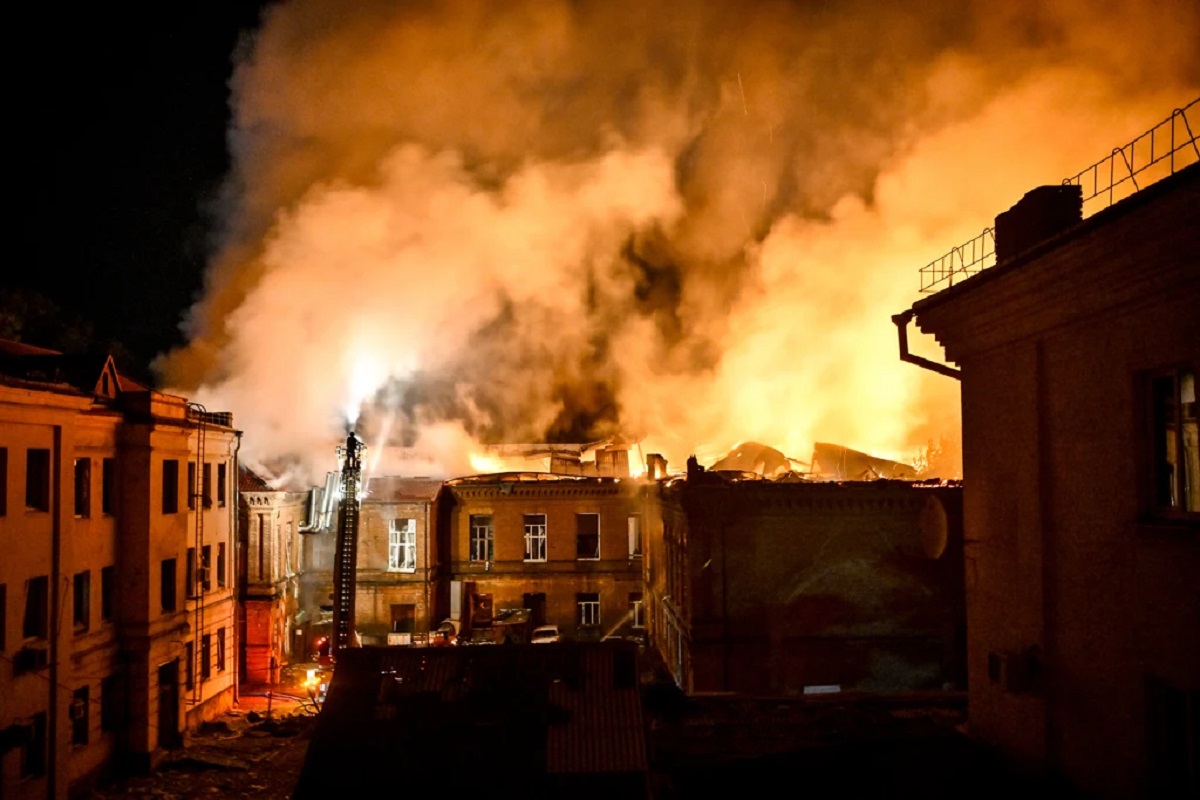
Russia and Ukraine exchanged fresh long-range strikes on September 22 as Zelenskyy traveled to New York for the UN General Assembly.
KYIV, Ukraine — September 22, 2026 — Russia and Ukraine exchanged fresh long-range strikes Tuesday, with Russianmissiles and drones killing people across several Ukrainian regions while Ukrainian forces targeted another Russian oil facility, underscoring the continuing focus on energy and industrial infrastructure even as President Volodymyr Zelenskyy traveled to New York for high-level talks with U.S. President Donald Trump.
Key points
Russian overnight attacks hit at least four Ukrainian regions, with Ukrainian officials reporting five deaths and multiple injuries.
Ukraine said its forces struck a Russian oil refinery in the Samara region as part of a continuing campaign against Moscow’s energy infrastructure.
Ukraine’s air force said the Russian barrage included more than 200 drones alongside several types of missiles.
Zelenskyy is in New York for the UN General Assembly and is scheduled to meet Trump, with Ukraine seeking further support and discussing possible measures to reduce attacks on energy infrastructure.
The latest attacks highlight a pattern that has become increasingly important to the war: the battlefield is not the only front where Moscow and Kyiv are competing. Both sides have increasingly targeted infrastructure, industrial facilities, logistics networks and energy assets in an effort to weaken the other side’s ability to sustain the war.
According to the Associated Press, Russia launched missiles and drones against at least four Ukrainian regions overnight. Officials said the attacks killed five people, while strikes damaged homes, businesses and other facilities. Dnipro was among the cities hit.
Reuters separately reported that Russian strikes hit industrial sites in Dnipro, Kryvyi Rih and Pavlohrad in the Dnipropetrovsk region. Ukrainian officials also reported damage to an energy facility in northern Ukraine that left nearly 100,000 consumers without electricity.
Ukraine responded with another long-range strike on Russian energy infrastructure. AP reported that Ukrainian forces damaged an oil refinery in Russia’s Samara region. The Ukrainian military said it had hit the facility, while the wider consequences of the strike were still being assessed.
The refinery attack follows a broader Ukrainian campaign against Russian oil-processing capacity. Reuters reported Monday that a drone attack had forced the Moscow oil refinery to suspend crude processing after fires damaged two major processing units. Industry sources said repairs could take several weeks.
That energy dimension gives the latest exchange significance beyond the immediate battlefield. Strikes on refineries and other energy facilities can affect fuel production and distribution, while attacks on Ukrainian power and industrial infrastructure raise concerns about the country’s ability to maintain essential services as winter approaches.
The escalation also comes at a sensitive diplomatic moment. Zelenskyy arrived in New York for the UN General Assembly and is expected to meet Trump. Reuters reported that the Ukrainian president plans to press for an energy truce and seek additional air-defense support, including Patriot systems.
There is no indication from the latest reporting that the new strikes have produced a new battlefield breakthrough. Instead, the attacks show how the war continues to be fought through repeated long-range strikes against infrastructure while diplomatic efforts remain under discussion.
For now, the immediate question is whether the meetings in New York can produce practical steps to reduce attacks on energy infrastructure. The latest exchange suggests that, despite renewed diplomatic activity, the campaign against strategic facilities remains active.
Hello! I'm M Muzamil Shami, the founder and lead editor of Star Struck Times, your trusted source for trending news, entertainment scoops, celebrity gossip, sports highlights, and global headlines.
With a passion for storytelling and journalism, I created this platform to bring you breaking news, viral moments, and deep insights into the worlds of Bollywood, Hollywood, sports, politics, tech, and more — all in one place.