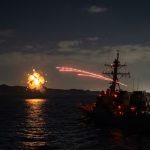
U.S. President Trump reiterates military warning amid nuclear negotiations with Iran
Washington, USA — Star Struck Times
President Donald Trump has intensified military warnings to Iran, stating that the United States could take “very tough” actions — including advancing more warships — if Tehran does not meet U.S. demands on its nuclear program and ballistic missile development. The remarks come as indirect nuclear talks continue amid heightened regional tensions.
In recent interviews, Trump reiterated that Tehran must comply with U.S. security demands or face serious consequences, signaling possible deployment of additional military assets near Iranian waters if negotiations falter. While Trump expressed cautious optimism about a diplomatic path, Iran has firmly rejected negotiation under threats, calling for diplomacy without military pressure.
This escalation raises concern among analysts that failure to reach an agreement could further destabilize the Middle East and strain global security frameworks. Media analysts believe any new confrontation could deeply affect oil markets and diplomatic relations with key U.S. allies.
Key Highlights
Trump warns Iran with possible military escalation if demands aren’t met.
U.S. considering sending additional aircraft carrier strike group to Gulf region.
Iran’s government rejects threats, insists no diplomacy under pressure.
Indirect nuclear talks continue in Oman with mixed official statements.
Iran warns of retaliation targeting U.S. bases if attacked.
What Happened: Military Warnings and Diplomatic Talks
President Trump’s comments to U.S. and international media earlier this week heightened U.S. military posture toward Iran, warning that Washington may deploy a second aircraft carrier strike group to the Middle East if negotiations with Tehran stall.
Trump emphasized that the U.S. demands Tehran abandon nuclear weapon ambitions, halt development of ballistic missiles, and curtail support for regional proxy groups. Officials disclosed that the USS Abraham Lincoln Carrier Strike Group is currently stationed in nearby waters as a deterrent.
Indirect talks — mediated by Oman — are ongoing but have yet to result in a comprehensive deal. Iran insists any discussion be limited to its civilian nuclear program, rejecting broader U.S. demands and military pressure.
Official Responses and Public Reaction
Iran’s leaders have publicly rejected negotiating under threat, with Foreign Minister Abbas Araghchi stating that diplomacy cannot succeed if coupled with military pressure. “Threats will not help negotiations,” he told state media.
A senior Iranian security official warned that U.S. military bases and assets in the Middle East would be targeted if Tehran faced an attack, though he emphasized that Iran does not intend to extend conflict beyond U.S. forces.
On social platforms, commentators expressed concern: “A military confrontation could devastate regional stability,” a Middle East policy analyst told Star Struck Times. A U.S. defense expert noted, “This pressure strategy underscores Washington’s shift toward hardline tactics over diplomacy.”
Why It Matters: Regional Security and Global Impact
The standoff between Washington and Tehran carries major implications:
Oil Markets & Global Economy: Any escalation could disrupt crude supply routes, especially near the Strait of Hormuz.
U.S. Foreign Policy: Experts say the U.S. approach could impact relations with European allies wary of military confrontation.
Middle East Stability: Regional players like Saudi Arabia and Israel are closely watching, with potential ramifications for proxy engagements abroad.
Dr. Laura Jennings, a foreign policy expert at the Atlantic Institute, said, “The combination of diplomacy and deterrence reflects a classic but risky strategy — mixing carrots with sticks.”
Historical Context: A Fraught Nuclear Dispute
Tensions between the U.S. and Iran over nuclear ambitions date back decades. The 2015 nuclear deal — the Joint Comprehensive Plan of Action — limited Iran’s enrichment in exchange for sanctions relief. The Trump administration withdrew from that pact in 2018, reinstating sanctions and significantly raising tensions. Since then, periodic negotiations have faltered, and military brinkmanship has increased.
The current talks, held indirectly in Muscat, represent the first effort to engage since a series of U.S. and Israeli military actions against Iranian sites last year.
What Happens Next
While diplomatic channels remain open, both sides are preparing for potential escalation. Tehran insists that threats won’t force its hand, and the U.S. continues to leverage military assets to pressure concessions. Observers stress that further dialogue and third-party mediation will be crucial in averting military conflict.
Internal Link Suggestion: Read more in our World News – Middle East Diplomacy section.
FAQs
Q: What are the main U.S. demands from Iran? A: The U.S. has called for Iran to end uranium enrichment beyond civilian levels, halt ballistic missile development, and cut support for regional proxy groups before a broad agreement can be reached.
Q: Has Iran accepted negotiations? A: Iran has engaged in indirect talks but maintains that negotiations under military threats are unacceptable and insists on focus solely on its nuclear program.
Q: What military assets has the U.S. deployed near Iran? A: The USS Abraham Lincoln Carrier Strike Group is in the region, and the U.S. is considering sending a second carrier if talks fail.
Q: Could this situation lead to war? A: Analysts warn that failure to reach a diplomatic solution could escalate tensions, though both sides currently emphasize negotiating channels.
Q: Are other countries involved? A: Oman is mediating talks, while countries like Israel and Gulf states are closely monitoring due to security concerns.
Stay informed on the latest developments between the U.S. and Iran. Follow Star Struck Times for real-time updates on nuclear talks, military alerts, and Middle East diplomacy. Share your thoughts on what this could mean for global security in the comments below!
Hello! I'm M Muzamil Shami, the founder and lead editor of Star Struck Times, your trusted source for trending news, entertainment scoops, celebrity gossip, sports highlights, and global headlines.
With a passion for storytelling and journalism, I created this platform to bring you breaking news, viral moments, and deep insights into the worlds of Bollywood, Hollywood, sports, politics, tech, and more — all in one place.