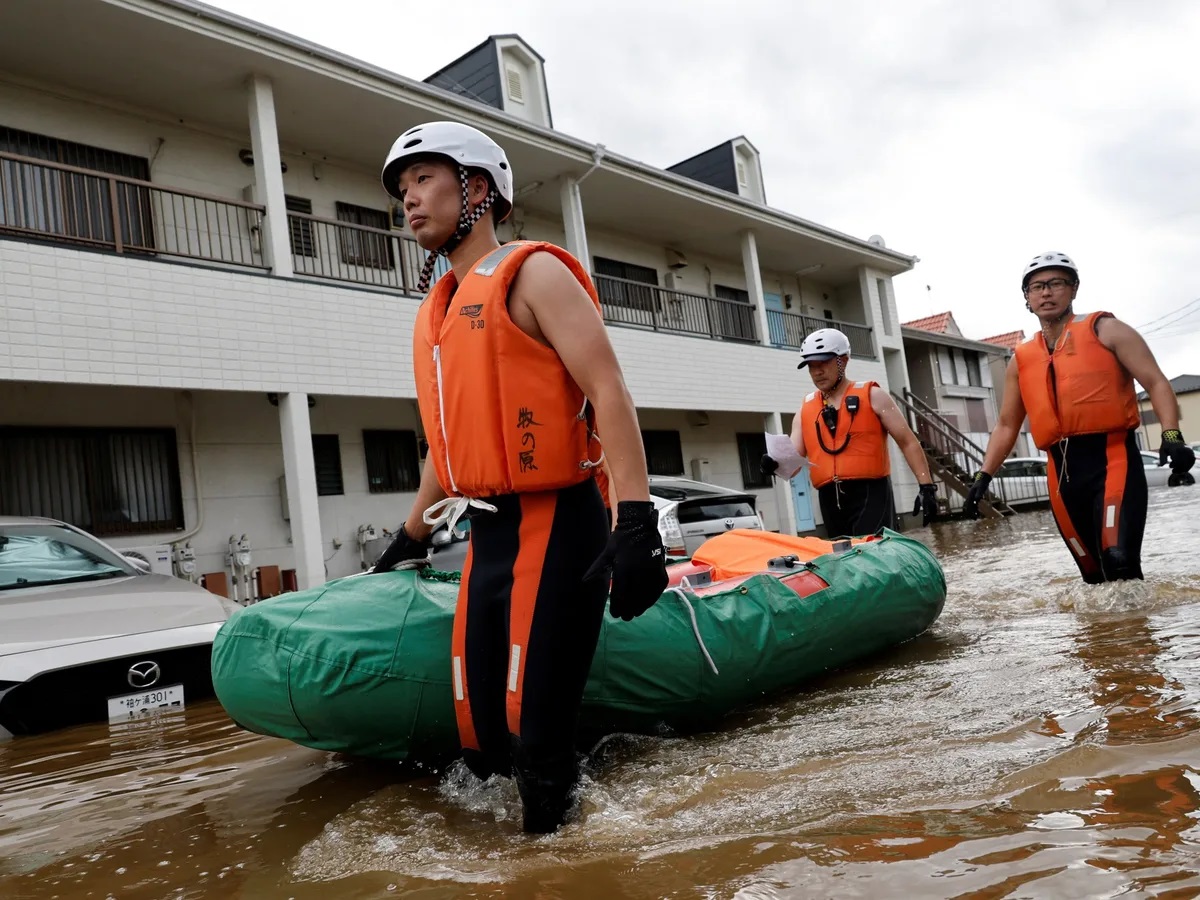
TOKYO, Japan — September 22, 2026 — Typhoon Dujuan has left at least four people dead and six missing in Japan after torrential rain triggered landslides and flooding along the country’s Pacific coast, while about 45,000 households remained without electricity near Tokyo, according to public broadcaster NHK and electricity provider data reported by Reuters.
Key points
- Four people have died and six remain missing following landslides in Kanagawa and Chiba prefectures, according to NHK.
- About 45,000 households lost power, with Chiba among the hardest-hit areas.
- Dujuan has moved northeastward away from Japan and into the Pacific, but authorities continued dealing with flooding, damaged homes and landslide risks.
- Emergency crews were searching for people believed to be trapped after landslides collapsed homes, including in the Miura area south of Tokyo.
The storm’s most serious impact was concentrated in the Kanto region surrounding Tokyo, where intense rainfall overwhelmed rivers and destabilized hillsides. Reuters reported that the fatalities included people in their 50s to 80s, with a woman in her 60s among those killed in Yokosuka.
The immediate danger from the typhoon itself has eased as Dujuan moved away from Japan, but the departure of the storm does not end the risk. Saturated ground can remain unstable after extreme rainfall, leaving communities vulnerable to additional landslides even after winds weaken.

Chiba prefecture also experienced significant flooding. Reuters reported that a resident in Sakura described severe flooding after a river overflowed, while more than 45,000 households in the prefecture were still without electricity on Tuesday afternoon. More than 460 homes had been damaged, according to reporting cited by the Straits Times.
The disruption came after the Japan Meteorological Agency had warned that Dujuan could bring exceptionally heavy and localized rainfall to eastern Japan. Earlier Reuters reporting said some areas of the Izu Islands had already received more than 300 millimeters of rain as the storm approached, with authorities warning of flash floods and landslides.
The storm also disrupted transport and public activities. Its approach had affected travel and prompted changes to scheduled events, while authorities urged residents in vulnerable areas to remain alert to flooding and landslides.
For emergency responders, the focus has now shifted from preparing for the storm to locating missing people, restoring electricity and assessing structural damage. The six people still missing make search operations the most urgent task, while power crews work to reconnect affected communities.
The latest toll could still change as rescue teams reach damaged areas and authorities complete assessments. For now, the confirmed picture is of a storm that has moved offshore but left a substantial recovery effort across parts of eastern Japan.