TOKYO, JAPAN, August 13, 2026 — Star Struck Times.
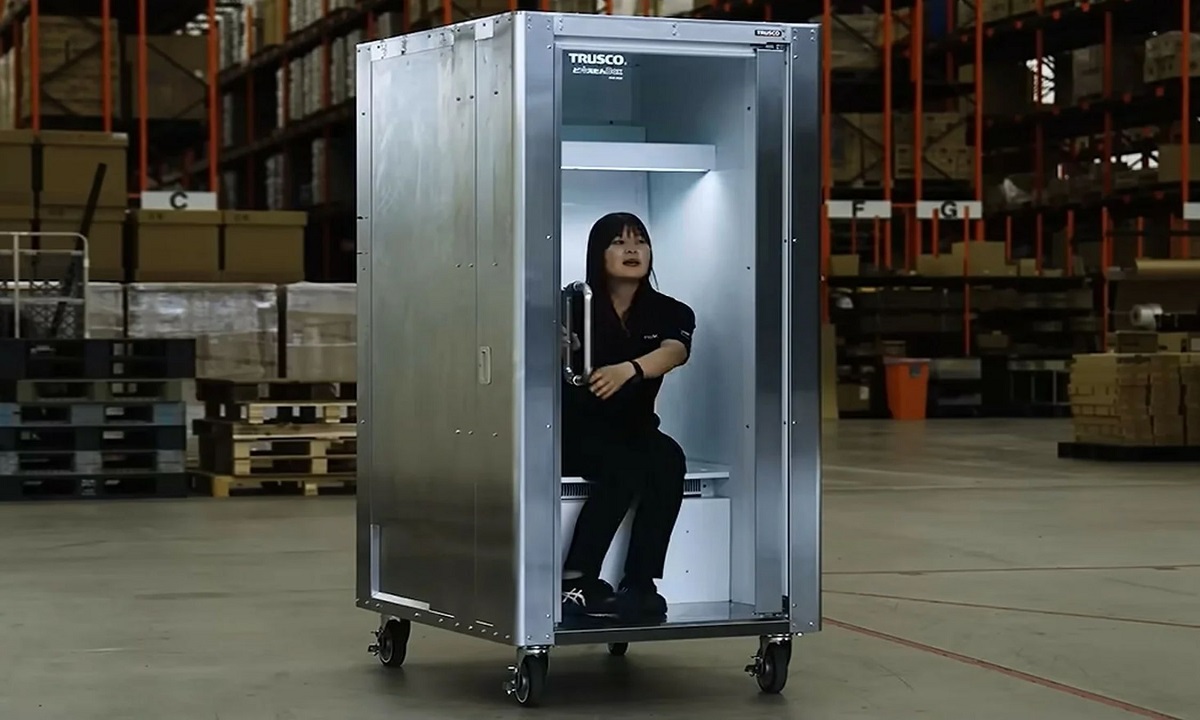
As record-breaking heatwaves transform urban centers across East Asia into concrete furnaces, Japan has unleashed a radical, futuristic weapon in its battle against extreme weather: the “Human Fridge.” Known officially as the Do Hiemon—or “The Cooling Box”—these walk-in refrigerator pods are rapidly appearing in public plazas, construction sites, and municipal hubs across Tokyo. Engineered by industrial innovator Tetsuya Nakayama, the $9,400 units represent a desperate, high-tech intervention for a nation currently confronting one of its most devastating summer health crises on record. With hospital emergency rooms overflowing and ambient pavement temperatures exceeding dangerous thresholds, this quirky yet vital Japanese innovation is shifting from a viral curiosity into a life-saving necessity.
Key Points Summary
- Lethal Heatwave Emergency: Over 53,000 individuals have required emergency hospital treatment for heatstroke across Japan in the past two months, with official reports confirming at least 79 heat-related fatalities.
- The $9,400 ‘Cooling Box’: Commercialized under the brand name Do Hiemon, these high-grade aluminum walk-in cooling stations cost ¥1.5 million ($9,407 / £6,973) per unit.
- Inspired by Vending Culture: Developed by CEO Tetsuya Nakayama, the design adapts Japan’s ubiquitous frozen vending machine architecture to shelter human beings needing instantaneous core temperature drop.
- Rapid Public & Commercial Rollout: Municipal governments, outdoor event organizers, logistics hubs, and industrial contractors are purchasing the pods to safeguard vulnerable populations and outdoor laborers.
The Scorching Reality Behind Tokyo’s Cooling Pods
The air across Tokyo this summer does not merely feel hot; it feels heavy, suffocating, and unrelenting. As global temperature records shatter nationwide, Japan’s urban heat island effect has turned daily commutes and outdoor labor into dangerous endurance tests. High humidity combined with sustained temperatures clearing 38°C (100°F) has overwhelmed traditional cooling measures. Standard parasols, handheld battery fans, and misting showers are no longer sufficient to keep severe heat illness at bay.

Enter the Do Hiemon.
Stepping inside the Do Hiemon is an immediate sensory shock. Designed as a modular, climate-controlled sanctuary, the pod relies on industrial-grade refrigeration technology engineered to plunge internal temperatures to a rapid, crisp relief zone within seconds of entry. The exterior mirrors the clean, utilitarian design language typical of modern Japanese street architecture, but the interior functions strictly as an emergency heat shelter.
BBC Tokyo correspondent Kurumi Mori, among the first international journalists granted access to test the commercial unit, described entering the chamber as stepping straight into an industrial freezer—yet without the harsh, skin-chapping bite. The air inside is optimized for immediate thermodynamic dissipation, stripping humidity while dropping ambient skin temperature safely and efficiently.
“Our core philosophy was remarkably simple,” explained Tetsuya Nakayama, CEO of the manufacturing firm behind the pod. “Japan has perfected automated frozen food delivery through specialized outdoor vending machines over decades. When we witnessed the rising casualty numbers from summer heat exhaustion, we realized we already possessed the structural manufacturing framework. We didn’t need to reinvent refrigeration; we simply needed to scale it up so a human being could step inside.”
The necessity of Nakayama’s creation is backed by alarming medical statistics. Japan’s Fire and Disaster Management Agency reported that emergency transports for heat-induced conditions surged past 53,000 cases in a mere eight-week window. For an aging society where more than 29% of the population is aged 65 or older, thermal stress is no longer just a seasonal discomfort—it is a national health emergency.
Hidden Context: What Other Reports Missed
While international headlines have largely treated the Do Hiemon as an eccentric piece of Japanese tech novelty, local industrial policy reveals a far more strategic narrative.
- The Construction & Logistics Crisis: Beyond public parks, the primary commercial buyers of the $9,400 pods are major Japanese construction conglomerates and delivery logistics firms. Under revised Japanese labor safety guidelines, project managers face strict liability penalties if workers suffer severe heat stroke on site. The Do Hiemon provides a deployable, low-footprint breakroom that can be lifted via crane onto high-rise building sites where centralized air conditioning does not yet exist.
- Micro-Grid Energy Optimization: Unlike standard portable air conditioners that drain massive continuous wattage and risk overloading temporary generators, the Do Hiemon utilizes phase-change thermal storage materials. The pod “charges” its thermal mass during off-peak morning hours and maintains internal refrigeration with minimal electrical draw during peak midday heat grid surges.
- Psychological Relief vs. Physiological Cooling: Public health researchers in Tokyo point out that heat anxiety causes significant cognitive fatigue among elderly residents, leading many to lock themselves indoors without ventilation to avoid high electricity bills. The strategic installation of Do Hiemon units near neighborhood shopping districts acts as a psychological safety net, encouraging mobility while guaranteeing accessible thermal relief.
Frequently Asked Questions (FAQs)
- What is Japan’s ‘Human Fridge’? The ‘Human Fridge’ is a commercial walk-in cooling shelter named Do Hiemon (“The Cooling Box”), manufactured in Japan for ¥1.5 million ($9,407). It provides rapid, air-conditioned relief to prevent heatstroke in public spaces and job sites.
- Why are human fridges being deployed in Japan? They are being deployed to fight a severe summer heatwave that has hospitalized over 53,000 people and caused at least 79 heatstroke deaths across Japan in just two months.
Q1: How much does a Do Hiemon cooling box cost? A: Each Do Hiemon unit costs approximately ¥1.5 million JPY, which translates to roughly $9,407 USD or £6,973 GBP, depending on currency conversion rates.

Q2: Who invented the Do Hiemon human fridge? A: The unit was created under the leadership of CEO Tetsuya Nakayama, who drew direct engineering inspiration from Japan’s iconic frozen food vending machines.
Q3: How cold does the inside of the human fridge get? A: The internal temperature is calibrated to provide immediate cooling relief without causing cold shock, maintaining a crisp microclimate significantly cooler than external ambient temperatures exceeding 38°C.
Q4: Can anyone use these cooling fridges in Japan? A: Yes, units installed in public plazas and municipality centers are open to pedestrians showing signs of heat distress, while commercial units are utilized on industrial job sites.
What do you think—are personal cooling pods the future of urban climate adaptation, or should cities focus entirely on green spaces and shade infrastructure? Leave your thoughts in the comments below!