Star Struck Times | November 8, 2026 | World News
US–Iran tensions
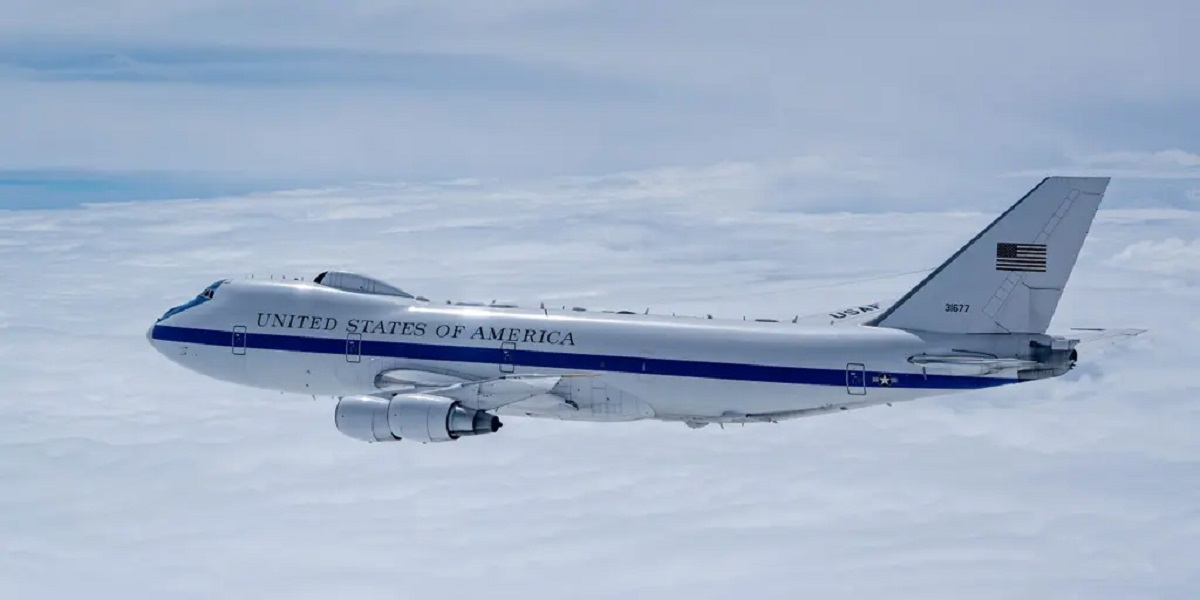
WASHINGTON, November 8, 2026 — The sighting of America’s E-4B Nightwatch, widely known as the Doomsday Plane, flying across the United States has attracted attention amid renewed military tensions between Washington and Tehran. The aircraft departed Offutt Air Force Base in Nebraska on November 5 and headed east, according to flight-tracking information cited by The Economic Times. Its destination, passengers and mission have not been publicly confirmed. The Economic Times

The flight came as President Donald Trump considered whether to expand US military operations against Iran. On November 6, Trump confirmed that American forces had carried out another limited strike against an Iranian air-defence system near Qeshm Island, describing the operation as minor. The announcement followed earlier US strikes in the strategically important Strait of Hormuz. AP News
However, there is no publicly verified evidence connecting the E-4B’s November 5 flight to the latest attacks on Iran or preparations for another round of strikes. The aircraft’s appearance should therefore be considered separately from the confirmed military developments.
Key Points
- The E-4B Nightwatch was spotted flying east after departing Offutt Air Force Base on November 5.
- The aircraft’s destination, passengers and operational purpose remain unconfirmed.
- Trump confirmed limited US strikes against an Iranian air-defence system near Qeshm Island on November 6.
- Washington and Tehran remain involved in a wider confrontation, with diplomatic efforts continuing.
- No official statement has linked the aircraft’s flight to a planned attack on Iran. The Economic Times
Why the Doomsday Plane Attracts Attention
The E-4B Nightwatch is not an ordinary military transport aircraft. According to the US Air Force, it serves as the National Airborne Operations Center, providing a highly survivable command, control and communications platform for the president, defence secretary and Joint Chiefs of Staff.
Designed to operate during national emergencies, the aircraft can help senior US officials maintain communications and direct military forces if ground-based command facilities become unavailable. Its systems include protection against electromagnetic pulse effects and specialised communications equipment.
The E-4B is also capable of aerial refuelling, allowing it to remain airborne for extended periods. The US Air Force says at least one aircraft is maintained on round-the-clock alert to support its national command mission. af.mil
These capabilities explain why sightings of the aircraft attract public interest during periods of international tension. However, its specialised role does not mean every flight signals an impending nuclear emergency or military escalation.
US Confirms Another Limited Strike on Iran
The aircraft’s reported flight coincided with a fresh development in the US-Iran confrontation.

On November 6, Trump told reporters that American forces had destroyed an Iranian anti-aircraft installation. He characterised the operation as minor and said the target had been disabled within minutes.
The Associated Press reported that Iranian state media had reported explosions in the Suza area of Qeshm Island, a strategically important location near the Strait of Hormuz.
The latest operation followed US strikes earlier in the week. On November 2, a US official told Reuters that American forces had attacked targets on Qeshm Island, describing the action as defensive measures against Iranian forces allegedly using surface-to-air missiles against US assets.
The distinction between these limited operations and a broader military campaign is important. The reported attacks do not, by themselves, establish that Washington has decided to resume a sustained bombing campaign.
Military Pressure and Diplomacy Continue
Despite the military developments, diplomatic efforts have not completely stopped.
An Associated Press report published November 6 said Qatar was mediating proposals intended to reduce tensions and establish steps towards broader negotiations. Discussions reportedly involve the US naval blockade, Iranian frozen funds, nuclear inspections and the future of the Strait of Hormuz.
The negotiations remain complicated by competing demands from Washington and Tehran, particularly over sanctions, nuclear activities and regional security. AP News
On November 8, Reuters reported further tensions involving commercial shipping near the Strait of Hormuz. The United States said it had disabled a commercial vessel in the Gulf of Oman after it allegedly ignored warnings and attempted to breach the naval blockade. Iranian authorities also reported incidents involving tankers, although details and responsibility remained unclear. Qatar, meanwhile, said diplomatic discussions were continuing. Reuters
This wider situation provides important context for the E-4B sighting. The aircraft’s appearance has attracted attention, but the more concrete developments are the confirmed US strikes, continuing maritime tensions and ongoing diplomatic contacts.
For now, the central unanswered question is why the E-4B flew on November 5. Without confirmation from the Pentagon, US Air Force or US Strategic Command, claims that the flight was connected to preparations for further strikes on Iran remain unverified.
The aircraft’s movement is worth reporting, but it should not be treated as proof that another US attack is imminent.