Islamabad, Pakistan, Saturday, April 25, 2026 — Star Struck Times
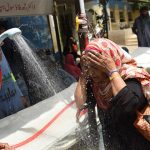
The Pakistan Meteorological Department (PMD) and the National Disaster Management Authority (NDMA) have issued urgent advisories as a dual-weather pattern grips the nation. While the northern territories prepare for localized thunderstorms, the plains of Sindh and Punjab are bracing for a severe heatwave intensified by a high UV index. Residents in cities like Bahawalnagar and Dadu, which recently clocked 45°C, are being warned of peaking temperatures that may challenge decadal records for late April.
Key Highlights
- Extreme Heat Alert: Temperatures in South Punjab and Sindh have hit 45°C, with cities like Bahawalnagar, Dadu, and Larkana leading the heat index.
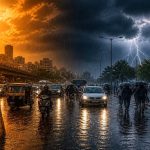
- Rain Relief: Thunderstorms and gusty winds are predicted for Upper KP, Gilgit-Baltistan, and Kashmir within the next 24 hours.
- NDMA Safety Advisory: A nationwide heatwave alert remains active until May 5, particularly for urban centers like Karachi and Multan.
- UV Index Warning: A “Very High” to “Extreme” UV index of 9–11+ is reported across the country, necessitating direct sunlight avoidance between 11:00 AM and 4:00 PM.
- Unexpected Rainfall: Southern Punjab and Northern Balochistan (Kalat and Zhob) recently witnessed rare light showers despite the prevailing heat.
The Great Divide: Scorching South vs. Turbulent North
Across the heartland of Pakistan, a persistent high-pressure system is trapping heat, pushing the mercury well above the seasonal average. According to data tracked by Star Struck Times, the most intense conditions are currently concentrated in Sindh and South Punjab. In the last 24 hours, Bahawalnagar, Dadu, and Larkana shared the highest temperature of 45°C.

Conversely, a western disturbance is currently influencing the upper regions. The PMD has recorded significant precipitation in Dir and Kalam (13mm) and Muzaffarabad (11mm). This atmospheric volatility is creating a “weather split” where the north enjoys cooling rains while the south faces a drought-like heat intensity.
Public and Official Reaction
The National Disaster Management Authority (NDMA) has asked provincial departments to activate “Cooling Centers” in major cities. “The current pattern is consistent with our seasonal outlook, but the intensity in urban heat islands like Karachi is a growing concern,” an NDMA official stated in a recent briefing.
Social media has been flooded with reactions from citizens. One resident from Multan tweeted, “The April sun feels like June this year; even the shade doesn’t offer relief.” Meanwhile, farmers in the wheat-growing belts of Punjab expressed concern over the “sudden light rain” in Dera Ghazi Khan, fearing it might affect the quality of the standing grain during the harvest peak.
What Other Reports Missed: The “Humidity Trap”
While most outlets focus solely on the 45°C peak, Star Struck Times identifies a more dangerous metric: the RealFeel® Temperature. Due to shifting moisture levels from the Mediterranean western disturbances colliding with the continental heat, the humidity in cities like Karachi and Sukkur is projected to rise. This creates a “Wet-Bulb” effect where the body’s natural cooling through sweat becomes less efficient, making even 38°C feel like 44°C.
Furthermore, historical data shows that April 2026 is seeing a higher frequency of “short, sharp” heat spells compared to the more gradual warming observed in the early 2020s, a clear signal of erratic climate shifts.
Historical Context and Expert Insight
Historically, April temperatures in Islamabad average around 27°C, but 2026 is trending significantly higher. Climate experts suggest that the Indian Ocean Dipole (IOD) and lingering effects of global surface temperature rises (now 1.1°C above pre-industrial levels) are fueling these early-season extremes.
Expert Insight: “We are no longer seeing a steady transition from spring to summer. Instead, we are witnessing a ‘telescoping’ of seasons where the heatwave threshold is being met weeks earlier than usual,” notes a senior meteorologist.
What Happens Next
Meteorologists predict that the heatwave will intensify over the next 48 hours in the plains, potentially pushing temperatures toward 47°C in isolated pockets of Sindh. However, the western disturbance in the north is expected to persist until Sunday, providing temporary relief to the residents of Khyber Pakhtunkhwa and Kashmir before the summer heat settles in permanently across the country by early May.

FAQ: Navigating the 2026 Heatwave
1. Which cities are currently the hottest in Pakistan? Currently, Bahawalnagar, Dadu, Larkana, and Khairpur are the hottest, with temperatures reaching 45°C.
2. Will it rain in Lahore or Islamabad soon? While the north (KP and Kashmir) is seeing rain, Lahore and Islamabad are expected to remain mostly dry and hot, with only a slight chance of dust storms providing brief relief.
3. How long will this heatwave last? The NDMA has issued an alert that heatwave conditions are likely to persist until at least May 5, 2026.
4. Is it safe to travel to the Northern Areas right now? Travelers should be cautious of “thunderstorms and gusty winds” in Gilgit-Baltistan and Upper KP, which could lead to localized landslides in steep terrains.
5. How can I protect myself from the high UV index? Stay indoors between 11:00 AM and 4:00 PM, wear light-colored cotton clothing, and significantly increase water intake to avoid heatstroke.
Sources
- National Disaster Management Authority (NDMA) Official Alerts
- Pakistan Meteorological Department (PMD) Daily Weather Report
- AccuWeather 10-Day Forecast for Pakistan