TOKYO, November 8, 2026
A magnitude 5.7 earthquake struck central Japan early Sunday, injuring at least 22 people, damaging buildings and disrupting railway services. The Japan Meteorological Agency (JMA) has urged residents in affected areas to remain alert for further tremors, particularly over the next several days.
The earthquake struck at 1:04 a.m. local time, with its epicentre in western Shizuoka Prefecture at a depth of approximately 41 kilometres, according to the JMA. The agency recorded a maximum seismic intensity of upper 5 on Japan’s seven-level intensity scale in parts of Aichi Prefecture.

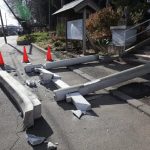
Although no tsunami warning was issued, the earthquake caused widespread shaking across central Japan, with reports of shattered shop windows, fallen merchandise and injuries sustained by people trying to escape their homes.
Key Points
- At least 22 people were injured in the magnitude 5.7 earthquake.
- The strongest recorded shaking reached upper 5 on Japan’s seismic intensity scale.
- Railway services, including Shinkansen bullet trains, experienced temporary disruption.
- The JMA warned residents to prepare for possible additional strong tremors.
- Officials reported no apparent change in the Nankai Trough earthquake situation.
JMA Warns of Further Earthquakes
The JMA has advised people in areas that experienced strong shaking to remain cautious for approximately one week. The warning is particularly important during the next two to three days, when stronger earthquakes are considered more likely based on previous seismic patterns.
According to the agency, there is a 10% to 20% historical occurrence rate of earthquakes of similar intensity following a major tremor. This is a statistical reference, not a prediction that another earthquake will definitely occur.
The agency also warned that falling rocks and landslides could become additional hazards, particularly if rainfall affects areas already weakened by the shaking.
The JMA confirmed that the earthquake did not generate a tsunami threat.
What the Earthquake Means for the Nankai Trough
The earthquake has also drawn attention because it occurred within the anticipated source region of a future Nankai Trough earthquake.
The Nankai Trough is an offshore seismic zone where the Philippine Sea Plate moves beneath the Eurasian Plate. Scientists have long warned that this region could produce a major earthquake.

However, the JMA said the magnitude of Sunday’s earthquake did not indicate any particular change in the condition of the plates along the Nankai Trough. The agency said it would continue monitoring seismic activity and ground movements.
This distinction is important: the earthquake’s location does not, by itself, mean that a major Nankai Trough earthquake is imminent.
Railway Disruptions and Damage
The earthquake also affected transportation in central Japan. Shinkansen bullet trains operated at reduced speeds in affected areas as a precaution while authorities considered the possibility of damage to railway infrastructure.
The Associated Press reported shattered storefront windows, broken glass scattered across streets and merchandise thrown from bookstore shelves in Aichi Prefecture.
At least 22 people were injured, according to local media cited by AP. Some suffered injuries after falling on stairs while attempting to evacuate buildings.
The reported damage and injuries underline the importance of following earthquake safety procedures even when a tremor does not trigger a tsunami warning.
Sources and Verification
The Japan Meteorological Agency’s November 8 bulletin confirms the earthquake’s magnitude, location, depth, maximum intensity and aftershock guidance. The Associated Press independently reports at least 22 injuries, visible damage and railway precautions.
One important measurement difference: the JMA reported magnitude 5.7, while the US Geological Survey reported magnitude 5.5. This is why the article uses the JMA measurement as its principal figure and identifies the reporting agency.
Reporting angle: Beyond the immediate injury count, the important context is the distinction between an earthquake occurring inside the Nankai Trough’s anticipated source region and evidence that a major earthquake is approaching. The JMA has explicitly said the current event does not indicate a particular change in the plate conditions.
Sources:
- Japan Meteorological Agency – November 8 earthquake bulletin
- Associated Press – Central Japan earthquake report
- JMA – Earthquake mechanism and magnitude data