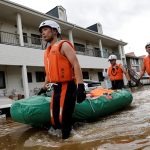
Nepal floods have left hundreds feared trapped inside hydropower tunnels as rescuers use controlled blasts, excavators and specialist teams to reach survivors. Nearly 4,800 people remain missing across Nepal and Tibet.
The search for survivors has entered a desperate new phase after catastrophic Nepal floods swept through communities along the Nepal-China border, killing hundreds and leaving thousands of people unaccounted for.
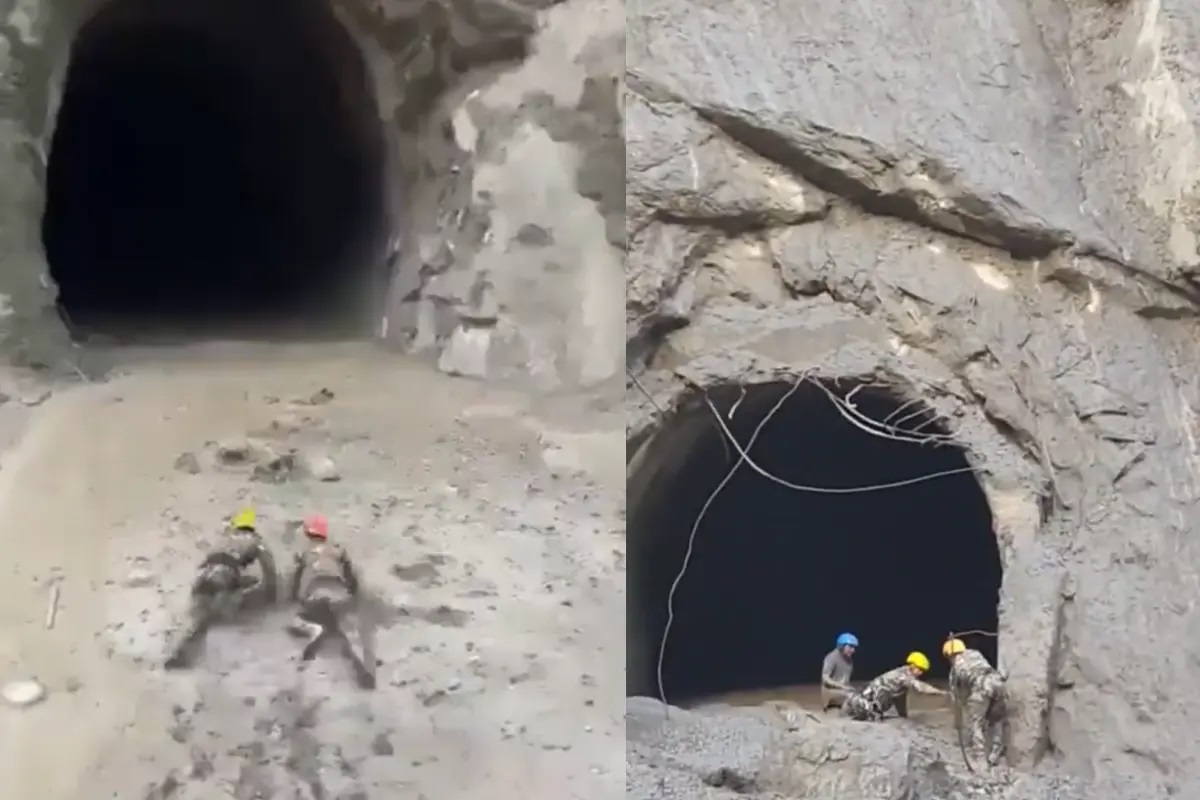
Rescue teams are now concentrating on hydropower projects where workers may still be trapped underground. Soldiers and engineers have begun using controlled explosions, heavy machinery and searchlights to break through enormous deposits of mud, rocks and debris blocking tunnels.

Nepal’s disaster authority reported 903 confirmed deaths and 4,247 missing people on Monday. Chinese authorities reported another 16 deaths and 546 missing in Tibet, bringing the combined reported toll to 919 dead and 4,793 missing. The figures remain fluid as rescuers reach previously isolated areas and authorities continue identifying victims.
But the numbers tell only part of the story.
For families gathered outside rescue centres, hospitals and military bases, the disaster has become a long wait for a phone call, a name on a list or any indication that a missing relative is alive.
Key Points
- Nepal floods have devastated communities along the Nepal-China border.
- Nepal reported 903 deaths and 4,247 missing on August 31.
- Chinese authorities reported 16 deaths and 546 missing in Tibet.
- The combined reported toll reached 919 deaths and 4,793 missing in those official updates.
- 933 hydropower workers were listed among Nepal’s missing.
- Rescue teams are using controlled blasts, excavators and specialist equipment to reach blocked tunnels.
- China has deployed more than 2,100 rescue personnel.
- Authorities and experts are examining the disaster’s links to glacier instability, climate change and early-warning systems.
Nepal Flood Rescue Turns to Hydropower Tunnels
The most urgent rescue effort is unfolding underground.
According to Reuters, 933 hydropower workers are listed among those missing in Nepal. Rescue teams are focusing particularly on projects in Rasuwa and Nuwakot, where tunnels were overwhelmed by mud and debris.
At several sites, rescuers have struggled simply to find a safe route into the tunnels.
Nepal Army teams have been using controlled blasts and excavators to remove the material. Three bodies were recovered after teams entered two tunnels, while other sections remained blocked.

Army spokesperson Raja Ram Basnet told Reuters that the sheer quantity of debris was making access extremely difficult.
The challenge is not simply reaching the tunnels. Rescuers must also work while facing unstable ground, continuing landslide risks and the possibility of further flooding.
AP reported that around 500 workers are believed to be trapped inside large hydropower tunnels, although the exact number and condition of those workers remain uncertain. Some workers reportedly managed to contact people outside when the disaster struck, but rescuers have not established whether those trapped underground remain reachable.
That uncertainty has transformed the rescue into a race against time.
What Caused the Nepal-China Border Floods?
The disaster began on August 26, when a major collapse involving ice and rock occurred in the Langtang Lirung area of the Himalayas.
The collapse triggered an enormous debris flow containing water, ice, rocks and mud. The torrent then moved through river valleys, gaining force and destroying infrastructure and settlements downstream.
The European Space Agency said satellite imagery has helped reveal the scale of the disaster. Its assessment described the event as a rapid slope failure associated with a glacier collapse on Langtang Lirung, with the resulting torrent travelling nearly 100 kilometres downstream. The impact was powerful enough to generate energy equivalent to a 5.2-magnitude earthquake.
The flooding struck areas on both sides of the Nepal-China border, including Nepal’s Rasuwa, Nuwakot, Dhading and other affected districts, as well as the Gyirong area in Tibet.
The speed of the event left little time for people to react.
Thousands Missing as Families Wait for Answers
Among the missing are not only hydropower workers but also security personnel, government officials, travellers and foreign nationals.
Nepal’s latest figures include 592 foreign nationals among those missing. The missing list also includes members of Nepal’s army, police, armed police force, customs and immigration authorities.
China has separately reported 546 people missing in Tibet, including 261 foreign nationals.
The international dimension of the disaster has added another layer of urgency. Nepal’s mountain routes are used by tourists, trekkers and pilgrims, and several foreign nationals were in the affected region when the flood struck.
For families, however, nationality has little meaning in the waiting.
They are searching for husbands, wives, children, parents, colleagues and friends.
Reuters reported scenes of mass burials in Nepal as hundreds of bodies recovered from the disaster were dealt with amid difficult conditions. Some bodies remain unidentified, making the search for missing people even more painful for relatives who have nowhere definitive to turn.
China, India and Other Teams Join the Rescue
The scale of the disaster has pushed Nepal into an increasingly international rescue effort.
China has deployed more than 2,100 personnel, along with vehicles and specialist rescue equipment, according to reports. Chinese and Indian specialists are also supporting operations in Nepal.
India has provided aerial and equipment support, while Chinese and South Korean teams have been involved in specialist efforts around hydropower infrastructure. Reuters reported that Nepal, despite generally preferring to manage rescue operations independently, has relied on neighbouring countries for expertise in the difficult tunnel operations.
The cooperation is significant because the rescue sites are not ordinary disaster zones. Hydropower tunnels cut through steep Himalayan terrain, and their entrances can be buried under enormous quantities of mud and rock after a sudden debris flow.
A Disaster With a Warning Beyond the Death Toll
The catastrophe has also raised difficult questions about climate change, glacier instability and disaster preparedness in the Himalayas.
Reuters reported that China has linked the disaster to climate-related changes, while experts have stressed the need for better monitoring of glaciers, unstable slopes and potential flood pathways. Satellite analysis has shown extensive destruction and continuing hazards in the region.
Nepal has also been pushing for stronger cross-border data sharing and earlier warnings. Reuters reported that Nepali officials have raised concerns about access to information on glacier movement and water levels, while China’s government says it has continued providing meteorological and hydrological data.
That disagreement matters because Himalayan disasters do not respect national borders.
A glacier can collapse in one country, a river can surge through another and communities hundreds of kilometres downstream can have only minutes to respond.
The Human Story Behind the Numbers
It is tempting to view a disaster of this size through statistics: 919 confirmed deaths, 4,793 people missing, hundreds of workers feared trapped underground.
But every number represents a person whose absence has left a family waiting.
The rescue teams digging through hydropower tunnels are therefore doing more than clearing infrastructure. They are searching for people whose families still believe there may be a chance.
That is why the controlled blasts and excavators working through the night have taken on such significance.
Every metre of debris removed could answer a question that thousands of families have been asking since August 26:
Is my loved one still alive?
And while the official casualty figures continue to change, the immediate priority remains unchanged — reach the missing, recover the dead and prevent another surge of water or debris from turning an already historic catastrophe into an even greater tragedy.
Nepal Floods: Frequently Asked Questions
How many people have died in the Nepal floods?
Nepal’s disaster authority reported 903 deaths in Nepal on August 31. Chinese authorities reported 16 deaths in Tibet, bringing the combined reported toll to 919 in those updates. Later AP reporting said the combined toll had surpassed 950, underscoring how quickly casualty figures are changing.
How many people are missing after the Nepal floods?
Nepal reported 4,247 missing people, while Chinese authorities reported another 546 missing in Tibet. Together, those figures total 4,793 missing people.
Why are hydropower workers trapped?
Several hydropower facilities were hit by enormous quantities of mud, rocks and floodwater. Tunnels at projects in Rasuwa and Nuwakot have been blocked, leaving hundreds of workers feared trapped underground.
What caused the Nepal floods?
The disaster followed a major glacier and slope collapse in the Langtang Lirung region on August 26. The collapse triggered a powerful flow of ice, rock, mud and water through Himalayan river valleys.
Are rescue operations still continuing?
Yes. Nepalese forces are continuing tunnel searches and recovery operations with assistance from international teams, including specialists from China and India. Controlled blasting and heavy machinery are being used to clear blocked access points.
Why This Nepal Flood Story Matters
The tragedy is more than a devastating natural disaster in Nepal. It is a warning about how quickly a high-altitude geological event can become a cross-border humanitarian emergency.
The combination of glacier instability, extreme terrain, hydropower infrastructure and limited evacuation time creates a uniquely dangerous environment. The search now underway may determine not only how many people can still be saved, but also what lessons Nepal, China and other Himalayan countries take from the disaster.
As rescue teams continue digging, families are still waiting.
What do you think should be the biggest priority after the Nepal floods — rescuing those still missing, rebuilding destroyed communities, or creating stronger Himalayan early-warning systems?