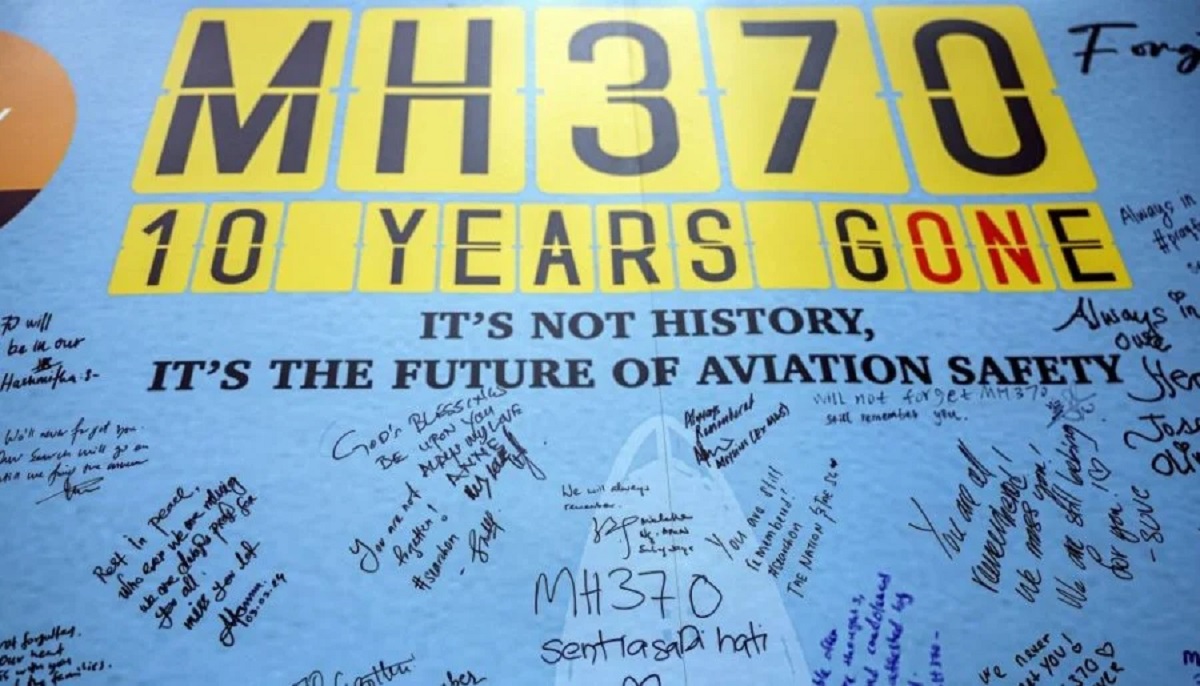
MH370 search resumes as Ocean Infinity scans new seabed area
Kuala Lumpur, Malaysia — Star Struck Times
After more than a decade of unanswered questions, the search for Malaysia Airlines Flight MH370 is set to resume on December 30, 2025, renewing global attention on one of aviation’s most enduring mysteries. The Boeing 777 vanished from radar on March 8, 2014, while en route from Kuala Lumpur to Beijing, carrying 239 passengers and crew. Malaysian authorities confirmed that a new seabed search mission, led by marine robotics firm Ocean Infinity, aims to locate the missing aircraft in a newly identified zone of the southern Indian Ocean—offering fresh hope to families still seeking closure.
Key Highlights
MH370 disappeared on March 8, 2014, with 239 people onboard
Search resumes on December 30 under a “no find, no fee” contract
Ocean Infinity to scan a 5,800-square-mile area of seabed
Mission expected to last up to 55 days, weather permitting
Company to receive $70 million if wreckage is found
Families of victims say hope has never faded
What Happened to Malaysia Airlines Flight MH370
Malaysia Airlines Flight MH370 took off from Kuala Lumpur International Airport shortly after midnight on March 8, 2014, bound for Beijing Capital International Airport. Approximately 40 minutes into the flight, air traffic control lost contact with the aircraft as it crossed from Malaysian to Vietnamese airspace.
Radar data later indicated that the plane had deviated sharply from its planned route, flying west across the Malay Peninsula before heading south into the remote southern Indian Ocean. Despite extensive international search efforts, no confirmed location of the main wreckage has ever been identified.
A 2018 investigation report by Malaysian authorities concluded that the aircraft was manually diverted, ruling out autopilot-only explanations. However, investigators stopped short of assigning responsibility, stating that the exact cause of the diversion remains unknown.
An aviation safety analyst quoted by regional media said, “MH370 represents a rare convergence of technological blind spots and human uncertainty in modern aviation.”
Renewed Search Effort: What’s Different This Time
The upcoming mission will be conducted by Ocean Infinity, a UK-US marine robotics company that previously searched for MH370 in 2018 without success. This time, the company will deploy advanced autonomous underwater vehicles capable of scanning deeper and more precisely than earlier technologies.
Under the newly signed “no find, no fee” agreement with the Malaysian government, Ocean Infinity will only be compensated if credible wreckage is discovered. The company plans to explore a new 5,800-square-mile search zone, identified through updated satellite data analysis and refined drift modeling of debris previously recovered.
The search is expected to run intermittently for 55 days, allowing flexibility around harsh ocean conditions that forced a pause in earlier attempts this year.
Malaysia’s Transport Ministry said in a statement that the government remains “committed to providing answers to the families of those onboard MH370.”
Global and Family Reactions
For families of the victims, the resumption of the search reopens emotional wounds—but also rekindles long-held hope.
Danica Weeks, whose husband Paul Weeks was a passenger, said in a recent statement:
“We have never stopped wishing for answers. I truly hope this next phase gives us the clarity and peace we’ve been desperately longing for since March 8, 2014.”
On social media, many supporters echoed similar sentiments. One user wrote, “Even after all these years, the families deserve the truth.” Another commented, “Technology has come so far—this might finally be the breakthrough.”
Media analysts believe the renewed mission reflects both advances in underwater search capabilities and sustained international pressure to resolve the case, which continues to influence aviation safety protocols worldwide.
Why the MH370 Mystery Still Matters
The disappearance of MH370 reshaped global aviation policies, particularly in aircraft tracking and real-time data transmission. Since 2014, airlines and regulators have implemented new standards to ensure planes can be monitored even over remote oceanic regions.
Experts say locating the wreckage could provide crucial insights into flight safety, human factors, and aircraft security, potentially preventing similar incidents in the future.
Beyond technical lessons, the case remains a humanitarian issue. More than 11 years later, families across China, Malaysia, Australia, Indonesia, India, France, the United States, Canada, Russia, and Taiwan continue to live without definitive answers.
A senior aviation historian noted, “MH370 isn’t just about a missing plane—it’s about accountability, closure, and restoring trust in global air travel.”
Context: Previous Search Efforts
Immediately after the disappearance, one of the largest search operations in aviation history was launched. Between 2014 and 2017, Australia, China, and Malaysia coordinated a massive underwater search covering over 46,000 square miles of seabed in the southern Indian Ocean. Despite unprecedented scale and cost, the effort yielded no confirmed wreckage.
In 2018, Ocean Infinity conducted a separate three-month search, again without success. Scattered debris believed to be from MH370 washed ashore in parts of Africa and Indian Ocean islands, but none led investigators directly to the crash site.
The new mission represents the most targeted search since those earlier efforts.
What Happens Next
If successful, Ocean Infinity’s mission could finally pinpoint the aircraft’s resting place, triggering a formal investigation into the cause of the crash. Any discovery would also likely lead to recovery operations and renewed forensic analysis.
If the search yields no findings, officials have not indicated whether further attempts will be funded. For now, families and observers await December 30 with cautious optimism.
FAQs
Q1: Why is the MH370 search resuming now after so many years? Advances in underwater robotics, improved satellite data analysis, and renewed commitments from both Malaysia and Ocean Infinity have made a targeted new search feasible. Authorities believe refined modeling has narrowed down a more promising search area.
Q2: What does “no find, no fee” mean in this search? Under this agreement, Ocean Infinity will only receive payment—up to $70 million—if the company successfully locates credible wreckage of MH370. This reduces financial risk for the Malaysian government.
Q3: Where will the new search take place? The mission will focus on a newly identified 5,800-square-mile area of the southern Indian Ocean seabed, different from zones covered in earlier searches.
Q4: Have any parts of MH370 ever been found? Yes, several pieces of debris believed to be from MH370 were recovered along African coastlines and Indian Ocean islands, but none confirmed the plane’s exact crash location.
Q5: Could this search finally solve the mystery? While no outcome is guaranteed, experts say this is the most technologically advanced and precisely targeted search attempt to date.
Star Struck Times will continue to monitor this developing story. Readers are encouraged to follow our aviation and global news coverage for verified updates as the search unfolds.
Hello! I'm M Muzamil Shami, the founder and lead editor of Star Struck Times, your trusted source for trending news, entertainment scoops, celebrity gossip, sports highlights, and global headlines.
With a passion for storytelling and journalism, I created this platform to bring you breaking news, viral moments, and deep insights into the worlds of Bollywood, Hollywood, sports, politics, tech, and more — all in one place.