


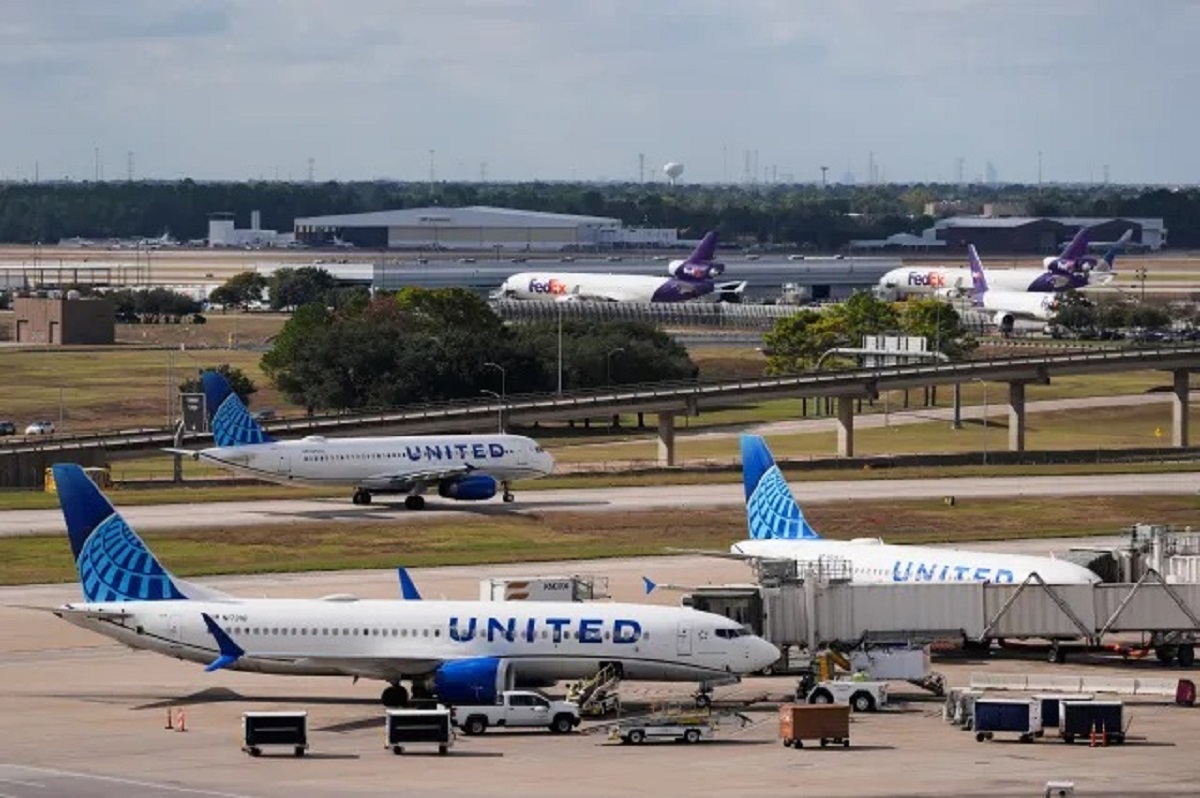
U.S. Government Shutdown Triggers Major Airline & Airport Chaos in Key Travel Hubs
As the longest-ever U.S. government shutdown continues, more than 800 domestic flights have been canceled and around 5,300 delayed across the country, according to industry tracking and Federal Aviation Administration (FAA) directives. Travelers face mounting uncertainty as staffing shortages at control towers compound holiday travel risks.
Washington, D.C. (Star Struck Times) — Travelers across the United States were hit with fresh disruption Friday and Saturday as the Federal Aviation Administration ordered airlines to slash flights amid mounting air-traffic-controller absences stemming from the ongoing federal shutdown. The directive covered 40 major U.S. airports and came as more than 800 cancellations and roughly 5,300 delays were logged by flight-tracking services.

The sharpest blows were felt at hubs including Ronald Reagan Washington National Airport in Washington, D.C., O’Hare International Airport in Chicago and Hartsfield‑Jackson Atlanta International Airport, where queued flights, stretched security lines and brisk cancellations became the new norm. On Friday alone, cancellations passed 1,000 and delays were creeping into the thousands.
According to the FAA, the decision to reduce flights by up to 10 % at those 40 airports (with possible increases to 20 % if shutdown persists) was driven by rising controller absenteeism and safety data showing “breaches” in standard separation between aircraft. Secretary Sean Duffy warned Friday that if the shutdown drags on, “the consequence … is more controllers don’t come to work … we may have to move … maybe to 20 %.”
Passengers described scenes of frustration and uncertainty. “I normally get here about two hours earlier, but due to everything that was going on, I just figured to get here about four hours earlier,” said one flyer at Houston’s George Bush Intercontinental Airport. Another, stranded when her Newark flight was re-scheduled to leave from JFK, quipped, “I’m going to U-Haul and drive a truck cross-country.”
In response, major carriers such as American Airlines and United Airlines moved to rebook impacted passengers automatically and waive change fees. “We’ve had a lot of success rebooking people… the bottom line,” said United’s spokesperson, pointing to efforts to absorb the fall-out.
Still, the broader context remains troubling: the shutdown entered its 38th day Friday, forcing more than 13,000 air traffic controllers and 50,000 security screeners to work without pay. Earlier staff attrition and mandatory overtime had already brought morale to a low ebb.
Airports named in the pilot cut-list span major hubs — from Atlanta, Boston and Dallas–Fort Worth to Denver, Los Angeles, Philadelphia and San Francisco. Many of these airports were grappling with back-to-back delays before the cuts took effect.
Industry analysts say the timing is especially critical, with the upcoming Thanksgiving travel peak putting added pressure on airline networks already operating compressed schedules. If the shutdown continues, travellers should realistically expect further cancellations, longer waits at security, and scattered rebooking options.

“We will continue to monitor data in the system,” Transport Secretary Duffy told reporters. “My No. 1 job is safety.”
Beyond the immediate airline chaos, the knock-on effects could ripple through broader travel and commerce networks: rental car demand spiked, security screening bottlenecks emerged, and some airports flagged the possibility of scaling back private-plane operations around the affected hubs.
For travellers, the message is clear: Check your flight early, allow extra time at the airport, and consider alternative logistics if your schedule is tight. Airlines are offering refunds and rebooking, but seat availability may become more limited if further cuts roll out.
FAQs
Q: Why are so many U.S. flights being canceled and delayed?
A: The cancellations and delays stem from flight-reductions ordered by the FAA at 40 major U.S. airports, triggered by staffing shortages among air traffic controllers and other essential workers during the federal government shutdown.
Q: How many flights are affected?
A: So far more than 800 flights have been canceled and around 5,300 delayed nationwide. Some sources indicate cancellations may exceed 1,000 on peak days.
Q: Is it still safe to fly?
A: Yes, the FAA and Transportation Secretary say the air-travel system remains safe. The flight-reduction decision was made as a precaution based on data showing system stress.
Q: What should travellers do now?
A: Check your airline for schedule updates, arrive earlier than usual, allow extra time at security, and consider alternate routing or dates if possible. Airlines are offering fee-free changes.
Q: Could more flights be canceled?
A: Yes. The FAA has warned that cuts could escalate to 15–20 % of flights at the 40 impacted airports if staffing issues persist.
If your travel plans include U.S. airports, check with your airline now and stay alert for schedule changes. Consider alternate travel dates if you can and subscribe for updates as the situation evolves.



Thank you for your sharing. I am worried that I lack creative ideas. It is your article that makes me full of hope. Thank you. But, I have a question, can you help me?