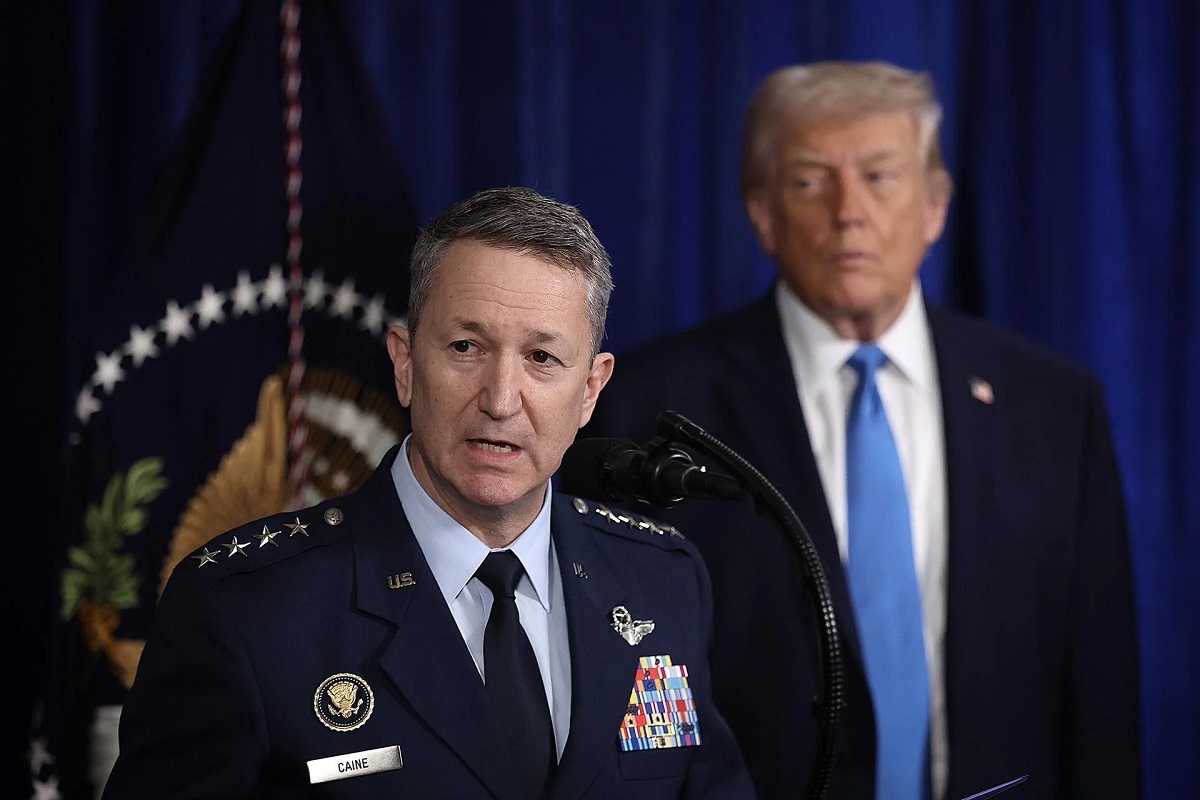
A tense standoff: Did General Dan Caine block an Iran nuclear strike?
Washington, D.C., May 15, 2026 — Star Struck Times
The geopolitical landscape was rocked today by explosive allegations from former CIA analyst Larry Johnson, who claims that President Donald Trump seriously considered deploying nuclear weapons against Iran during a high-stakes emergency meeting. According to Johnson, the catastrophic proposal was only derailed when General Dan Caine, Chairman of the Joint Chiefs of Staff, reportedly “shot down” the idea in a tense Oval Office confrontation.
Key Highlights
Nuclear Escalation: Former CIA analyst Larry Johnson alleges Trump pushed for a “nuclear option” against Iranian targets.
The “Caine” Veto: General Dan Caine reportedly blocked the move, telling the President “Absolutely not” during a heated exchange.
Pentagon Tensions: Reports suggest Caine left a mid-April meeting visibly shaken, leading to rumors of potential resignations.
Public Denial: President Trump has since pivoted, labeling reports of military hesitation as “100% incorrect” and “Fake News.”
Ongoing Conflict: These leaks emerge as the U.S. and Iran remain locked in a fragile ceasefire following Operation Epic Fury.
Inside the Oval Office: The Nuclear Proposal That Shook the Pentagon
The allegations center around an emergency meeting held on or around April 18, 2026. Larry Johnson, speaking on a viral podcast appearance, described a “blow up” of historic proportions. He claims Trump was “seriously entertaining” the use of a low-yield nuclear strike to end the Iranian stalemate permanently.
“Trump was asking about the use of a nuclear weapon,” Johnson stated in a Friday interview with ANI. “And General Caine, to his credit, said, ‘Absolutely not’ — very firmly.”
While the President serves as the Commander-in-Chief, the operational chain for a nuclear strike must pass through the Secretary of War (Pete Hegseth) and STRATCOM. Johnson suggests that while Caine does not have a formal “veto,” his refusal to provide military backing for the order created a constitutional and ethical wall that Trump was forced to respect.
What Other Reports Missed: The “Midnight Hammer” Context
While mainstream outlets are focusing on the drama of the “No,” Star Struck Times has identified a critical piece of the puzzle: the fallout from Operation Midnight Hammer.
Earlier in 2026, General Caine led a precision campaign that successfully dismantled much of Iran’s nuclear infrastructure without resorting to atomic war. Insiders suggest Caine’s resistance to a nuclear strike isn’t just moral—it’s tactical. Having already “owned the skies” and decimated Iran’s air defense, Caine reportedly argued that a nuclear strike would be a “redundant catastrophe” that would alienate every U.S. ally and turn a “won war” into a global pariah state scenario.
“General Caine isn’t expressing a political view; he’s making a realistic military assessment of what success looks like,” says one defense analyst. “He knows that once you cross the nuclear threshold, there is no ‘deal’ left to make.”
Public Reaction: Shock and Skepticism
The digital world has been split by the report. On X (formerly Twitter), the hashtag #NuclearTrump began trending within minutes of the report.
“If Caine really stood up to him, he’s a national hero. We were seconds away from WWIII,” wrote one viral post with over 50k likes.
Contrastingly, Trump supporters on Truth Social dismissed the claims as a “Deep State hit job” designed to weaken the President’s leverage as ceasefire talks in Geneva approach.
Trump himself took to social media to fire back, stating: “General Caine, like all of us, would like not to see War but, if a decision is made… it will be something easily won.”
What Happens Next
The ceasefire is currently described by the White House as being on “life support.” With the Strait of Hormuz still effectively blocked and energy markets in a tailspin, the pressure on the administration to find a “final solution” to the Iran crisis is mounting.
All eyes now turn to the Geneva Summit scheduled for next Thursday. If negotiations fail, the question remains: will the “nuclear option” stay off the table, or will the friction between the White House and the Joint Chiefs lead to a leadership shakeup at the Pentagon?
FAQ: The Trump-Iran Nuclear Controversy
Did Trump actually order a nuclear strike on Iran?
According to ex-CIA analyst Larry Johnson, Trump “seriously entertained” and asked about the option, but a formal order was never executed due to immediate pushback from top military brass.
Who is General Dan Caine?
General Daniel “Razin” Caine is the Chairman of the Joint Chiefs of Staff. He previously led Operation Midnight Hammer and is considered the primary military advisor to the President.
What was the “Midnight Hammer” operation?
It was a precision military campaign in late 2025/early 2026 aimed at destroying Iran’s nuclear development infrastructure using conventional, high-tech weaponry.
Is there a ceasefire between the U.S. and Iran right now?
Yes, a fragile ceasefire was established following Operation Epic Fury, but it is currently under immense strain due to disagreements over the Strait of Hormuz.
Can a General legally “veto” a President’s nuclear order?
No. However, a General can refuse to carry out an order they deem illegal or resign in protest, which often creates enough political friction to halt the process.
Hello! I'm M Muzamil Shami, the founder and lead editor of Star Struck Times, your trusted source for trending news, entertainment scoops, celebrity gossip, sports highlights, and global headlines.
With a passion for storytelling and journalism, I created this platform to bring you breaking news, viral moments, and deep insights into the worlds of Bollywood, Hollywood, sports, politics, tech, and more — all in one place.