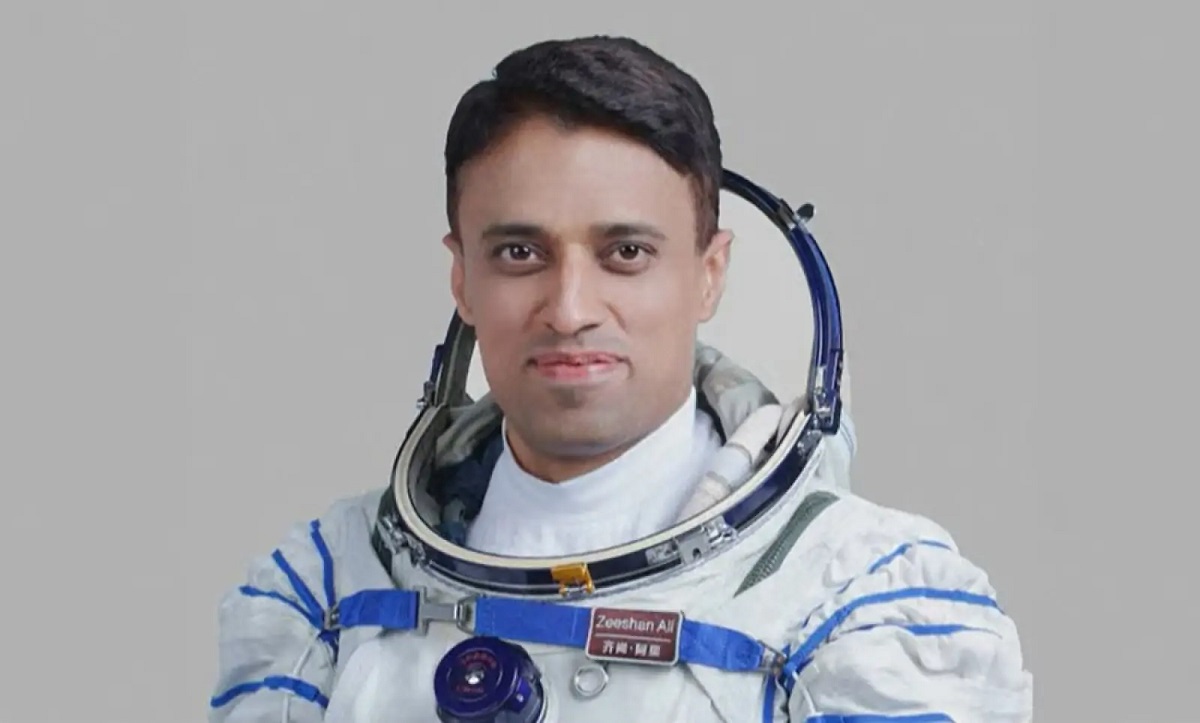
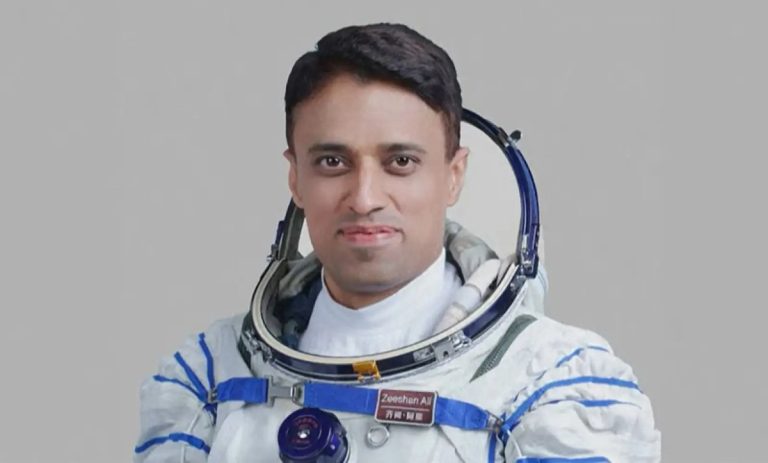
Pakistan’s Muhammad Zeeshan Ali has been officially named a crew member of China’s Shenzhou-24 space mission, marking a historic milestone as he prepares to become the first Pakistani astronaut to travel into orbit and the first foreign astronaut to visit China’s Tiangong space station. The China Manned Space Agency (CMSA) announced the three-member crew on Tuesday, with the spacecraft scheduled to launch on Wednesday, November 25, from the Jiuquan Satellite Launch Center in northwestern China. Reuters+2
Key Points
Historic achievement: Muhammad Zeeshan Ali is set to become Pakistan’s first astronaut in space and the first foreign astronaut to visit China’s Tiangong space station.
Mission date: Shenzhou-24 is scheduled to launch on November 25, 2026, at 8:18 a.m. Beijing time (5:18 a.m. Pakistan time).
International crew: Ali will fly alongside Chinese astronauts Tang Hongbo and Wu Yi.
Mission responsibilities: Ali will serve as a payload specialist during a short-duration visit to the space station.
Return journey: He is expected to return to Earth aboard the Shenzhou-23 spacecraft after approximately one week in orbit. Reuters+2
Zeeshan Ali’s Historic Selection for Shenzhou-24
The CMSA confirmed that Tang Hongbo will command the Shenzhou-24 mission, while Wu Yi will serve as flight engineer. Ali has been assigned the role of payload specialist, making him the first non-Chinese astronaut selected to participate in a crewed mission to China’s Tiangong space station.
The launch is scheduled for 8:18 a.m. Beijing time on November 25, equivalent to 5:18 a.m. in Pakistan. The spacecraft will be carried into orbit by a Long March-2F rocket from the Jiuquan Satellite Launch Center.
According to Reuters, the space agency announced that the crew was in good condition and launch preparations had been completed. However, the scheduled launch remains subject to operational conditions. Reuters+2
What Will Pakistan’s First Astronaut Do in Space?
Ali’s assignment is different from the regular six-month missions undertaken by China’s Tiangong station crews. Rather than joining a full-length station rotation, he will participate as a payload specialist on a short-term mission.
He is expected to spend approximately one week aboard the orbital laboratory before returning to Earth with members of the outgoing Shenzhou-23 crew.
During the mission, the astronauts will undertake space science research and other station-related activities. The Shenzhou-24 flight will also support the ongoing crew rotation and operational work aboard Tiangong. South China Morning Post+2
This distinction matters: Ali’s selection represents Pakistan’s first human spaceflight achievement, but it does not mean Pakistan has independently developed a crewed spacecraft or launched a national astronaut programme capable of sending people into orbit.
Pakistan-China Space Cooperation Behind the Mission
Ali’s selection follows a space cooperation agreement signed between Pakistan’s Space and Upper Atmosphere Research Commission (SUPARCO) and the China Manned Space Agency in February 2025.
Under the agreement, Pakistani candidates were to receive astronaut training in China, with one eventually selected to participate in a mission to the Tiangong space station.
Muhammad Zeeshan Ali and Khurram Daud were selected for the training programme. Both underwent preparation in China, but Ali was ultimately chosen for the Shenzhou-24 flight.
The partnership reflects the expanding relationship between Islamabad and Beijing, extending their cooperation beyond traditional areas such as infrastructure, trade and defence into scientific research and space exploration. Dawn+2
Why This Mission Matters Beyond a National Milestone
China’s decision to include a Pakistani astronaut is significant for another reason: it opens the Tiangong programme to its first foreign visitor on a crewed mission.
China has developed its own space station after being excluded from participation in the International Space Station programme. Its cooperation with Pakistan demonstrates how Beijing is seeking international partnerships as it expands its human spaceflight activities.
For Pakistan, the mission provides practical experience in astronaut training, international scientific collaboration and human spaceflight operations. However, the long-term impact will depend on whether the partnership leads to further training opportunities, research projects and future astronaut participation.
Ali’s flight is therefore more than a symbolic achievement. It offers Pakistan an opportunity to build technical experience through cooperation with one of the world’s major space programmes.
As the scheduled launch approaches, attention will turn to the successful liftoff, Ali’s arrival aboard Tiangong and the scientific work planned during his short stay in orbit.Reuters+2
Hello! I'm M Muzamil Shami, the founder and lead editor of Star Struck Times, your trusted source for trending news, entertainment scoops, celebrity gossip, sports highlights, and global headlines.
With a passion for storytelling and journalism, I created this platform to bring you breaking news, viral moments, and deep insights into the worlds of Bollywood, Hollywood, sports, politics, tech, and more — all in one place.