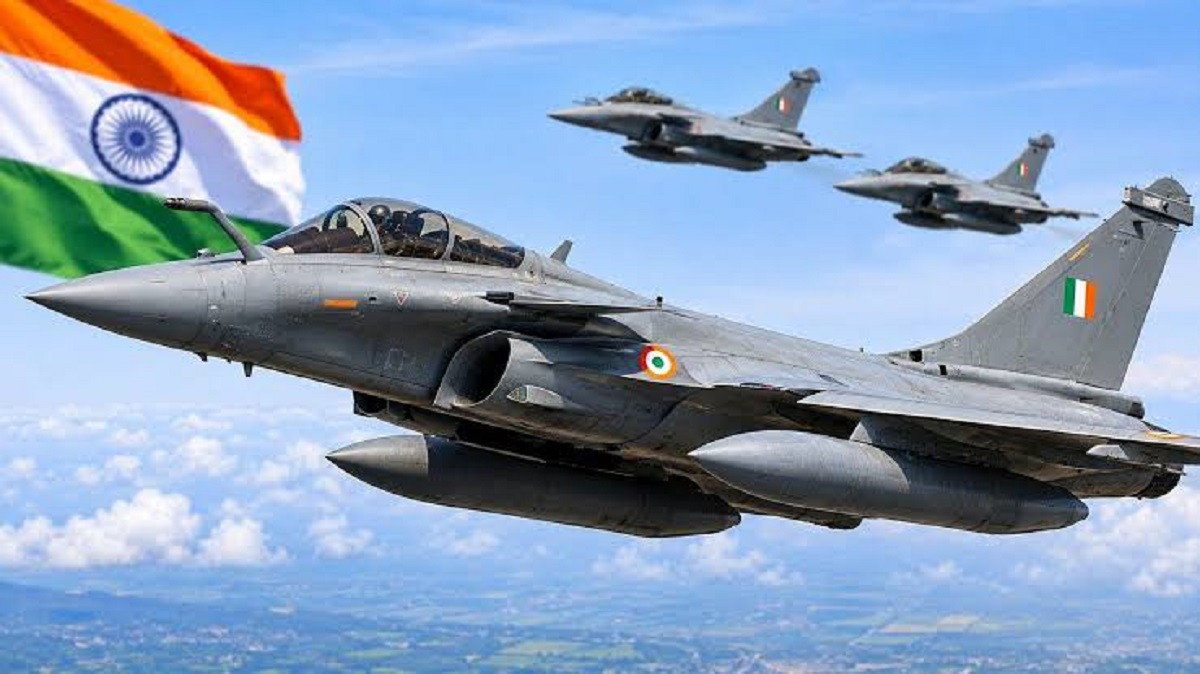
FlightGlobal's latest directory lists 32 active Indian Rafale jets against the 36 originally acquired, prompting questions from a former IAF vice-chief.
A new international military aircraft directory has listed 32 active Rafale fighter jets in the Indian Air Force (IAF), four fewer than the 36 India originally acquired from France. The figures, published in FlightGlobal’s 2027 World Air Forces directory, have reignited questions about the Indian Rafale fleet and revived debate over aircraft losses during the May 2025 India-Pakistan conflict. However, a former Indian Air Force vice-chief has strongly disputed the assessment, saying the reported figure is incorrect.
Key Points
FlightGlobal’s 2027 World Air Forces directory lists 32 active Indian Rafale fighter jets against the 36 originally acquired.
The previous edition of the directory listed 35 Rafales in the Indian Air Force inventory.
Former IAF Vice Chief Air Marshal Narmdeshwar Tiwari (retd) called the latest figures “patently false.”
The directory does not explain why four aircraft are absent from its active count.
The reported difference does not independently establish that four Rafales were destroyed during Operation Sindoor.
FlightGlobal Reports 32 Active Rafale Jets in Indian Air Force Inventory
The controversy follows the publication of FlightGlobal’s latest World Air Forces directory, an annual assessment of military aircraft operated by air forces around the world.
Under its Indian Air Force inventory, the publication lists 32 Rafale DH/EH fighter jets as active. India originally acquired 36 aircraft from French manufacturer Dassault Aviation under a 2016 agreement.
The difference has attracted attention because FlightGlobal’s previous directory, published in 2025, listed 35 active Rafales. The latest assessment therefore represents a reduction of three aircraft from the previous published count, while leaving a four-aircraft gap against India’s original acquisition.
Importantly, the directory does not provide a detailed explanation for the revised figure. It does not identify the four aircraft as destroyed, written off or permanently withdrawn from service.
Former IAF Vice Chief Rejects the Four Missing Rafale Jets Claim
Air Marshal Narmdeshwar Tiwari (retd), who served as the Indian Air Force’s vice-chief during Operation Sindoor, has challenged the reliability of the latest assessment.
Reacting to the FlightGlobal figures in a post on X, Tiwari described them as “patently false” and urged the publication to reassess its information sources.
He also questioned earlier claims involving specific Rafale aircraft tail numbers. According to Tiwari, aircraft previously identified in reports as having been shot down subsequently participated in international military exercises.
He further referred to false social media claims that Squadron Leader Shivangi Singh, an Indian Rafale pilot, had been captured during the May 2025 conflict.
His response adds an important qualification to the controversy: an external aircraft inventory estimate should not automatically be treated as confirmation of combat losses.
What Happened During Operation Sindoor?
The debate over the four Rafales is closely connected to the military confrontation between India and Pakistan in May 2025, known as Operation Sindoor.
Pakistan claimed that its air force had shot down Indian fighter aircraft, including Rafales. India initially rejected Pakistan’s account but later acknowledged that it had suffered aircraft losses without publicly confirming the full number or identifying every aircraft involved.
There is independent reporting that at least some Indian aircraft were lost. In August 2025, Reuters reported that India’s Chief of Air Staff, Air Chief Marshal A.P. Singh, acknowledged Indian aircraft losses while discussing the confrontation. He also rejected Pakistan’s overall account of the number of Indian aircraft destroyed.
Separately, French Air Force Chief General Jérôme Bellanger said he had seen evidence pointing to three Indian aircraft losses: one Rafale, one Sukhoi and one Mirage 2000.
These earlier statements matter because they establish a distinction between acknowledged or independently reported aircraft losses and the specific claim that four Rafales were destroyed.
Neither those statements nor FlightGlobal’s latest inventory entry establishes that four Rafales were lost in the conflict.
Why the 32-versus-36 Difference Matters
There is another important detail in the controversy. An aircraft acquisition figure and an active-fleet estimate do not necessarily describe the same thing.
The 36 figure represents India’s original Rafale acquisition for the Indian Air Force. FlightGlobal’s 32 figure represents the number it currently categorises as active. A difference between those figures requires an explanation, but it does not reveal the operational or historical status of every aircraft.
The Hindu has also reported that an Indian Air Force maintenance-support tender issued in June 2026 covered all 36 Rafale aircraft. This provides relevant context for questioning the reduced inventory estimate, although a maintenance contract alone cannot establish that all 36 aircraft were simultaneously operational.
The key unanswered question is why FlightGlobal’s latest directory lists fewer active Rafales than India’s original acquisition figure and what information supports that assessment.
Until the publication provides further clarification or the Indian authorities release a verifiable fleet breakdown, the four-aircraft discrepancy should not be presented as proof of four Rafale shootdowns.
For now, the 32-aircraft figure remains a disputed inventory assessment, while the exact explanation for the difference remains publicly unresolved.
Hello! I'm M Muzamil Shami, the founder and lead editor of Star Struck Times, your trusted source for trending news, entertainment scoops, celebrity gossip, sports highlights, and global headlines.
With a passion for storytelling and journalism, I created this platform to bring you breaking news, viral moments, and deep insights into the worlds of Bollywood, Hollywood, sports, politics, tech, and more — all in one place.