New Delhi, October 13, 2026
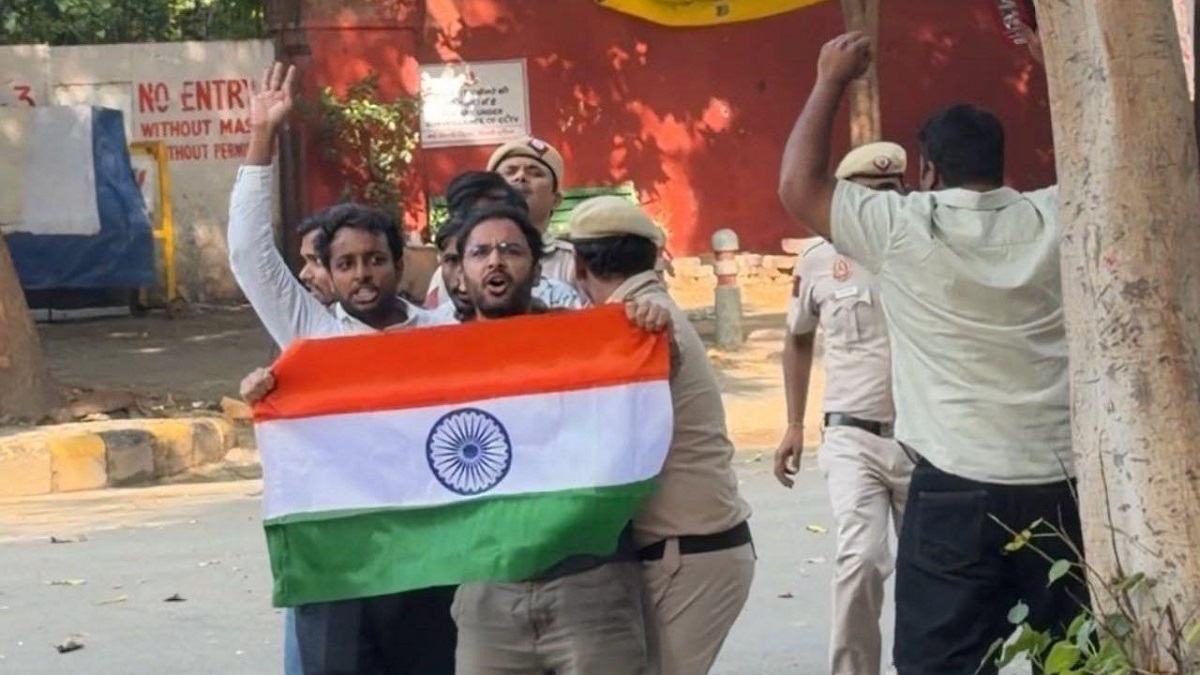
Cockroach Janta Party (CJP) leaders Ashutosh Ranka, Saurav Das and Ajinkya Shinde were detained by Delhi Police on Tuesday after protesters carrying India’s national flag climbed over barriers to enter Jantar Mantar, escalating a dispute over restrictions on demonstrations at the Delhi protest site. The action came a day after authorities withdrew Jantar Mantar’s designation as an authorised protest venue, according to Indian media reports.
Key Points
- Ashutosh Ranka, Saurav Das and Ajinkya Shinde were among the CJP members detained.
- Videos shared by CJP founder Abhijeet Dipke showed protesters carrying the Indian flag and climbing over a gate.
- The demonstration concerned allegations of irregularities in electoral rolls and demands for Chief Election Commissioner Gyanesh Kumar to resign.
- Authorities have designated alternative protest venues, including Ramlila Ground and Burari Ground, according to reports.
What Happened at Jantar Mantar?
Videos circulated by CJP founder Abhijeet Dipke showed Ranka, Das and other supporters entering the barricaded area while carrying the tricolour and raising slogans. Police subsequently detained the group, according to India Today and NDTV.

The confrontation followed a change in the status of Jantar Mantar, a longstanding location for public demonstrations in the Indian capital. Delhi Police had removed its designation as a protest site and identified other locations for demonstrations, including Ramlila Ground, Burari Ground and the CBD Ground in east Delhi, The New Indian Express reported.
The immediate dispute is therefore about more than the detention of individual activists: it also concerns where demonstrators can gather to challenge government institutions and how authorities enforce restrictions around public protests.
Why Is CJP Demanding the Election Chief’s Resignation?
The group’s demonstration is linked to controversy over revisions to electoral rolls and allegations of voter deletions. CJP members have called for Chief Election Commissioner Gyanesh Kumar to resign, arguing that the changes raise concerns about electoral fairness.
The allegations remain contested. Reuters reported that the Election Commission has denied claims of bias, while the ruling Bharatiya Janata Party (BJP) has rejected criticism of the voter-list changes. Allegations that revisions disproportionately affect particular communities should not be treated as established findings without supporting evidence.
The wider context is important because the dispute involves both electoral administration and access to public spaces for political dissent. A restriction on a particular protest venue does not, by itself, establish that all demonstrations are prohibited; authorities have identified alternative sites, while activists have criticised the change.
What Happens Next?
India Today reported that police were considering whether to register a First Information Report (FIR) over the entry into the restricted site, but there was no immediate confirmation that one had been filed.
The available reports do not establish the final legal status of all those detained or confirm whether any formal charges followed. Those details remain important in assessing the consequences of Tuesday’s confrontation.

For now, the incident highlights the growing tension surrounding the CJP-led campaign over electoral rolls and the practical limits placed on demonstrations in central Delhi. Further developments will depend on police action, any legal proceedings and whether the group is permitted to protest at an alternative venue.