Donald Trump faces backlash over AI-generated Jesus-like image
Washington, United States, April 14, 2026, 10:00 AM — Star Struck Times
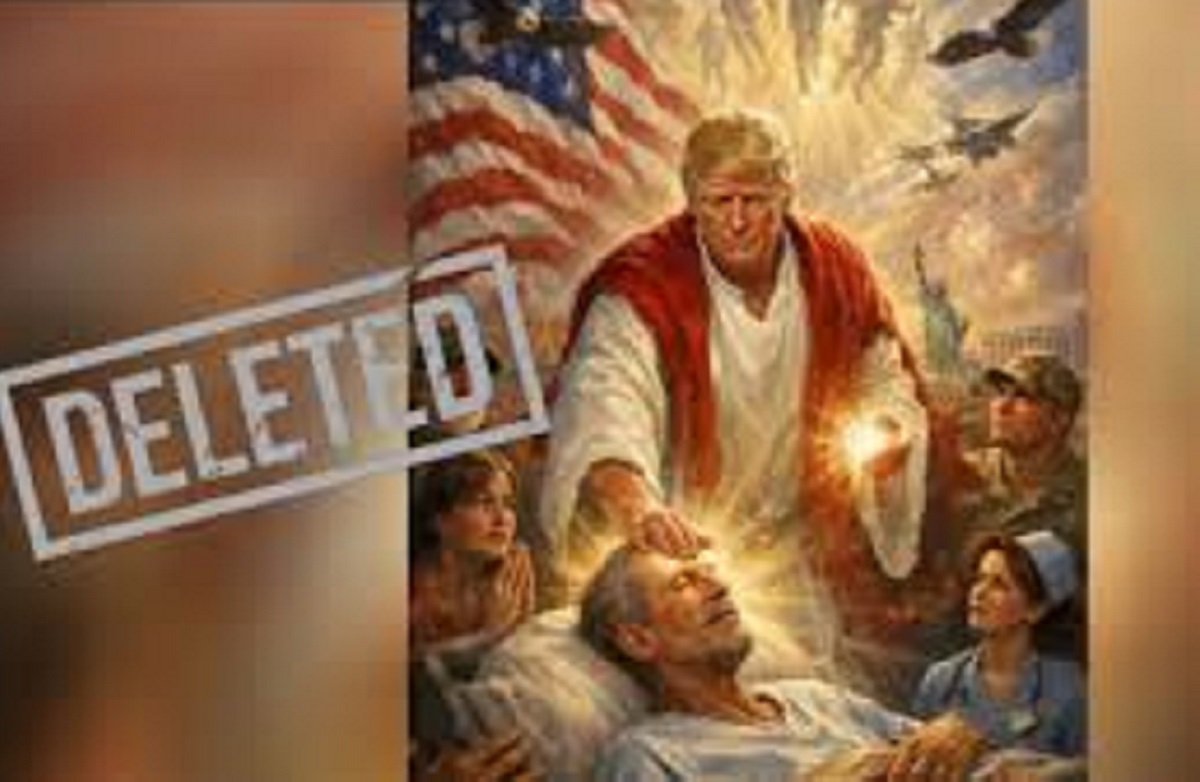
In a rapidly escalating political and cultural controversy, Donald Trump deleted a controversial AI-generated image from his Truth Social account after facing intense backlash from religious leaders, political commentators, and the public. The image, posted late Monday, appeared to depict Trump in a Jesus-like form, sparking accusations of sacrilege and self-glorification. The incident has reignited debates around political messaging, AI manipulation, and the boundaries of symbolism in modern leadership.
Donald Trump posted an AI-generated image resembling a Jesus-like figure
The post triggered backlash from religious communities and political critics
Trump later deleted the image but defended his intentions
He claimed the image represented a doctor helping Red Cross workers
The controversy comes amid ongoing tensions with religious institutions
What Happened: The Viral Image That Sparked Outrage
The controversy began when Trump shared an AI-generated image on Truth Social that showed him wearing flowing robes, placing a glowing hand on a sick individual in a hospital bed. The imagery closely resembled traditional depictions of Jesus Christ, complete with symbolic elements like a radiant aura.
The background featured strong patriotic imagery—an American eagle, fighter jets, and the Statue of Liberty—blending nationalism with religious symbolism. Critics quickly interpreted the post as an attempt to portray himself as a savior figure.
Within hours, the image went viral across platforms, drawing millions of views and sparking heated debates.
Public & Religious Reaction: “Deeply Offensive”
The backlash was swift and widespread.
Religious leaders from multiple denominations expressed concern. A spokesperson cited by Al Jazeera described the image as “deeply offensive and inappropriate for a public figure.”
Even conservative commentators, typically aligned with Trump, voiced discomfort. According to The Washington Post, this marked a rare moment where Trump faced criticism from within his ideological base.
Social media reactions were equally intense:
“This crosses a line. Faith isn’t a campaign tool.” — Twitter user “Is this satire or something more troubling?” — Facebook comment
The controversy was amplified further because it came shortly after Trump publicly criticized Pope Leo XIV, calling him “weak.”
Trump’s Defense: “It Was Misinterpreted”
Despite deleting the post, Trump stood firm in his explanation.
Speaking to reporters, he insisted the image was misunderstood:
“It wasn’t a depiction. I thought it was me as a doctor helping Red Cross workers. Only fake news could twist it that way.”
He emphasized his support for humanitarian efforts, particularly referencing the Red Cross.
However, critics argue that the visual symbolism was too explicit to be accidental.
The Bigger Issue: AI in Political Messaging
This incident highlights a growing concern—the use of AI-generated content in politics.
Experts warn that AI imagery blurs the line between satire, propaganda, and reality.
Expert Insight: Dr. Elaine Morris, a digital ethics analyst, notes:
“AI visuals are powerful because they bypass rational analysis and trigger emotional responses instantly. When used by influential figures, the impact is magnified.”
Trump has previously used AI-generated images for engagement, but this marks one of the most controversial instances.
Context: A Pattern of Provocative Symbolism
This is not the first time Trump has sparked controversy through symbolic messaging.
Historically, political leaders have used imagery to project strength or moral authority. However, directly invoking religious iconography—especially figures like Jesus Christ—remains highly sensitive.
The incident also reflects a broader trend where political communication increasingly overlaps with internet culture, memes, and viral content strategies.
Unique Angle: Why This Matters More Than It Seems
Beyond the immediate outrage, this controversy reveals a deeper shift:
Politics is becoming visually driven rather than policy-driven
AI tools are enabling rapid, unfiltered content creation
Public trust is increasingly influenced by emotional reactions
In essence, this isn’t just about one image—it’s about how leaders shape perception in the digital age.
Watch: Full Breakdown of the Trump AI Image Controversy
After the video went viral, reactions intensified across political, religious, and media circles, pushing the controversy into a global debate.
What Happens Next
The fallout from this controversy is likely to continue in several ways:
Increased scrutiny of AI-generated political content
Possible calls for regulation or platform moderation
Continued tension between Trump and religious institutions
Whether this incident impacts Trump politically remains to be seen, but it has undeniably added another layer to the evolving relationship between technology, media, and leadership.
FAQs
1. Why did Donald Trump delete the AI image?
He deleted it after facing widespread backlash but claimed it was misinterpreted.
2. Was the image meant to depict Jesus?
Critics believe so, but Trump insists it showed him as a doctor helping others.
3. Why did the image cause controversy?
Because it appeared to use religious symbolism, which many found offensive.
4. Has Trump used AI images before?
Yes, he has previously shared AI-generated content on social media.
5. What are experts saying about AI in politics?
Experts warn it can manipulate emotions and blur reality, making it risky.
Hello! I'm M Muzamil Shami, the founder and lead editor of Star Struck Times, your trusted source for trending news, entertainment scoops, celebrity gossip, sports highlights, and global headlines.
With a passion for storytelling and journalism, I created this platform to bring you breaking news, viral moments, and deep insights into the worlds of Bollywood, Hollywood, sports, politics, tech, and more — all in one place.