Donald Trump AI image controversy sparks backlash worldwide
Washington, United States — April 14, 2026, 11:30 AM — Star Struck Times
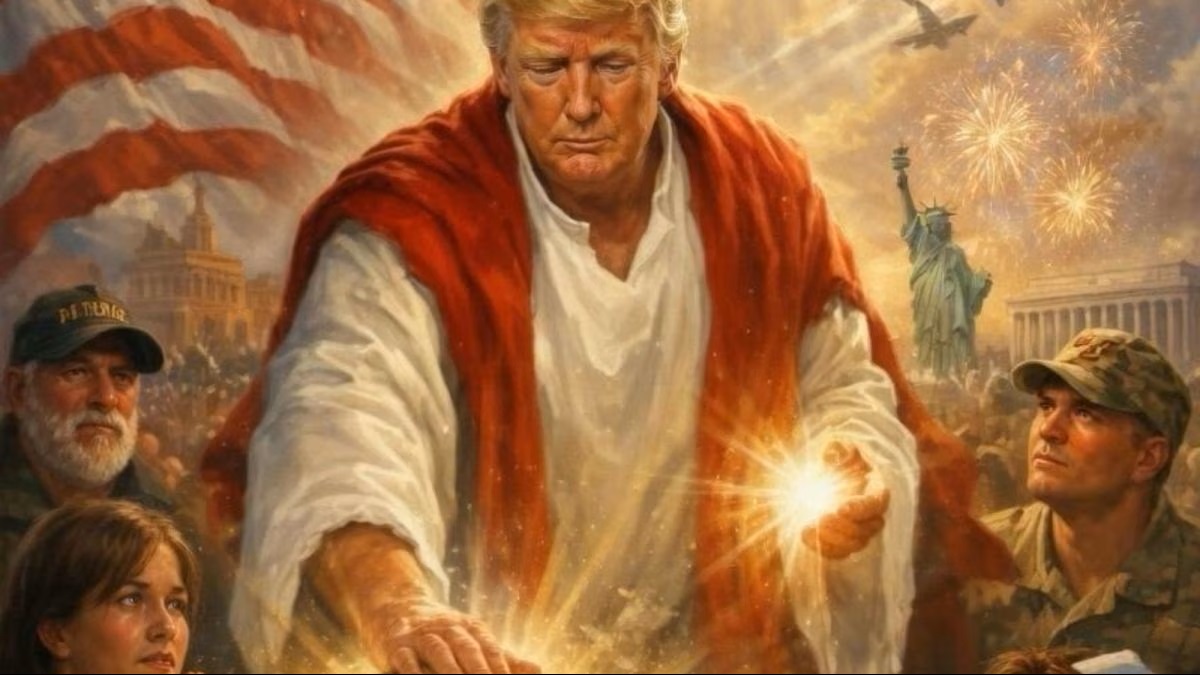
A fresh political and cultural storm has erupted after Donald Trump shared an AI-generated image portraying himself as a Christ-like figure, triggering outrage across religious and political circles. The controversial post, uploaded on April 12 to Truth Social, came shortly after Trump publicly criticized Pope Leo XIV, intensifying an already tense feud. The incident is rapidly becoming a defining flashpoint in debates around artificial intelligence, religion, and political messaging.
Donald Trump posted an AI-generated “Messiah-style” image on April 12, 2026
The post followed sharp criticism of Pope Leo XIV
Religious leaders called the image “disrespectful” and “blasphemous”
Even allies like Marjorie Taylor Greene publicly condemned it
The controversy is fueling debates on AI ethics and political messaging
Social media reactions include both backlash and calls to delete the post
The Post That Sparked Global Outrage
The controversy began when Trump uploaded an AI-generated image showing himself in flowing robes, appearing to perform a healing miracle—imagery strongly associated with Jesus Christ.
The timing amplified the backlash. Just minutes earlier, Trump had criticized Pope Leo XIV, calling him “weak on crime” and “terrible for foreign policy.” The juxtaposition of political attack and religious symbolism immediately triggered intense reactions.
According to reports from BBC and Al Jazeera, the image spread rapidly across social media platforms, igniting debates about respect for religious figures and the boundaries of AI-generated content in politics.
Religious Leaders and Allies Push Back
The response from religious communities was swift and pointed.
Archbishop Paul S. Coakley expressed disappointment, stating:
“The Pope is not a political rival. He is a spiritual leader who speaks for the care of souls.”
Meanwhile, Trump’s criticism didn’t just come from opponents—it also drew rare public disapproval from within his own political camp.
Congresswoman Marjorie Taylor Greene wrote:
“This comes after attacking the Pope and then portraying himself as replacing Jesus… I completely denounce this.”
This internal criticism signals a deeper fracture, as even loyal supporters question the tone and implications of the post.
Why This Controversy Matters in 2026
This incident is not just about one image—it reflects a larger shift in how technology intersects with politics and religion.
AI-generated visuals are becoming increasingly powerful tools for communication. However, experts warn they also blur ethical lines.
Dr. Samuel Reyes, a media ethics analyst, explains:
“When political figures use AI to create symbolic or religious imagery, it raises serious concerns about manipulation, influence, and cultural sensitivity.”
The controversy highlights three key issues:
AI misuse in political messaging
Religious sensitivity in public discourse
Erosion of traditional boundaries in leadership behavior
The Vatican’s Response and Rising Tensions
The Vatican has taken a measured but firm stance.
Pope Leo XIV responded by reaffirming his role as a promoter of peace and Gospel values, avoiding direct escalation but clearly distancing himself from political confrontation.
This comes amid growing tensions between Trump and the Vatican over global issues, including foreign policy and conflict positions.
According to The Guardian, this clash represents a broader ideological divide between nationalist politics and global religious leadership.
The Social Media Divide: Support vs Backlash
Online reactions have been sharply divided.
Critics labeled the image:
“Deeply offensive”
“Blasphemous”
“Crossing a dangerous line”
At the same time, some supporters defended Trump, arguing that the image was symbolic or satirical.
However, a notable trend has emerged—many users who typically support Trump are urging him to remove the post, suggesting the controversy may have broader implications for his public image. Watch the full Trump AI image Controversy 2026 Video Explained (Full Breakdown), where experts explain the backlash, religious reaction, and political impact.
Trump AI Image Controversy 2026 Video Explained (Full Breakdown)
The video highlights key reactions and global political impact of the controversy.
The Bigger Picture: Politics Meets Artificial Intelligence
This controversy may mark a turning point in how AI is regulated in political communication.
Governments worldwide are already discussing policies to control AI-generated misinformation. Incidents like this could accelerate those efforts.
What makes this case unique is the blending of:
Religious symbolism
Political messaging
AI-generated imagery
This combination creates a powerful—and potentially dangerous—communication tool.
What Happens Next?
The fallout is still unfolding.
Key developments to watch:
Whether Trump removes or addresses the post
Possible responses from religious institutions globally
Renewed discussions on AI regulation in politics
Impact on Trump’s political standing
As the debate intensifies, one thing is clear: this incident has pushed the boundaries of political expression into uncharted territory.
FAQs
1. Why is Donald Trump facing backlash in 2026? He posted an AI-generated image portraying himself as a Christ-like figure, which many found offensive.
2. What did Trump say about Pope Leo XIV? He criticized the Pope as “weak on crime” and “terrible for foreign policy.”
3. What was the reaction from religious leaders? They condemned the image as inappropriate and emphasized respect for religious figures.
4. Did Trump’s supporters criticize him? Yes, even allies like Marjorie Taylor Greene publicly denounced the post.
5. What does this mean for AI in politics? It raises serious concerns about ethical use and potential regulation of AI-generated content.
Hello! I'm M Muzamil Shami, the founder and lead editor of Star Struck Times, your trusted source for trending news, entertainment scoops, celebrity gossip, sports highlights, and global headlines.
With a passion for storytelling and journalism, I created this platform to bring you breaking news, viral moments, and deep insights into the worlds of Bollywood, Hollywood, sports, politics, tech, and more — all in one place.