RIYADH, Saudi Arabia | October 10, 2026
The Saudi Arabia-Yemen conflict has intensified after attacks targeting Riyadh’s King Khalid International Airport killed three Saudi nationals, damaged an aircraft operated by national carrier Saudia, and disrupted international flights. The escalation has prompted wider aviation safety warnings, while Pakistan has reaffirmed its commitment to Saudi Arabia’s security at the United Nations Security Council.
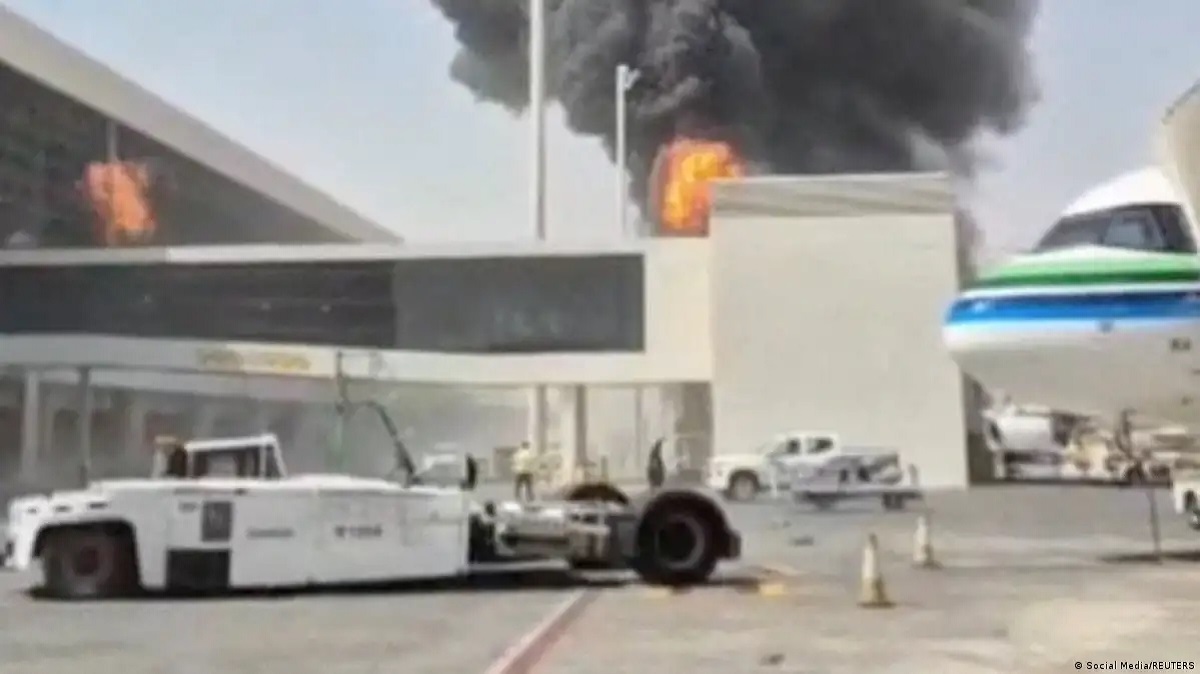
Saudi Arabia’s General Authority of Civil Aviation said two attacks on Thursday, October 8, targeted airport facilities and a Saudia aircraft. Several people of different nationalities were also injured, according to the authority. The airline confirmed damage to an aircraft on the ground and said no passengers were aboard at the time.

Yemen’s Houthi movement claimed responsibility for attacks on the airport. Saudi authorities confirmed the casualties and damage, although responsibility for individual incidents should be distinguished from the group’s own claims.
The attacks mark a significant escalation in the renewed fighting between the Houthis and forces aligned with Yemen’s internationally recognised government, backed by Saudi Arabia.
Key Points
- Three Saudi nationals were killed after attacks targeted Riyadh’s King Khalid International Airport.
- A Saudia aircraft was damaged, while several international flights were disrupted or cancelled.
- European aviation authorities expanded warnings over increased risks to civilian aircraft in Saudi airspace.
- The Houthis claimed responsibility for the attacks, while Saudi authorities confirmed casualties and damage.
- Pakistan reaffirmed its commitment to Saudi Arabia’s security at the UN Security Council and called for de-escalation.
Flight Disruptions Extend Beyond Riyadh
The consequences have extended beyond the immediate damage at the airport.
The European Union Aviation Safety Agency expanded its advisory on Saudi airspace on October 9, adding an area in northwestern Saudi Arabia because of the increased threat from missile and drone activity. The agency warned that attacks, air-defence interceptions and falling debris could create risks for civilian aircraft.
Reuters reported that flight-tracking data showed 131 cancellations to and from Riyadh by early afternoon on Friday, following hundreds of cancellations the previous day.
Several international airlines also suspended or cancelled services. Lufthansa Group and Indian carriers announced disruptions to Riyadh flights, while flydubai cancelled services to Riyadh and Yanbu through October 10 and to Abha through October 11, according to Reuters.
Pakistan International Airlines temporarily suspended its Riyadh operations. However, the Pakistan Airports Authority clarified that other flight operations to Saudi Arabia were continuing as usual, cautioning against wider claims circulating on social media.

The distinction matters for travellers: disruption to a particular route does not necessarily mean every flight to Saudi Arabia has been suspended. Passengers should check directly with their airline and airport before travelling.
Pakistan Reaffirms Support for Saudi Arabia
The escalation has also become a diplomatic concern for Pakistan.
Addressing the UN Security Council’s briefing on Yemen, Pakistan’s Permanent Representative, Ambassador Asim Iftikhar Ahmad, reaffirmed Islamabad’s commitment to Saudi Arabia’s sovereignty, territorial integrity and security.
According to Dawn’s October 10 report, Ahmad condemned attacks on Saudi infrastructure and said Pakistan supported the kingdom’s right to defend its people and protect its cities and vital facilities. He referred to the Makkah Joint Defence Agreement and recent decisions by the countries’ Strategic Political and Defence Committee.
Pakistan also called for an end to the hostilities and urged the protection of civilians and commercial shipping.
The ambassador’s remarks did not, by themselves, announce a new Pakistani military deployment to Yemen. Reports about possible assistance or military involvement should therefore be treated separately from Pakistan’s confirmed diplomatic position.
The wider regional response remains important as Saudi Arabia seeks support from partners amid renewed attacks. The Associated Press reported that Pakistan and Türkiye were assessing possible air-defence, electronic-warfare and technical assistance under a trilateral arrangement, while Türkiye’s foreign minister stressed that any assistance would be defensive rather than an offensive troop deployment.
Why the Yemen Conflict Matters Beyond Saudi Arabia
The latest escalation is unfolding alongside renewed fighting across Yemen, including areas near Taiz and the strategically important Bab el-Mandeb Strait.
The strait connects the Red Sea with the Gulf of Aden and is a key route for international shipping. Fighting near this passage can raise concerns about commercial vessels, maritime security and the movement of goods through the region.
On October 9, UN Special Envoy for Yemen Hans Grundberg warned that the country had slid back into full-scale war, with hostilities spreading across several front lines.
The United Nations has also highlighted the risks to civilians and essential infrastructure as fighting intensifies. That humanitarian dimension is important because the consequences of renewed military operations extend beyond the immediate confrontation between the Houthis and Saudi-backed forces.
The airport attacks have added another concern: the safety of civilian transport in a region already experiencing heightened military activity. Aviation warnings do not mean that every Saudi airport is closed, but they indicate that airlines and regulators are reassessing the risks of operating in affected airspace.
What Happens Next?
The immediate questions concern whether further attacks will occur, how long flight disruptions will continue, and whether diplomatic efforts can prevent the fighting from spreading further.
Saudi Arabia’s airport operations were reported to have resumed after Thursday’s attacks, but the subsequent aviation warnings and airline cancellations show that resumed operations do not automatically remove the security risk.
For Pakistan, the challenge is to maintain its stated support for Saudi security while continuing to call for de-escalation, civilian protection and a political settlement in Yemen.
As the Saudi Arabia-Yemen conflict develops, the situation will be measured not only by military movements but also by its effects on air travel, commercial shipping and civilians caught in the fighting.
Star Struck Times will continue to follow verified developments in the conflict, regional diplomacy and the impact on international travel.