A rare triple-vent eruption destroys a live-stream camera as officials warn residents about hazardous gas and airborne tephra.
According to early assessments from the US Geological Survey (USGS), the Kilauea volcano eruption in Hawaii sent lava fountains soaring more than 1,000 feet, destroying a live-streaming webcam and triggering safety alerts across the island. As reported by CBS News and USGS observers, elevated volcanic gas and hot tephra now pose significant risks to nearby communities.
Key Points
- Kilauea erupted Saturday morning, sending lava over 1,000 ft.
- A live-stream camera in Hawaii Volcanoes National Park was destroyed.
- USGS confirms rare triple lava fountains from north and south vents.
- Officials warn of hazardous volcanic gas & airborne tephra.
- Residents urged to avoid the area due to visibility and respiratory risks.
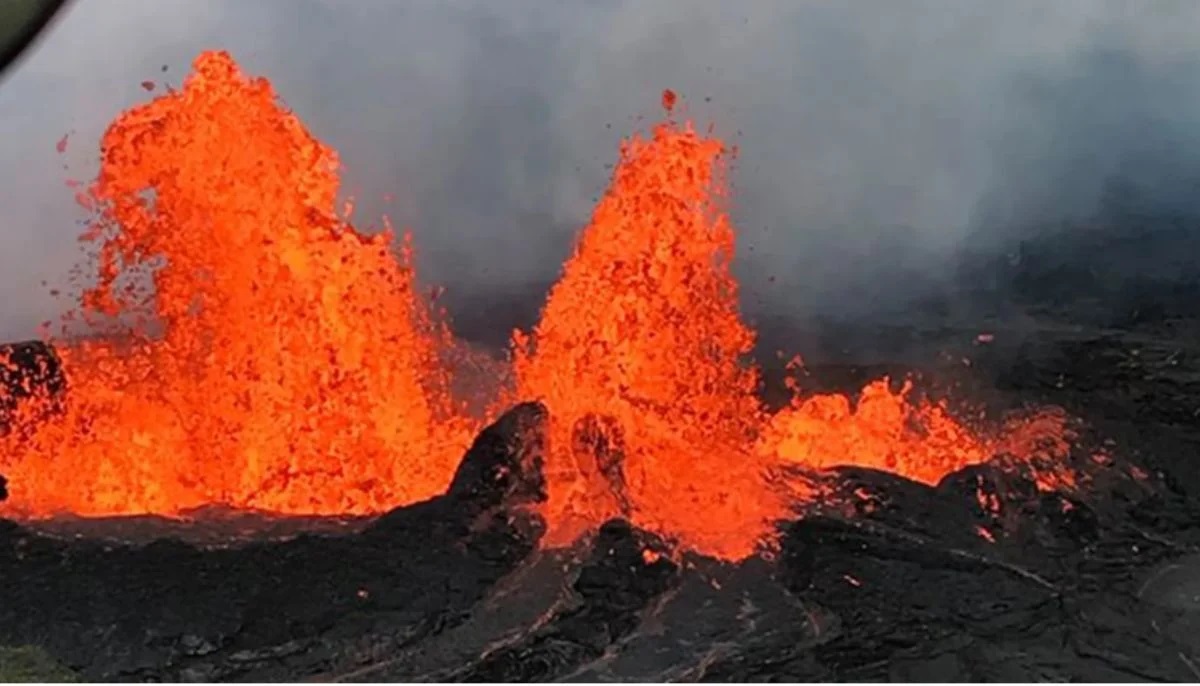
HILO, Hawaii (Star Struck Times) — The Kilauea volcano on Hawaii’s Big Island erupted early Saturday morning, sending red-hot lava shooting more than 1,000 feet into the air as emergency officials rushed to warn residents about escalating gas levels and dangerous tephra drifting across nearby communities. The eruption began shortly before 8:45 a.m. local time on December 6, 2025, with the first bursts emerging from the volcano’s north vent, authorities confirmed.

Within minutes, the eruption intensified. By 9:45 a.m., the lava began rising in violent fountains, forming what volcanologists described as one of Kilauea’s most dramatic displays in recent years. The sudden escalation created a powerful visual spectacle but also resulted in significant destruction, including the loss of a webcam that had been live-streaming the unfolding event from inside Hawaii Volcanoes National Park.
Officials from the U.S. Geological Survey (USGS) reported that the eruption produced unusually intense heat waves and “hot tephra”—solid volcanic fragments that can reach scorching temperatures and travel long distances when ejected. According to early USGS assessments, the tephra burst reached the webcam before operators could shut it off, melting its casing and severing the live feed.
Scientists noted that Saturday’s event occurred almost exactly one year after Kilauea—one of the world’s most active volcanoes—entered its current eruptive cycle. “Sustained lava fountains approximately 50 to 100 feet in height are erupting from the north vent, and fountain heights are increasing rapidly,” the Hawaiian Volcano Observatory (HVO) said in an official statement.
As the eruption progressed, geologists documented a rare and visually striking phenomenon: three separate lava fountains emerging simultaneously. Two originated from Kilauea’s north vent, while a third burst from the south vent, forming what experts described as a “triple-jet eruption”—a pattern not previously seen in this year’s volcanic activity. The observation immediately drew attention among both scientists and enthusiasts tracking the live stream.
“Watching three lava fountains rise like that in real time is unbelievable,” said one viewer on social media, reacting moments before the feed went dark. Another resident, commenting on a community broadcast, said, “It’s beautiful, but terrifying. We could feel the heat from miles away.”
The now-destroyed webcam had captured rare footage of pumice clouds and roiling volcanic gases sweeping over the landscape before the molten surge engulfed the equipment. The camera belonged to a set of monitoring tools positioned inside the park to track lava movement, gas levels, and seismic activity.
In response to the eruption, Hawaii County Civil Defense issued immediate warnings urging residents—especially those with respiratory conditions—to avoid the area. Officials cautioned that elevated levels of sulfur dioxide and thick clouds of tephra could reduce visibility and lead to hazardous driving conditions.

“Avoid the area if you have sensitivities or respiratory issues,” the agency said in a written alert. “On roadways, beware of tephra, which may reduce visibility and create traffic congestion. Take necessary precautions to limit your exposure.”
Emergency teams are continuing to monitor wind patterns as shifting gusts could carry ash and microscopic volcanic particles into populated towns. Scientists also noted that while the eruption appears vigorous, it remains localized to the summit area, with no current indications that lava flows threaten residential zones.
The eruption has once again placed Kilauea at the center of global attention, drawing comparisons to previous events that reshaped parts of the island’s landscape. For longtime residents and experts alike, the volcano’s renewed activity is both a familiar sight and a stark reminder of the islands’ constantly changing geological environment.
Despite the risks, many locals expressed gratitude for the rapid response and near-constant monitoring by USGS teams. The event has sparked renewed discussion about expanding camera coverage to avoid future losses of critical live-streaming tools.
As the eruption continues, officials emphasize that conditions may change without warning. Residents and visitors are encouraged to follow updates from the USGS, HVO, and Hawaii Civil Defense for accurate, real-time information.
FAQs
Q: Is Kilauea’s eruption affecting residential areas?
A: Officials say no lava flows are currently impacting homes, but gas and tephra pose health risks.
Q: Why was the webcam destroyed?
A: Intense heat and fast-moving tephra reached the device before crews could secure it.
Q: Are more eruptions expected?
A: USGS notes Kilauea is highly active; additional activity is possible.
Stay tuned to Star Struck Times for verified updates on this developing story.