Trump Iran ceasefire statement sparks global reaction
Washington, United States, April 2, 2026 — Star Struck Times
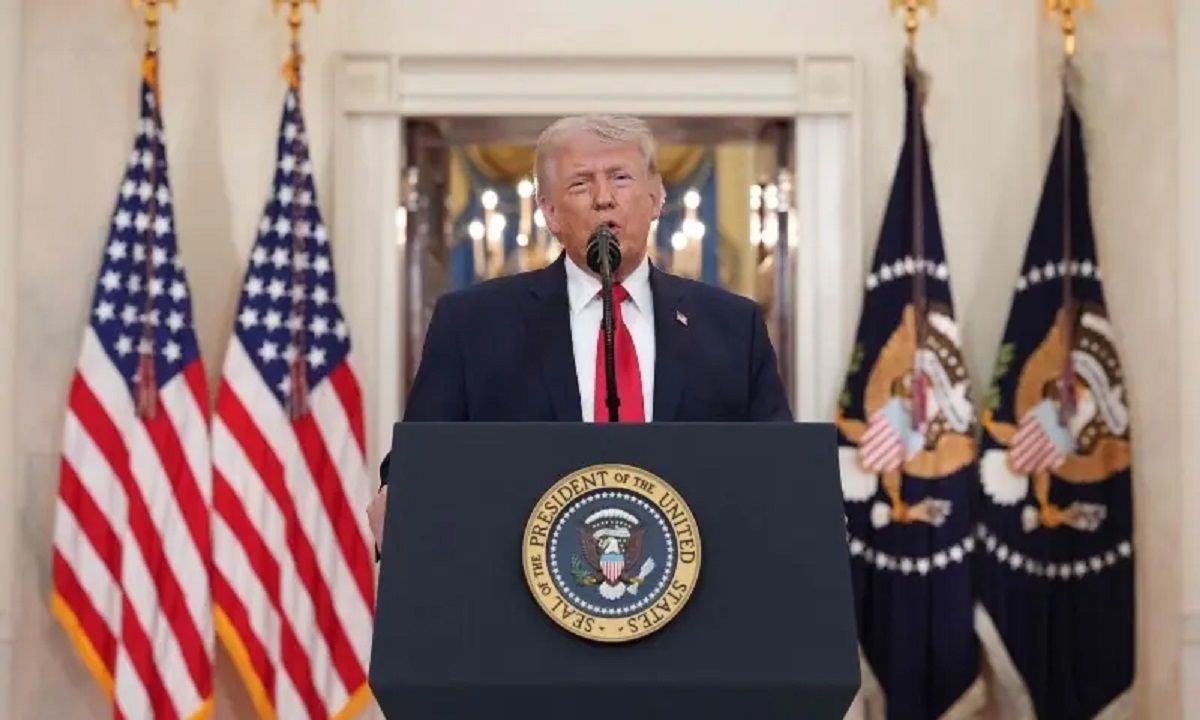
In a high-stakes national address, Donald Trump escalated tensions in the ongoing Iran conflict by warning of “extremely hard” military action while simultaneously suggesting the war could end “shortly.” The conflicting tone has left global markets, political analysts, and citizens uncertain about the true direction of U.S. policy. The statement comes amid rising oil prices and strong denials from Tehran regarding any ceasefire request—raising critical questions about what lies ahead.
Internal Link Suggestion: Explore more in our World News section
Key Highlights
Trump threatens “extremely hard” strikes against Iran
Claims war could end “shortly,” signaling mixed messaging
Iran denies requesting any ceasefire
Global oil prices surge following the address
International media highlights contradictions and rising risks
What Exactly Happened During Trump’s Address?
In a nationally televised speech delivered late Wednesday, Trump addressed the American public regarding escalating tensions with Iran. While emphasizing U.S. military readiness, he simultaneously projected optimism about a near resolution.
According to coverage by BBC News, Trump’s remarks triggered immediate market reactions, particularly in the energy sector, where oil prices climbed sharply due to fears of prolonged instability.
Meanwhile, NBC News reported that Trump claimed the war might conclude “soon,” though he offered no clear timeline or diplomatic framework to support that assertion.
The contradiction between aggression and optimism has become the defining feature of this address.
Iran’s Firm Response: No Ceasefire Request
Iran quickly pushed back against Trump’s claims.
As reported by Al Jazeera, Iranian officials categorically denied seeking any ceasefire. Instead, Tehran issued a strong warning that it would “fight back” against any U.S. escalation.
This response highlights a widening communication gap between the two nations, increasing the risk of miscalculation.
A regional analyst quoted in international coverage noted:
“When one side signals peace while preparing for war, it creates strategic ambiguity—which is often more dangerous than open hostility.”
Global Reaction: Media, Markets, and Public Sentiment
International media coverage has been intense and sharply analytical.
Dawn News emphasized how global outlets focused on Trump’s contradictory tone
BBC News highlighted the economic ripple effects
NBC News tracked real-time political developments
Financial markets reacted almost instantly. Oil prices surged as investors anticipated supply disruptions in the Middle East.
Public sentiment, particularly on social media, reflects confusion and concern:
“Is this peace or the start of something bigger?” one user posted. “Mixed signals like this usually don’t end well,” another commented.
Why This Moment Matters Globally
This is not just another political speech—it may represent a turning point in global geopolitics.
Key reasons this situation matters:
Energy Markets at Risk: Rising oil prices could trigger inflation globally
Military Escalation Potential: Miscommunication increases risk of sudden conflict
Diplomatic Breakdown: Lack of clarity weakens international negotiation efforts
Historically, moments of “strategic ambiguity” have often preceded major escalations. Analysts are comparing the current situation to past geopolitical flashpoints where unclear messaging led to unintended consequences.
The Hidden Angle: Strategic Messaging or Tactical Confusion?
One unique perspective emerging from expert analysis is whether Trump’s mixed messaging is intentional.
Some believe this could be a calculated strategy:
Project strength to deter Iran
Signal openness to peace for global allies
Others argue it reflects internal policy divisions within U.S. leadership.
An expert in international relations explained:
“This could be psychological warfare—or simply a lack of coordinated messaging. Either way, the risks are real.”
What Happens Next?
The coming days will be critical.
Key developments to watch:
Any official diplomatic communication between the U.S. and Iran
Military movements in the region
Oil market stabilization or further spikes
Statements from global powers like the EU, China, and Russia
If tensions escalate further, the world could be facing a significant geopolitical crisis. If not, this moment may become a case study in high-risk diplomacy.
FAQs
1. Did Iran request a ceasefire from the U.S.?
No, Iran has officially denied any such request.
2. Why did oil prices increase after Trump’s speech?
Markets reacted to fears of potential conflict disrupting global oil supply.
3. Is the U.S. planning immediate military action?
Trump hinted at strong action but did not confirm any timeline.
4. What does “war will end shortly” mean?
It remains unclear, as no concrete diplomatic plan was shared.
5. How are global leaders responding?
Most are monitoring the situation closely, urging restraint and dialogue.
Hello! I'm M Muzamil Shami, the founder and lead editor of Star Struck Times, your trusted source for trending news, entertainment scoops, celebrity gossip, sports highlights, and global headlines.
With a passion for storytelling and journalism, I created this platform to bring you breaking news, viral moments, and deep insights into the worlds of Bollywood, Hollywood, sports, politics, tech, and more — all in one place.