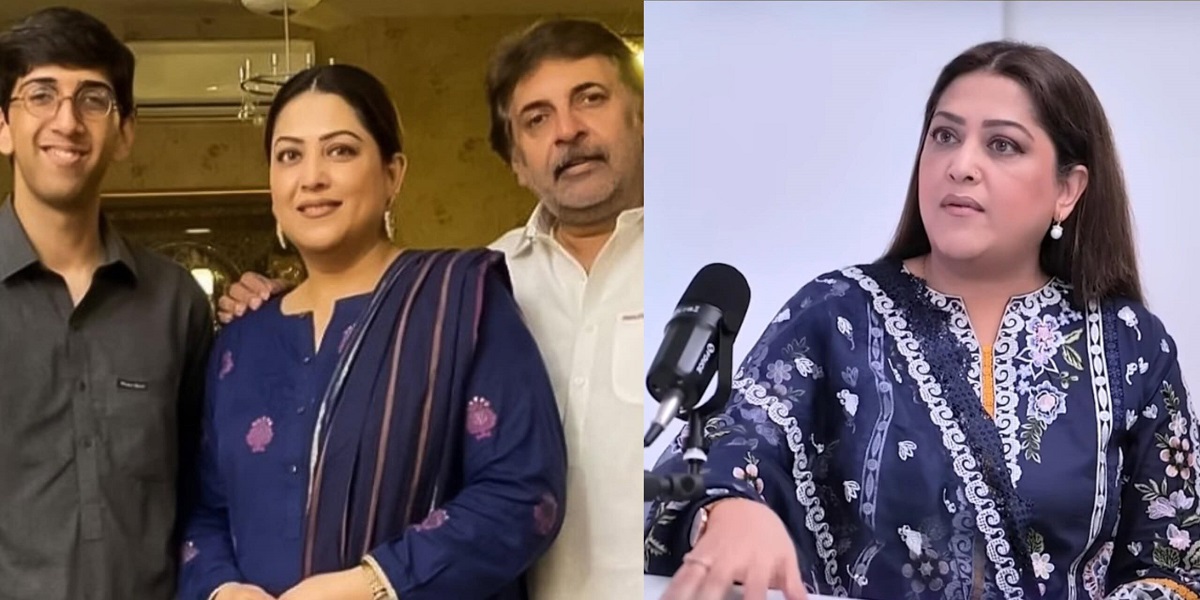
Fazila Qazi defends son Zorain Nizamani as viral article sparks national discussion
Breaking: Fazila Qazi Speaks Out as Son’s Article Sparks National Debate
Breaking: Pakistani television icon Fazila Qazi has finally addressed the controversy surrounding her son Zorain Nizamani, whose viral article ignited intense debate across Pakistan’s social and digital spaces. The discussion, now trending under Fazila Qazi defends son Zorain Nizamani, has moved beyond celebrity news into a broader conversation about youth voices, freedom of expression, and generational change—raising questions many were hesitant to ask aloud.
What truly happened behind the scenes—and why was the article removed after gaining traction?
Key Points
Fazila Qazi publicly defended her son’s article for the first time
Zorain Nizamani is a US-based PhD scholar in Criminology and Criminal Justice
The article “It’s Over” went viral before being taken down
Fazila Qazi says the piece was misinterpreted due to polarization
No political affiliation or agenda, according to the family
A Viral Article That Crossed Borders
Zorain Nizamani, a lawyer and PhD scholar in the United States, did not expect his article to explode the way it did. Titled “It’s Over,” the piece focused on how younger generations are rejecting outdated power narratives and demanding inclusive policymaking.
Within days, the article was being shared across social media platforms, discussed in opinion circles, and quoted in private forums. According to media analysts, the language resonated with Pakistani youth, particularly students studying abroad who regularly engage in open academic debate.
However, the momentum came to an abrupt halt when the article was quietly removed after reportedly drawing the attention of higher authorities.
Fazila Qazi’s Emotional Defense on a Public Platform
The conversation took a dramatic turn when Fazila Qazi appeared on Ahmed Ali Butt’s podcast, Excuse Me. Known for her composed public persona, the veteran actor spoke candidly, addressing what she called “widespread misinformation” surrounding her son’s writing.
“Did you read the original article?” she asked pointedly. “There was nothing controversial in it. The backlash came because of polarization, not because of the content.”
Her remarks quickly circulated online, with clips trending on Instagram and X, further fueling searches for Fazila Qazi defends son Zorain Nizamani.
Freedom of Speech and the New Generation
Fazila Qazi highlighted a crucial distinction: context. According to her, students studying abroad are encouraged to question systems, discuss political and social frameworks, and express independent views without fear.
“If you look at the new generation across the world, they talk like this,” she said. “They openly discuss issues with teachers and classmates. This is normal in academic environments.”
Experts in media and youth studies believe this incident underscores a growing disconnect between institutional expectations and globalized education norms.
One senior columnist quoted by Dawn noted that such reactions often arise when academic discourse collides with domestic sensitivities.
Clearing the Political Air
One of the strongest clarifications made by Fazila Qazi was about political neutrality. She firmly stated that Zorain’s article does not represent any political party, movement, or ideology.
“These were his personal views, shaped by his education and experiences,” she emphasized. “Nothing more.”
Fans echoed similar sentiments online. One user commented,
“This is exactly how educated youth think today. Punishing ideas won’t stop change.”
Another wrote,
“Respect to Fazila Qazi for standing by her son with dignity.”
A Family Known for Values, Not Headlines
Fazila Qazi and Kaiser Khan Nizamani have long been respected names in Pakistani television, admired not just for their performances but for maintaining a low-profile personal life. This controversy, however, placed their family under an unexpected spotlight.
In a heartfelt moment during the podcast, Fazila Qazi spoke about parenting, faith, and responsibility.
“We taught our children the Quran as guidance and encouraged them to seek answers. I am proud to be their mother.”
Cultural commentators believe this statement resonated deeply, especially with parents navigating similar concerns in a rapidly changing world.
Why This Moment Matters
Beyond celebrity relevance, this episode highlights a larger national conversation:
Can young Pakistanis express independent opinions without consequence?
How should society respond to academic critique?
Is generational change being misunderstood as rebellion?
According to digital media experts cited by BBC Urdu, controversies like this often signal transitional phases in public discourse, not crises.
Public Reaction: Divided Yet Engaged
Social media reaction has been sharply divided. While critics argue that such writings can be “misused,” supporters insist that silencing educated voices only deepens generational gaps.
Search trends show a consistent spike for related queries, proving the issue has struck a nerve far beyond entertainment circles.
What Happens Next
As of now, Zorain Nizamani has not issued a new public statement. However, media observers believe the conversation is far from over. With prominent voices like Fazila Qazi stepping in, the debate has shifted from controversy to reflection.
Whether this leads to greater openness—or further restrictions—remains to be seen.
FAQs
Why was Zorain Nizamani’s article removed?
The article was reportedly taken down after drawing attention from higher officials. No official reason has been publicly documented, but analysts point to heightened sensitivity around political discourse.
Did Fazila Qazi support the article’s message?
Fazila Qazi clarified that while the article reflects her son’s personal views, she supports his right to express himself within an academic and intellectual framework.
Is Zorain Nizamani affiliated with any political group?
No. The family has clearly stated that Zorain has no political affiliation, and the article was written independently.
Why did the article resonate so strongly online?
Experts believe it connected with youth who feel existing narratives no longer represent their realities, especially students exposed to global education systems.
What do you think—should educated youth be encouraged to speak freely?
Hello! I'm M Muzamil Shami, the founder and lead editor of Star Struck Times, your trusted source for trending news, entertainment scoops, celebrity gossip, sports highlights, and global headlines.
With a passion for storytelling and journalism, I created this platform to bring you breaking news, viral moments, and deep insights into the worlds of Bollywood, Hollywood, sports, politics, tech, and more — all in one place.