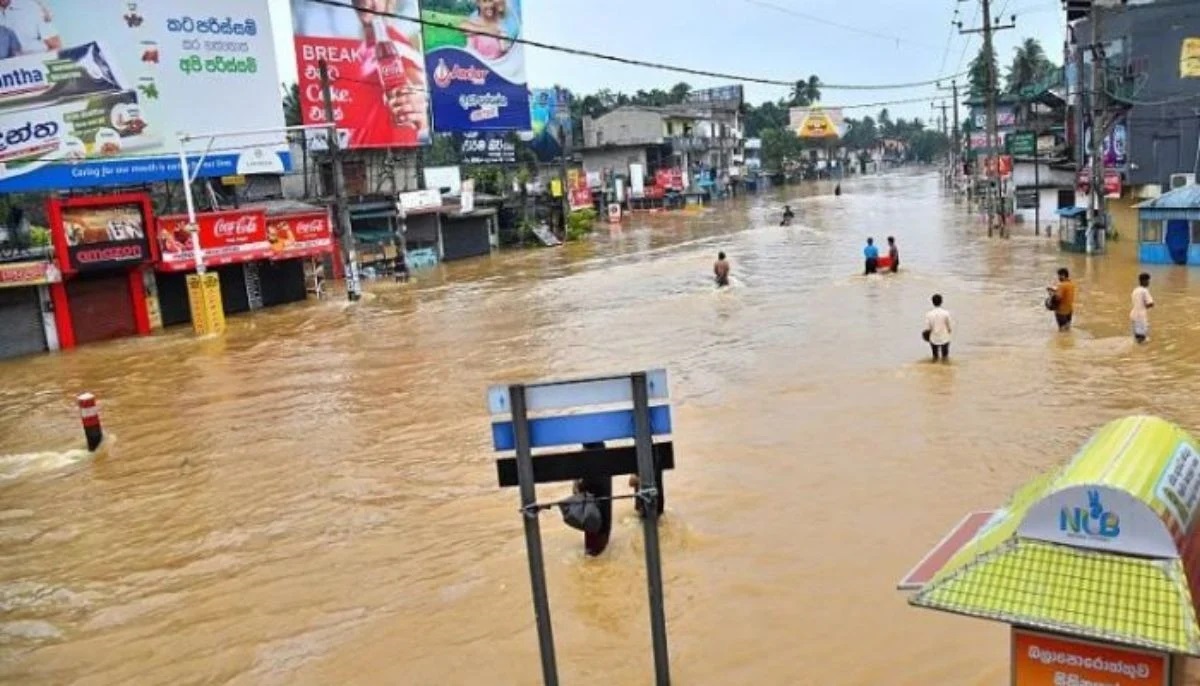
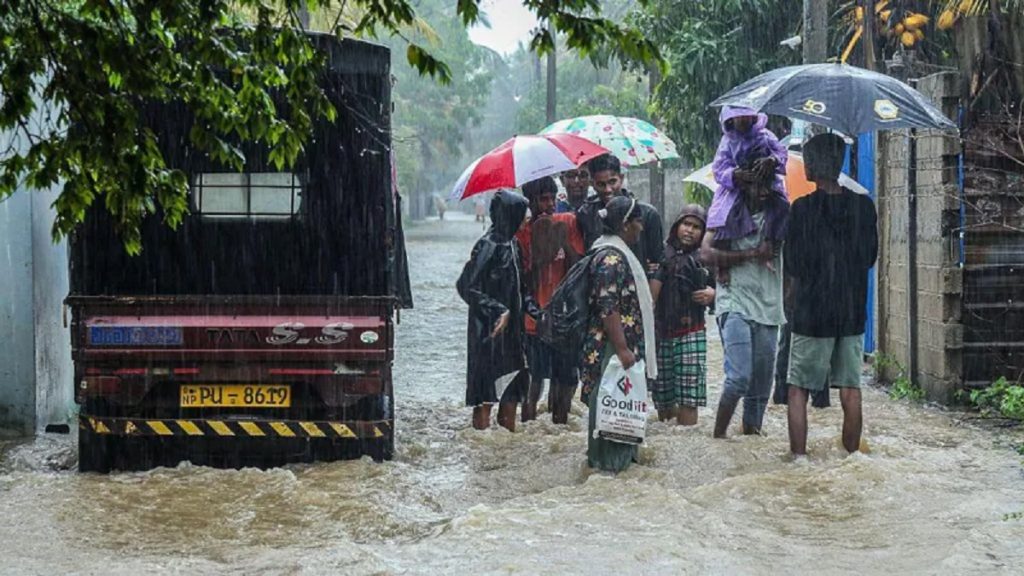
Flooded roads and rescue teams in Sri Lanka after Cyclone Ditwah Sri Lanka struck, leaving hundreds missing and thousands displaced.
Shelters Overflow, Flood-Stricken Families Await Aid as Missing Count Climbs
Colombo, Sri Lanka (Star Struck Times) — The death toll from Cyclone Ditwah has surged to 212, with 218 people still missing, as the island-nation reels from devastating floods and landslides that ravaged large swathes of the country since Friday, Nov. 28, 2025.
Key Points
212 killed, 218 missing after Cyclone Ditwah’s floods and landslides.
Up to 200,000 displaced, now in 1,275 shelters across Sri Lanka.
More than 20,000 homes destroyed, and hundreds of thousands in need of humanitarian aid.
Government declared a state of public emergency and appealed for international assistance.
Massive rescue operations underway — armed forces, air force, navy, volunteers working to evacuate survivors.
The tropical storm triggered intense downpours, overflowing rivers, and catastrophic landslides — particularly in central hill zones and low-lying urban areas. Military, air force, and police units have launched large-scale rescue operations.
Authorities say nearly 200,000 people have been displaced, taking refuge in over 1,275 state-run shelters, as floodwaters breached dams and submerged entire neighbourhoods.
What Went Wrong — and Where Cyclone Ditwah, part of the 2025 North Indian Ocean season, made landfall over Sri Lanka’s eastern coast on Friday, unleashing more than 300 mm of rainfall within 24 hours — a deluge that overwhelmed rivers, drainage systems and triggered landslides.
The worst damage is concentrated in central districts known for steep terrains, where saturated soil gave way under its weight. Meanwhile, parts of the capital, Colombo, saw water levels along the Kelani River surging rapidly, flooding suburbs like Wellampitiya and Kaduwela and leaving many trapped at home.
Reports say more than 20,000 homes were destroyed, and hundreds-of-thousands need immediate humanitarian assistance. The government declared a state of public emergency, appealing for international aid to support relief, rehabilitation and rebuilding efforts.
Voices From the Ground One displaced resident from the central district of Badulla recounted by phone:
“We can’t leave the village, and no one can come in because all roads are blocked by landslides. There is no food, and we are running out of clean water.”
In Colombo, a 46-year-old woman forced to flee her flooded home described desperation as she carried a few possessions, “hoping there is some safe shelter where I can take my family.”
Government and International Response The Sri Lankan government, under the newly invoked emergency powers, mobilized thousands of troops, navy personnel, and relief workers to clear roads, deliver food and water, and relocate stranded families.
India has already sent relief supplies and helicopters to assist with rescue and evacuation efforts. Other countries, including Japan, have pledged humanitarian aid to help combat what officials are calling the worst weather-related disaster in decades.
Human Cost and Long Road Ahead Entire villages remain cut off, hillsides unstable, and floodwaters receding only slowly. The destruction extends beyond homes — farmland, infrastructure, water treatment plants, electricity and communication services have been disrupted.
Relief centers are overwhelmed and resources remain scarce. For many displaced families, the immediate needs are food, clean water, medical care and shelter — urgent essentials that agencies are racing to provide.
As rescue operations continue across hard-hit districts, the full extent of the disaster is only beginning to emerge. With heavy rains still looming, weather experts warn that further floods, landslides and dam-breach risks remain.
FAQs
Q: How many people have been evacuated so far? A: Approximately 200,000 individuals have been relocated to over 1,200 shelters across Sri Lanka.
Q: What caused most of the deaths — floods or landslides? A: The majority of fatalities are the result of landslides triggered by torrential rainfall exceeding 300 mm in 24 hours.
Q: Which regions are hardest hit? A: Central hill districts — such as Badulla and Kurunegala — saw devastating landslides; low-lying suburbs of Colombo were flooded by the overflowing Kelani River.
Q: What is the government doing now? A: The government declared a national emergency, mobilized armed forces for rescue and relief, and appealed for international humanitarian aid.
Q: Is the danger over now? A: Not yet — saturated hillsides, swollen rivers, damaged dams and ongoing rainfall mean risks of renewed flooding and landslides remain high.
If you are in a position to help — whether by donating relief supplies, financial support, or spreading accurate information — now is the time to act. Lives are at stake, and communities are in urgent need. Share verified updates — and if you know of reliable aid channels, pass them on.
Hello! I'm M Muzamil Shami, the founder and lead editor of Star Struck Times, your trusted source for trending news, entertainment scoops, celebrity gossip, sports highlights, and global headlines.
With a passion for storytelling and journalism, I created this platform to bring you breaking news, viral moments, and deep insights into the worlds of Bollywood, Hollywood, sports, politics, tech, and more — all in one place.