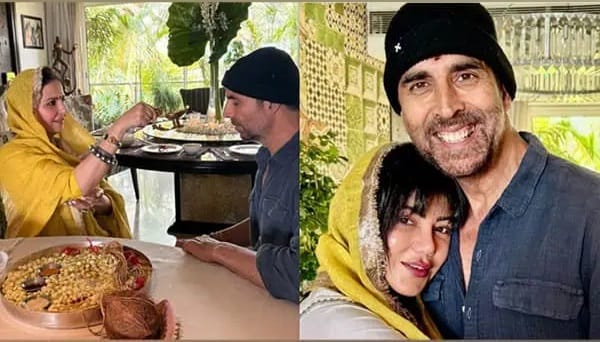
Bollywood actor Akshay Kumar has approached the Bombay High Court seeking urgent interim protection of his likeness, voice and image against AI-generated deepfakes and unauthorized commercial exploitation.
Mumbai, India (Star Struck Times) — Bollywood superstar Akshay Kumar has filed a legal petition with the Bombay High Court to halt what his team describes as large-scale misuse of his image, voice, screen name and likeness through artificial‐intelligence (AI) generated deepfakes and cloned content. The court granted interim relief in his favour on October 15-16, 2025.
In his suit, Kumar alleges that unknown entities and e-commerce platforms have been circulating AI-generated videos and images depicting him in roles or making statements he never made — including a fabricated trailer showing him as the sage Maharishi Valmiki and other content with potentially inflammatory implications. The court described this as “truly alarming” given the sophistication of the morphing, and the potential harm not only to Kumar’s reputation but to public order.

According to the order, the bench of Justice Arif S. Doctor noted that “in the context of images and videos, the morphing is so sophisticated and deceptive that it is virtually impossible to discern that the same are not genuine images/videos of the Plaintiff (Akshay Kumar).” The court further emphasised that while Kumar is a public figure, his rights over his name, screen name, image, likeness, voice, tone, distinctive performance style and mannerisms are uniquely identifiable and must be protected.
One of the more striking examples cited in court documents is a deepfake video where Kumar is shown making communally inflammatory statements about Rishi Valmiki — a depiction the actor said he had no part in and was entirely fabricated. The court observed that such videos pose a “grave threat to the safety and well-being of the Plaintiff’s family members” and “may also have an adverse and widespread impact on society and public order.”
In direct reaction to the deepfake trailer, Kumar publicly posted on his X (formerly Twitter) account: “I have recently come across some AI-generated videos of a film trailer showing me in the role of Maharishi Valmiki. I want to clarify that all such videos are fake and created using AI.”
The court’s interim order restrains the unknown “John Doe” defendants, social media accounts, websites and certain e-commerce platforms from further infringing Kumar’s personality rights, and directs the removal of infringing content from the public domain until the next hearing.
Industry observers note that Kumar’s case is part of a broader trend in Bollywood: stars such as Aishwarya Rai Bachchan, Abhishek Bachchan, Hrithik Roshan and others have recently moved legal frameworks in India to respond to the challenges posed by AI-driven likeness misuse. As Reuters reported, Indian courts are seeing a rising number of litigation filings as celebrities fight to protect what are often referred to as “personality rights.”
A Bollywood fan reacting on social media commented: “When even our favourite hero’s face and voice can be faked, how do we trust what we see online?” Meanwhile, a legal commentator told this newsroom: “This precedent may reshape how Indian celebrities will regulate AI content and their image rights going forward.”
Kumar’s legal team issued a statement saying: “Mr Kumar has always valued the trust his audience places in him. The unauthorised use of his persona in AI-generated content is not just a violation of his rights but undermines the integrity of his relationship with his fans and the entertainment ecosystem.” Kumar himself added: “I will not stand by while content is used in my name that I did not approve. We must draw a clear line on how technology is used.” The court order includes the actor’s voice, image, screen name and performance style under the ambit of “personality rights”.

Media commentary emphasises that this is not simply about one actor’s image being misused, but rather a sign of how deepfakes and AI are pressuring established norms in entertainment, media and the law. Many fans expressed relief at the court’s intervention: “Finally someone in Bollywood is saying enough to fake-trailers and phoney endorsements,” one user wrote online.
As the hearing moves to the next stage in November, legal experts say the stakes include how Indian platforms will moderate AI-generated content, whether technology companies will face greater liability, and how “rights of personality” will be codified in the Indian context. For Kumar, the outcome may set a benchmark for how Indian celebrities protect themselves in a rapidly evolving digital environment.
FAQs
Q: What exactly is being claimed by Akshay Kumar?
A: He is seeking to protect his personality rights — namely his name, screen name, image, likeness, voice, tone, distinctive performance style and mannerisms — from unauthorised use through AI-generated videos, images, counterfeit merchandise and deepfakes.
Q: What did the Bombay High Court decide?
A: The court granted interim relief (ad-interim order) on October 15-16, 2025, directing the removal of infringing content and restraining unknown defendants, social media accounts and platforms from further misuse. It flagged the realistic nature of deepfakes as “truly alarming”.
Q: Why is this significant for the entertainment industry?
A: Because AI-generated content, voice cloning and deepfakes are proliferating, and there is no comprehensive Indian law yet that specifically regulates “personality rights”. This case may shape how such rights are enforced in India.
Q: What are the next steps?
A: A full hearing will take place in the Bombay High Court. Meanwhile the interim order remains. Platforms and intermediaries may also need to take down listed content and possibly identify infringing persons.
Q: Will this affect future use of AI by fans or creators?
A: Possibly — if the court establishes stronger protections for celebrity likenesses, creators using AI to replicate voice/image may face stricter restrictions or clearance requirements.