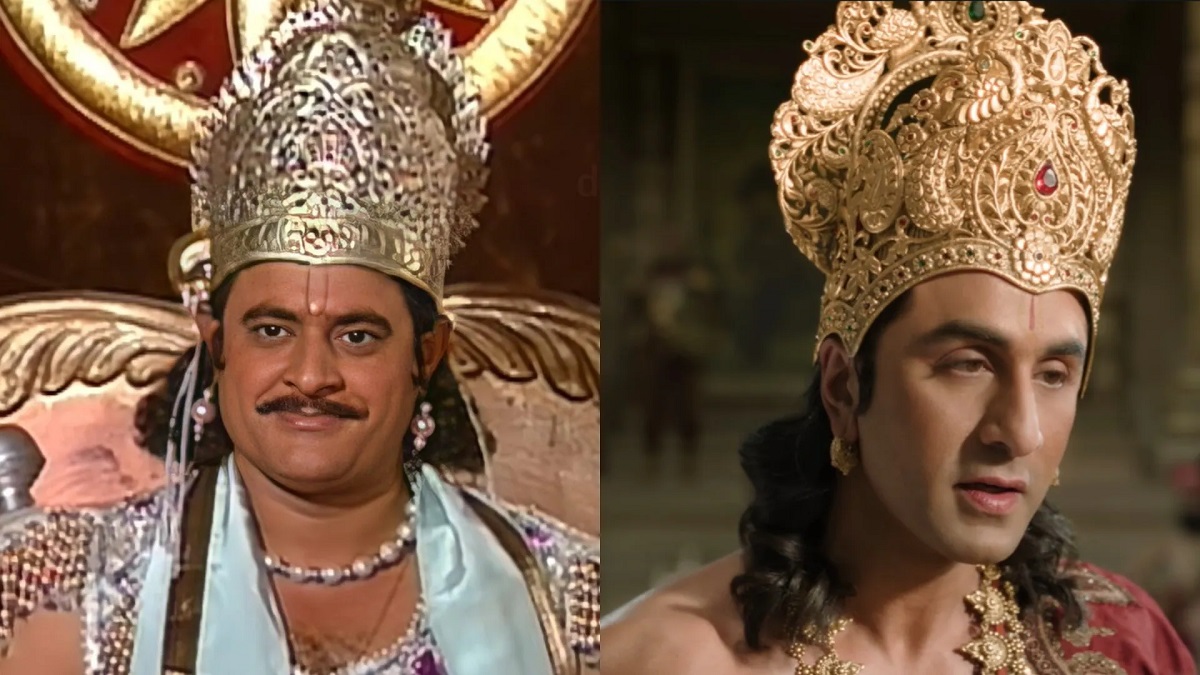
MUMBAI, INDIA, August 12, 2026 — Star Struck Times.
Veteran actor Gajendra Chauhan, widely remembered for his iconic portrayal of Prince Yudhishthira in B.R. Chopra’s legendary television epic Mahabharat, has fired a sharp salvo at director Nitesh Tiwari’s highly anticipated multi-crore cinematic spectacle, Ramayana. Speaking in an explosive candid interview, the veteran performer voiced deep skepticism over casting major Bollywood superstars in revered mythological roles, arguing that an actor taking on the sacred mantle of Lord Ram “should not be too exposed in public life” or carry heavy commercial image baggage. Chauhan also took aim at the film’s westernized title spelling and modern visual aesthetic, sparking a massive online debate between traditional purists and modern cinema enthusiasts over how India’s sacred epics ought to be adapted for contemporary global screens.
Key Points
- Star Image Conflict: Gajendra Chauhan asserts that established Bollywood stars carry excessive public persona baggage, making it difficult for audiences to accept them as divine figures like Lord Ram.
- Linguistic Critique: The veteran actor called out the global title spelling, stating emphatically, “It is Ramayan and not Ramayana”.
- Visual & VFX Backlash: Chauhan criticized the reliance on modern computer-generated graphics and modernized costume choices, particularly pointing to Kaikeyi’s styling during the pivotal exile scene.
- Praise for Legacy Casting: Despite his overall critique, Chauhan gave a major nod of approval to Arun Govil’s casting as King Dashrath.
- Industry & Audience Divide: The comments have triggered intense ideological debates across X (formerly Twitter) and Facebook regarding cultural reverence versus cinematic modernization.
The Battle Between Stardom and Sanctity
The announcement and promotional rollout of Nitesh Tiwari’s Ramayana—starring Ranbir Kapoor as Lord Ram, Sai Pallavi as Goddess Sita, and Yash as Raavan—was designed to position Indian cinema on a global stage with a mammoth budget and state-of-the-art visual effects. However, the ambitious project has run straight into a wall of scrutiny from veteran artists who built their careers during the golden era of Indian television mythology.

Gajendra Chauhan’s critique stems from a fundamental philosophy regarding how mythological epics were cast in decades past. During the era of B.R. Chopra’s Mahabharat and Ramanand Sagar’s Ramayan, directors deliberately selected actors who lacked established star personas. This allowed the audience to view the performers strictly as the deities and historical figures they represented, rather than as celebrities playing a role.
                EPIC CASTING PHILOSOPHIES: THEN VS. NOW

   Classic Era (1980s–1990s)                  Modern Cinema Era (2020s)
 ┌───────────────────────────┐              ┌───────────────────────────┐
 │ • Unexposed/Fresh Faces   │              │ • A-List Superstars       │
 │ • Minimal Public Persona  │   VS.        │ • Deep Commercial Image   │
 │ • Focus on Practical Sets │              │ • Heavy CGI / VFX Backdrops│
 │ • Devotional Acceptance   │              │ • Westernized Titling     │
 └───────────────────────────┘              └───────────────────────────┘
Chauhan highlighted that Ranbir Kapoor, despite being a phenomenal talent who looks convincing in the initial get-up, inevitably carries his high-profile Bollywood image onto the screen. When an actor’s off-screen persona, commercial endorsements, and past romantic or intense roles are constantly in the public eye, stripping away that star image to evoke pure spiritual reverence becomes an uphill task for moviegoers.
Furthermore, Chauhan pulled no punches regarding the visual execution shown in early glimpses. Drawing from his own experience playing King Dashrath in a 2002 adaptation, he emphasized that key emotional sequences—such as Queen Kaikeyi demanding Lord Ram’s exile—require deep dramatic weight rather than sleek, modern saris and digital backgrounds.
┌─────────────────────────────────────────────────────────────────────────────┐
│                     GAJENDRA CHAUHAN ON MYTHOLOGICAL CASTING                │
│                                                                             │
│ "Stars have an image. It is very difficult for that star image to be       │
│ accepted in mythology. If you want to play these characters, you should     │
│ not have too much of an image. You should not be too exposed to the         │
│ public... It is Ramayan and not Ramayana. You can release a film globally   │
│ with a Hindi name."                                                         │
│                                                                             │
│ — Gajendra Chauhan, Actor & Former FTII Chairman                            │
└─────────────────────────────────────────────────────────────────────────────┘
Hidden Context: What Other Reports Missed
While most mainstream headlines focused purely on the clickbait angle of an older actor criticizing a younger superstar, a closer look at Chauhan’s arguments reveals deeper structural issues within Indian cinema’s current adaptation wave:
- The Shelved Super-Star Mahabharat Precedent: In his complete remarks, Chauhan pointed out a historical lesson that mainstream commentary overlooked: a massive Mahabharat feature film project was once planned decades ago featuring stars like Amitabh Bachchan, Aamir Khan, and Ajay Devgn. That project ultimately collapsed after two years of pre-production precisely because balancing heavy superstar images within a sacred ensemble proved artistically unworkable.
- The “Arun Govil Paradox”: Chauhan offered glowing praise for casting Arun Govil as King Dashrath. Govil famously played Lord Ram in Ramanand Sagar’s 1987 show. Passing the patriarchal crown to a former “Ram” who has naturally aged into “Dashrath” four decades later brings genuine emotional gravitas that no CGI environment can replicate.
- Linguistic Soft Power & Global Marketing: Chauhan’s gripe over the extra “a” at the end of Ramayana touches on a long-standing debate in Indian media. Westernized phonetic spellings added for international search optimization and global distribution often alienate domestic audiences who feel the sacred Sanskrit titles are being needlessly altered for foreign consumption.
Frequently Asked Questions (FAQs)
Why did Gajendra Chauhan criticize Nitesh Tiwari’s Ramayana?
Gajendra Chauhan expressed disappointment with early glimpses of Ramayana, criticizing the over-reliance on digital VFX, modern costume choices, the westernized title spelling (Ramayana vs. Ramayan), and the casting of highly exposed mainstream superstars in sacred roles.
What did Gajendra Chauhan say about Ranbir Kapoor playing Lord Ram?
While admitting that Ranbir Kapoor looks visually convincing in the character’s costume, Chauhan argued that a superstar with a heavily exposed public image makes it difficult for audiences to feel pure spiritual reverence when watching them portray a deity.
Who is playing King Dashrath in Nitesh Tiwari’s Ramayana?
Veteran actor Arun Govil, who famously portrayed Lord Ram in Ramanand Sagar’s classic 1987 television series Ramayan, is playing King Dashrath in Nitesh Tiwari’s film adaptation.

Q1: Is Gajendra Chauhan demanding a boycott of the Ramayana movie?
A: No. Chauhan clarified that it is impossible to judge a full film based solely on initial teasers or promotional clips and stated he will withhold a final verdict until the full movie is released in theaters.
Q2: What is the official release date for Nitesh Tiwari’s Ramayana?
A: Part One of Nitesh Tiwari’s two-part cinematic adaptation is scheduled to hit global theaters during Diwali 2026 (November 2026), with Part Two slated for release during Diwali 2027.
Q3: Who else stars in Nitesh Tiwari’s Ramayana alongside Ranbir Kapoor?
A: The ensemble cast features Sai Pallavi as Goddess Sita, Yash as Raavan, Sunny Deol as Lord Hanuman, Ravi Dubey as Lakshman, Lara Dutta as Kaikeyi, and Arun Govil as King Dashrath.
Does a star’s off-screen personal life affect your ability to accept them in a divine mythological role? Or should performance and visual scale matter most? Share your thoughts in the comments below!