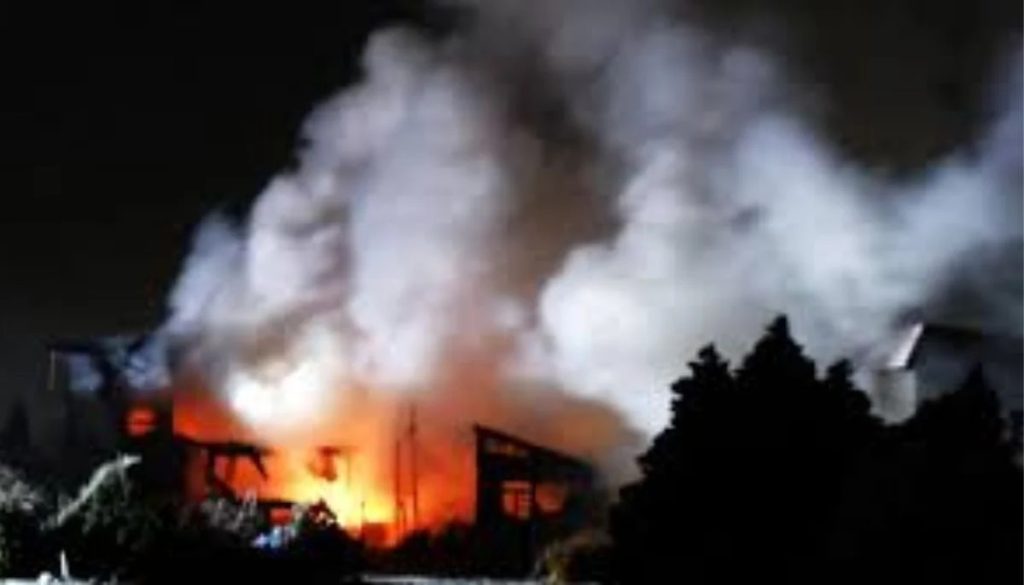
A powerful offshore quake hits Aomori Prefecture, forcing authorities to issue a tsunami advisory as residents brace for aftershocks.
According to preliminary data from the Japan Meteorological Agency (JMA), a 6.7-magnitude earthquake struck off the coast of Aomori, prompting an urgent tsunami advisory for Japan’s northeast. As reported by NHK and confirmed by USGS, authorities are assessing risks amid rising concerns following a larger quake earlier this week.
Key Points
- A 6.7-magnitude earthquake struck Aomori’s offshore region at 11:44am local time.
- Tsunami advisory issued for parts of Japan’s northeastern coastline.
- No immediate abnormalities reported at nearby nuclear facilities.
- Region still reeling from a 7.5-magnitude quake earlier this week.
- Concerns rising about increased seismic activity near the Pacific Ring of Fire.
Tokyo (Star Struck Times) — A strong 6.7-magnitude earthquake struck Japan’s northeast on Friday, triggering a tsunami advisory and heightening anxieties in a region already rattled by a series of recent quakes. The tremor hit off the coast of Aomori Prefecture at 11:44am local time, according to data released by the Japan Meteorological Agency (JMA), which confirmed the quake originated at a shallow depth of about 20km.

The United States Geological Survey (USGS) also measured the quake at magnitude 6.7. Within minutes, authorities issued a tsunami advisory, urging coastal residents to move away from the shoreline as a precaution. Early forecasts suggested waves could reach coastal areas, although no immediate large-scale flooding was reported.
Officials from Japan’s Nuclear Regulation Authority said there were no signs of abnormalities at nuclear facilities across the region, an update that offered some relief in an area historically sensitive to seismic risks. Inspections continued through the early afternoon as authorities monitored aftershock patterns.
NHK reported that the shaking intensity appeared lower than the magnitude 7.5 earthquake that struck the same broader region on Monday, which caused notable infrastructure damage, including cracked highways, shattered windows, and minor tsunami waves reaching up to 70 centimeters. More than 50 people were injured in that earlier event, prompting the JMA to issue a rare special advisory warning of heightened seismic activity for up to a week.
Residents across Aomori, Iwate, and Hokkaido described today’s quake as “sudden and sharp,” with many reporting that it felt “short but powerful.” One X (Twitter) user posted, “It was over in seconds, but the fear never really leaves when you live up here.” Another resident told NHK, “It’s the same unsettling feeling we had after Monday’s quake. Everyone is on edge.”

This series of tremors has revived painful memories of the 2011 Tōhoku earthquake, a devastating magnitude 9.0 undersea quake that unleashed massive tsunami waves and caused nearly 18,500 deaths or disappearances. The nation remains acutely aware of how suddenly seismic conditions can escalate.
Japan’s government continues to highlight the Nankai Trough as another area of critical concern. In early 2024, the JMA issued a significant advisory warning of potential “megaquake” activity along the trough, which stretches beneath Japan’s Pacific coast. Government estimates suggest that a major Nankai event could result in as many as 298,000 deaths and cause up to $2 trillion in economic damage, underscoring the region’s vulnerability.
Friday’s quake arrives at a time when residents and experts alike are carefully watching seismic clusters in northern and eastern Japan. While the JMA has not definitively linked the events, the agency urges the public to remain cautious, especially near coastal regions marked by elevated tsunami risks. Local governments activated emergency response units to inspect buildings, bridges, and transportation lines, though no widespread disruptions were immediately reported.
Japan’s position atop four major tectonic plates along the Pacific Ring of Fire makes it one of the most earthquake-prone nations in the world. Each episode renews efforts to strengthen infrastructure and update evacuation protocols. Today’s advisory once again tested emergency communication systems, with local authorities broadcasting alerts via loudspeakers, radio, and mobile networks.
Experts say the next 48 hours remain critical. Aftershocks are expected, and residents are urged to stay clear of coastal areas until the advisory is lifted. Emergency kits, evacuation routes, and shelters have been rechecked, especially in Aomori and neighboring prefectures.
As the day progressed, social media filled with mixed reactions—some expressing fear, others resilience. Many residents shared images of swaying lights and falling shelves, though damage appeared limited compared to Monday’s destructive quake. Still, the psychological toll remains significant, especially for those who survived the catastrophic events of 2011.
In its latest statement, the JMA emphasized that more detailed analysis is underway to determine whether this quake signals a broader seismic trend. Authorities continue urging people not to let their guard down.
For now, the northeast braces for what may come next. Japan’s strict building codes and advanced disaster-warning systems provide layers of protection, but today’s quake is another reminder of the ever-present seismic threat that defines life along the Pacific Rim. As aftershocks ripple through the region, communities stay alert, leaning on preparedness, experience, and each other.
FAQs
Q1: Is a major tsunami expected?
No major tsunami was reported, but authorities issued an advisory as a precaution.
Q2: Were nuclear facilities affected?
No abnormalities were detected, according to the Nuclear Regulation Authority.
Q3: Should residents expect more aftershocks?
Yes. Aftershocks are typical after a quake of this magnitude.
Q4: Is this connected to Monday’s quake?
Authorities are still analyzing patterns but advise heightened caution.
Stay updated with verified alerts. Follow us for real-time seismic updates, emergency guidelines, and breaking global news.
© 2025 Star Struck Times. All rights reserved.