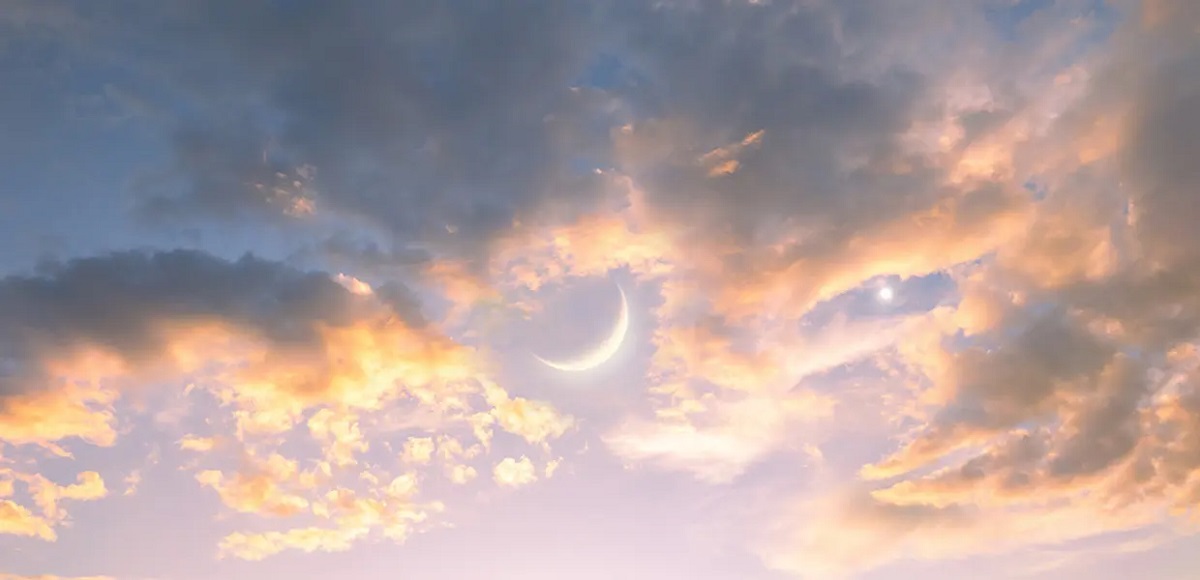
Muslims celebrate Eid ul Fitr 2026 after moon sighting confirmation
Karachi, Pakistan — Star Struck Times
As Muslims worldwide prepare to mark Eid ul Fitr 2026, the end of Ramadan has once again brought differing celebration dates across regions. While several Middle Eastern countries began festivities on Friday, March 20, 2026, Pakistan and parts of South Asia are set to celebrate on Saturday, March 21, following the non-sighting of the Shawwal crescent moon. Readers can follow ongoing developments in our World News category for more updates.
Key Highlights
Gulf countries including Saudi Arabia and the UAE marked Eid on March 20, 2026
Pakistan, India, and Bangladesh are celebrating Eid on March 21, 2026
Moon sighting differences caused a one-day split in global celebrations
Authorities relied on both astronomical data and local moon sightings
Millions of Muslims are observing Eid prayers, charity, and family gatherings worldwide
What Happened: Moon Sighting Split Leads to Two Eid Dates
The Islamic calendar is based on lunar cycles, meaning the sighting of the Shawwal crescent moon determines the start of Eid. In 2026, religious authorities in Saudi Arabia, the UAE, Kuwait, Qatar, and Bahrain confirmed the moon sighting earlier, allowing them to celebrate Eid on March 20.
However, Pakistan’s moon-sighting committees reported that the crescent was not visible on March 19, meaning Ramadan completed 30 days and Eid was observed the following day on March 21. Astronomical forecasts had already predicted low visibility due to the moon’s age being insufficient for naked-eye sighting at sunset.
A spokesperson from Pakistan’s Central Ruet-e-Hilal Committee stated that all regional reports were reviewed before making the official announcement, ensuring consistency with religious tradition.
Public Reaction and Official Responses
The split in Eid dates sparked widespread discussion across social media and communities with cross-border families. Many expatriates in the Gulf celebrated a day earlier than relatives in Pakistan, leading to mixed emotions but familiar acceptance of the lunar system’s variability.
A senior religious scholar quoted by local media said:
“The variation in Eid dates is a natural outcome of geographic differences in moon visibility and has always been part of Islamic tradition.”
Meanwhile, safety and public order advisories were issued in several countries to manage large gatherings, traffic, and fireworks during celebrations. Authorities in Abu Dhabi, for instance, released guidelines urging residents to avoid reckless driving and unsafe fireworks to ensure safe festivities.
On social media, one Pakistani user wrote, “We wait all year for Eid, but the moon decides everything. It’s frustrating but also part of the beauty of our tradition.”
Why It Matters: Cultural Unity vs Astronomical Precision
The recurring split in Eid dates highlights an ongoing debate between traditional moon sighting and reliance on astronomical calculations. Many Muslim-majority countries continue to prioritize physical sightings to maintain religious authenticity.
Media analysts note that this issue resurfaces almost every year, prompting renewed discussions on whether a unified global Islamic calendar should be adopted. Despite technological advances, consensus remains elusive due to theological and regional considerations.
The difference also impacts travel schedules, stock markets, and international business operations in Muslim-majority countries, especially when public holidays do not align across borders.
Context: Has This Happened Before?
Yes — differing Eid dates have been recorded frequently over the past decades. Countries at western longitudes often sight the moon earlier than those further east, making a one-day variation common.
In Pakistan, similar situations occurred in 2023 and 2025, when Eid was observed a day later than in Saudi Arabia. Experts say this is not a sign of inconsistency but rather a predictable outcome of lunar observation methods.
Unique Angle: Technology vs Tradition in Moon Sighting
Despite access to advanced satellite imaging and astronomical modeling, many Islamic scholars continue to emphasize physical moon sighting as a religious requirement. This has created a dual system: scientific forecasting for planning, followed by visual confirmation for official declaration.
Astronomical bodies such as Pakistan’s space agency had predicted that the moon would be too young to be visible on March 19, supporting the final decision to celebrate Eid on March 21.
What Happens Next
As global celebrations conclude, attention will now shift to Eid travel, tourism trends, and economic activity, which typically surge during the holiday period. Authorities in several countries are also monitoring public safety and transportation networks as millions travel to visit family.
Religious authorities are expected to review moon sighting data for academic and archival purposes, continuing the long-standing dialogue on potential calendar harmonization in the Muslim world.
FAQs
When was Eid ul Fitr celebrated in Pakistan in 2026?
Eid ul Fitr was celebrated in Pakistan on Saturday, March 21, 2026, after the Shawwal moon was not sighted on March 19.
Why did Saudi Arabia celebrate Eid a day earlier?
Saudi Arabia confirmed the moon sighting earlier due to geographical differences, allowing Eid to begin on March 20, 2026.
Is it common for Eid dates to differ between countries?
Yes, variations in moon sighting across regions frequently cause a one-day difference in Eid celebrations.
Who decides the official Eid date in Pakistan?
The Central Ruet-e-Hilal Committee reviews moon sighting reports and makes the official announcement.
Can astronomy alone determine Eid dates?
Astronomical calculations can predict visibility but many religious authorities require physical moon sighting for official confirmation.
Hello! I'm M Muzamil Shami, the founder and lead editor of Star Struck Times, your trusted source for trending news, entertainment scoops, celebrity gossip, sports highlights, and global headlines.
With a passion for storytelling and journalism, I created this platform to bring you breaking news, viral moments, and deep insights into the worlds of Bollywood, Hollywood, sports, politics, tech, and more — all in one place.