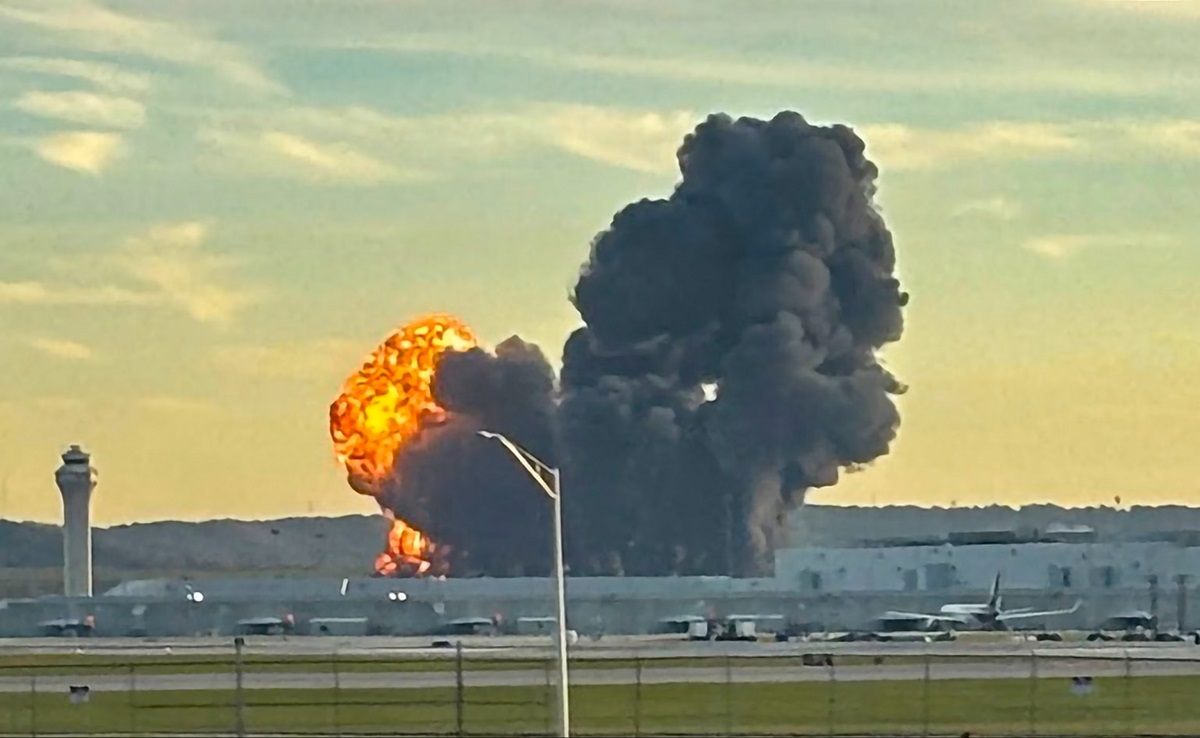
A dramatic fire-ball explosion seconds after takeoff from Louisville’s global hub sparks major investigation into the MD-11’s failure.
Breaking: A fatal crash involving a UPS Airlines cargo jet erupted into a massive fireball moments after departing Louisville Muhammad Ali International Airport, Kentucky, killing at least nine and injuring 11, according to sources. As investigators from the National Transportation Safety Board (NTSB) and Federal Aviation Administration probe what went wrong, fears grow of a possible engine separation just seconds into flight.
Key-Points:
- The flight was UPS Flight 2976, a McDonnell Douglas MD-11F freighter, which crashed shortly after takeoff from Louisville at about 5:15 p.m. local time.
- At least nine people are confirmed dead—including all three crew members aboard—and 11 more hospitalized with serious injuries.
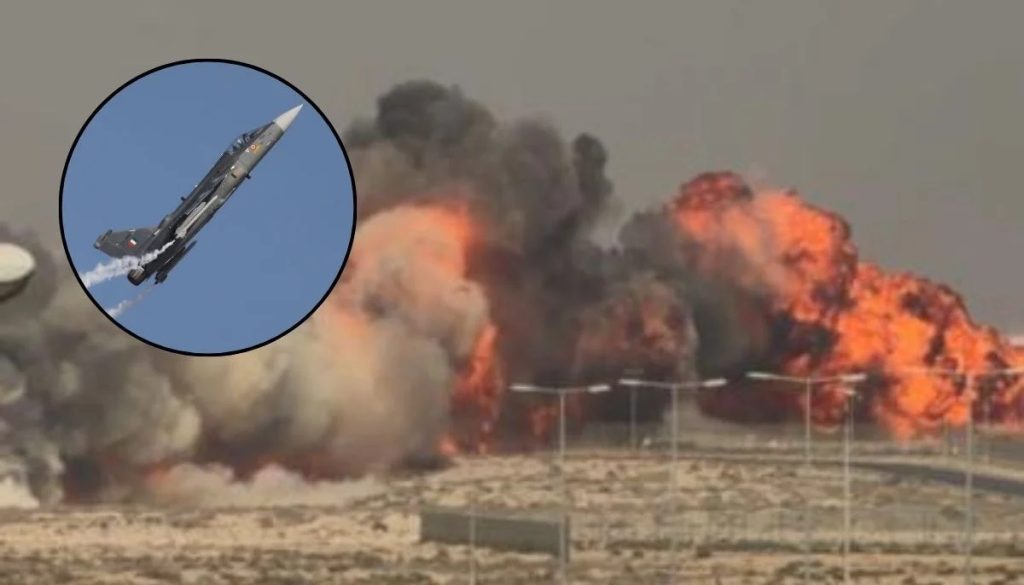
- Dramatic eyewitness video shows a large fire on the plane’s left wing, flame eruption on the runway, and thick black smoke visible for nearly a mile.
- The airport hub where the crash occurred is the UPS Worldport facility in Louisville, a critical node handling hundreds of thousands of packages daily—impacts on supply-chain and logistics already emerging.
- The NTSB investigation is already focusing on a possible engine failure or separation, weight and balance during takeoff, and the safety record of the MD-11 fleet.
Louisville, KY (Star Struck Times) — In a shocking disaster that has sent tremors through the aviation and logistics worlds, the cargo jet operated by UPS Airlines crashed in flames just after takeoff from Louisville Muhammad Ali International Airport in Kentucky. The aircraft, a 34-year-old McDonnell Douglas MD-11F, designated UPS Flight 2976, was bound for Honolulu when the fatal incident occurred at around 5:15 p.m. local time on November 4, 2025.

The dramatic scene played out in real time: a fire erupted on one wing during climb-out, the aircraft failed to gain altitude, then plunged into nearby industrial buildings beyond the runway, erupting into a fireball as giant plumes of black smoke rose. Four of the fatalities occurred on the ground in the adjacent industrial zone, compounding the tragedy.
Aircraft & Flight Details: The aircraft involved was registered N259UP, a late-1990s build MD-11F converted for cargo operations—part of UPS’s aging tri-jet freighter fleet. Flight tracking shows the aircraft had flown from Louisville to Baltimore earlier that day and returned ahead of the fatal departure.
Crash Sequence: Surveillance footage and flight-data suggest that after lift-off, the aircraft reached a low altitude (roughly 175 feet) and 184 knots before descending sharply. A detached engine pod has been found near the crash site—raising suspicion of a catastrophic engine separation or failure in the critical initial climb phase.
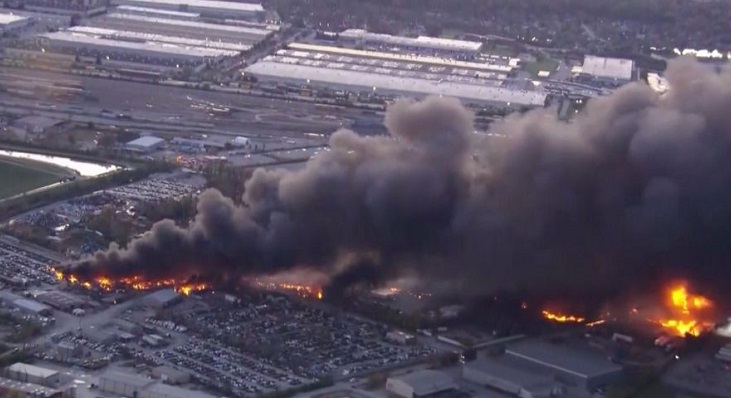
Casualties & Ground Impact: Officials initially reported seven dead and 11 injured; the death toll has since risen to nine. Ground victims include employees at a petroleum recycling plant and an auto-parts lot hit by the crashing aircraft. Emergency responders issued a shelter-in-place order for a five-mile radius around the airport amidst the blaze and debris danger.

Logistics & Hub Disruption: The crash struck the heart of UPS’s Worldport hub in Louisville—processing more than two million packages per day. Many flights were canceled, sorting operations suspended, and a significant supply-chain ripple is anticipated across major clients such as Amazon and Walmart.
Expert Opinions
Aviation-safety expert Tom Kinton described the scene:
“Engine failure or separation during initial climb is one of the worst emergencies a crew can face — the margin for recovery is extremely low.”
Another expert, former DOT inspector Mary Schiavo, noted that the discovery of the separated engine pod strongly suggests a non-contained engine failure, where engine fragments breach the casing and impact airframe integrity.
Additional Background
The MD-11 freighter has long been a workhorse for cargo operators like UPS—and yet has been gradually phased out because of higher maintenance costs compared to modern twin-engine freighters. UPS itself began retiring its MD-11 fleet in 2023, citing fuel inefficiency and age.
Historically, UPS had not seen a fatal cargo-plane crash since 2013 (an Airbus freighter in Birmingham, AL). That makes this incident particularly significant in UPS’s safety record—and raises broader questions about aging fleets and cargo-aircraft safety across the industry.
Additionally, the crash’s impact extends beyond aviation: the Louisville hub disruption threatens global parcel-delivery timelines, particularly in peak season. Residents near the crash site described the scene as looking “apocalyptic” with roads closed, schools shut, and power outages.
Conclusion
This crash of UPS Flight 2976 is more than a tragic accident—it is a convergence of aging aircraft technology, high-stakes logistics infrastructure, and catastrophic failure during one of the most vulnerable phases of flight. With nine confirmed dead, dozens more injured, and investigations still in early days, the incident underscores the high cost of any failure in modern supply-chain aviation.
For readers and stakeholders:
- Aviation watchers should monitor the NTSB’s findings on engine separation, maintenance records, cargo weight and balance, and MD-11 retirement status.
- Logistics firms and customers should brace for disruptions in the UPS network and consider alternative routing strategies.
- Communities near air-cargo facilities should assess crash-zone risks as industrial neighbors of major airports.
FAQs
Q1: What caused the crash of UPS Flight 2976?
A1: The official cause has not yet been determined; investigators from the NTSB and FAA are focusing on evidence of engine failure or separation, takeoff performance under heavy fuel load, and integrity of the MD-11 airframe.
Q2: How many people died and were injured in the crash?
A2: At least nine people have been confirmed dead, including the three crew onboard the aircraft. At least 11 others were injured on the ground and in nearby buildings.
Q3: What is the current impact on UPS’s operations?
A3: The crash occurred at UPS Worldport, a major worldwide hub. Sorting operations at the site have been suspended, flight cancellations reported, and supply-chain ripple effects expected across UPS clients.
Q4: Is the MD-11 aircraft safe for cargo operations?
A4: While the MD-11 has an established safety record, it is an aging design. UPS and other operators have begun phasing it out, citing higher maintenance burden and less efficiency compared with newer models. Investigators will review its service history closely.