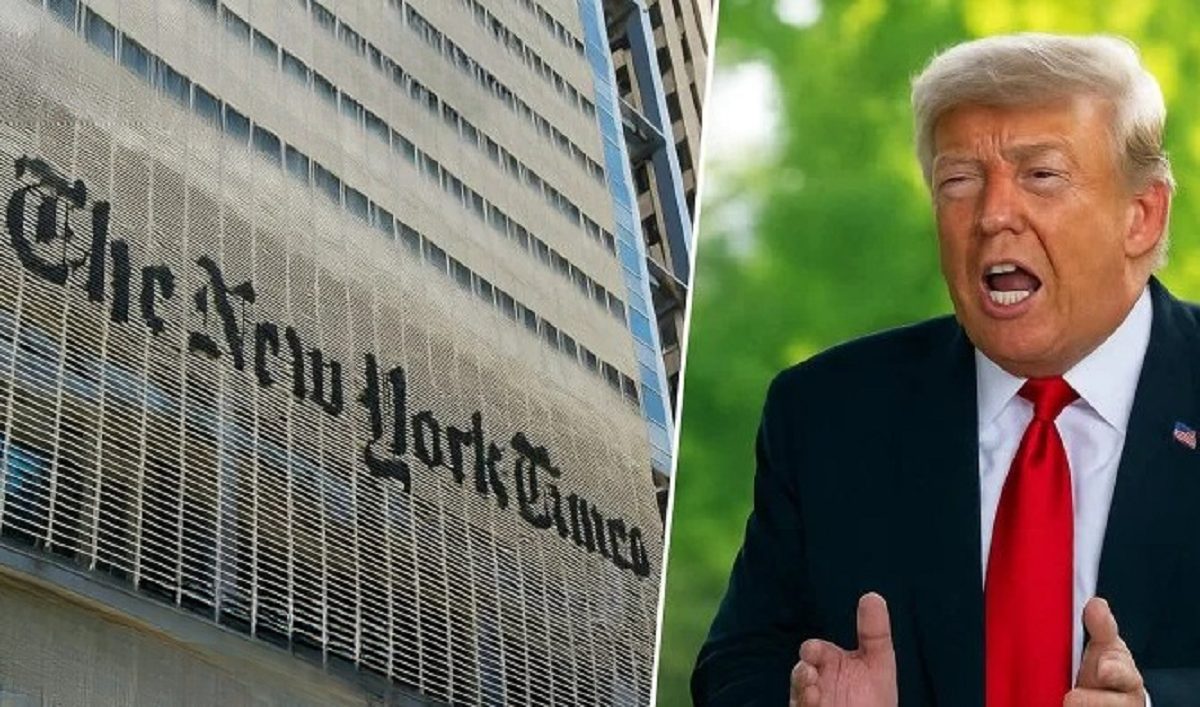
Former President Donald Trump reacts in the courtroom after his $15 billion defamation lawsuit against The New York Times was dismissed.
BREAKING: In a significant legal development, former President Donald Trump’s $15 billion defamation lawsuit against The New York Times has been dismissed. A federal judge in Florida ruled that the complaint was excessively lengthy and filled with irrelevant language, violating procedural standards. What does this mean for Trump’s ongoing legal challenges? Read on to find out.
Former President Donald Trump’s $15B defamation lawsuit against The New York Times dismissed by a Florida federal judge.
Judge ruled the 85-page complaint was excessively lengthy and contained irrelevant language.
Lawsuit claimed The New York Times misrepresented Trump’s finances and TV career, harming his reputation.
Trump has 28 days to file an amended complaint in compliance with court guidelines.
Legal experts note the ruling reinforces procedural standards in U.S. courts.
Case highlights the ongoing Trump vs. media conflict and debates over freedom of the press.
Global and domestic reactions vary: seen as a victory for journalistic integrity by some, a setback for Trump by others.
Outcome could set a legal precedent for public figure defamation cases.
The case raises questions about media influence, political narratives, and public perception.
Readers are encouraged to follow the story for updates as the legal battle continues.
TAMPA, FL (Star Struck Times) — In a stunning legal blow to former President Donald Trump, a federal judge in Florida has dismissed his $15 billion defamation lawsuit against The New York Times. The lawsuit, filed just days ago, accused the newspaper of spreading false narratives about Trump’s finances and television career. However, U.S. District Judge Steven Merryday ruled that the complaint was “improper and impermissible,” citing its excessive length and lack of relevance to the legal case at hand. This decision marks a significant moment in the ongoing saga of Trump’s legal battles and his complex relationship with the media.
The Lawsuit That Shook the Nation
On September 15, 2025, Donald Trump filed a defamation lawsuit against The New York Times, its journalists Russ Buettner and Susanne Craig, and publisher Penguin Random House. The suit alleged that the defendants had maliciously peddled false narratives about Trump’s business dealings and his role in the television show “The Apprentice.” Trump claimed that these publications intentionally misrepresented facts to damage his reputation and political standing.
The lawsuit sought a staggering $15 billion in damages, making it one of the most significant defamation cases in recent history. Trump argued that the media’s portrayal of him as a mere television personality, rather than a successful businessman and political figure, was both defamatory and misleading.
However, the legal battle took an unexpected turn when Judge Merryday dismissed the lawsuit, stating that the 85-page complaint was filled with “tedious and burdensome” language that had no bearing on the legal case. The judge emphasized that a complaint should not serve as a platform for public relations or political rhetoric but should adhere to the rules of procedure in a professional and dignified manner.
Legal Implications and Next Steps
The dismissal of Trump’s lawsuit has significant legal implications. It underscores the judiciary’s commitment to upholding procedural standards and ensuring that legal actions are based on substantive claims rather than political posturing. Legal experts suggest that the ruling could set a precedent for future defamation cases, particularly those involving public figures and media organizations.
Despite the setback, Trump has been given 28 days to file an amended complaint that complies with the court’s guidelines. Legal analysts predict that Trump’s legal team will likely revise the lawsuit to focus more narrowly on specific defamatory statements and provide concrete evidence to support their claims.
Media’s Role in Shaping Public Perception
This legal development also highlights the influential role of the media in shaping public perception of political figures. Trump’s longstanding feud with the media has been well-documented, and this lawsuit represents another chapter in that ongoing narrative. The case raises important questions about the balance between freedom of the press and protection against defamation, especially when it comes to public figures who are subject to intense scrutiny.
Media organizations, on the other hand, argue that their role is to inform the public and hold powerful individuals accountable. They contend that the lawsuit was an attempt to silence critical reporting and intimidate journalists. The outcome of this case may have broader implications for press freedom and the ability of the media to operate without fear of retribution.
Global Reactions and Political Ramifications
The dismissal of Trump’s defamation lawsuit has reverberated beyond the courtroom, drawing reactions from political leaders and commentators worldwide. Some view the ruling as a victory for journalistic integrity and a reaffirmation of the importance of a free press. Others interpret it as a setback for Trump’s efforts to challenge media narratives and control his public image.
In the United States, the case has become a focal point in the ongoing debate over media bias and the treatment of public figures by the press. Supporters of Trump argue that the media has been unfairly critical of him and that the legal system should provide avenues for redress. Critics, however, caution against using the courts to settle disputes over media coverage, warning that it could set a dangerous precedent for press freedom.
What’s Next for Trump?
Looking ahead, Trump’s legal team faces the challenge of crafting a more concise and legally sound complaint that addresses the court’s concerns. The amended lawsuit will likely focus on specific instances of alleged defamation and provide detailed evidence to support the claims. Legal experts will be closely monitoring the case to see how it develops and whether it leads to a broader discussion about the intersection of law, media, and politics.
FAQs
Q1: Why was Trump’s $15 billion defamation lawsuit dismissed?
A1: The lawsuit was dismissed because the judge found it to be excessively lengthy and filled with irrelevant language, violating procedural standards. The judge emphasized that a legal complaint should be professional and adhere to the rules of procedure.
Q2: Can Trump refile the lawsuit?
A2: Yes, Trump has been given 28 days to file an amended complaint that complies with the court’s guidelines. The revised lawsuit should focus more narrowly on specific defamatory statements and provide concrete evidence to support the claims.
Q3: What are the implications of this ruling?
A3: The ruling underscores the judiciary’s commitment to upholding procedural standards in legal cases. It also highlights the influential role of the media in shaping public perception and raises important questions about the balance between freedom of the press and protection against defamation.
Stay informed about the latest developments in this high-profile legal case by subscribing to our newsletter. Get timely updates and expert analysis delivered straight to your inbox.
Hello! I'm M Muzamil Shami, the founder and lead editor of Star Struck Times, your trusted source for trending news, entertainment scoops, celebrity gossip, sports highlights, and global headlines.
With a passion for storytelling and journalism, I created this platform to bring you breaking news, viral moments, and deep insights into the worlds of Bollywood, Hollywood, sports, politics, tech, and more — all in one place.